Two Weeks in GenevaCarrying AI for Every Mind to the United Nations
A side event I moderated, a summit floor shared with fifty UN agencies, a panel on motherhood and machines, and seven student-team ideas now published on the UN's own registry.
“For every investment in AI technology, make an equal investment in people.”
From a school for visually impaired learners in India, to Palexpo and the United Nations Office at Geneva.
AI for Every Mind began as a simple question: who is AI designed for, and who does it leave behind? In July 2026, that question travelled to Geneva — to the UN Global Dialogue on AI Governance, the AI for Good Global Summit, and the United Nations Office at Geneva (UNOG) — across four days that moved from a UN-registered side event to an industry conversation with LEGO Education, to a panel on maternal values and safe AGI, and finally to watching the 24 students I mentored, working across seven project teams, see their names published on the UN's own Partnership Hub.
What follows is the full account — the credentials, the rooms, the people, and the work — kept together as one narrative rather than scattered across a gallery.
AI for Every Mind, Inside the UN Itself
From a classroom question to a UN-registered side event
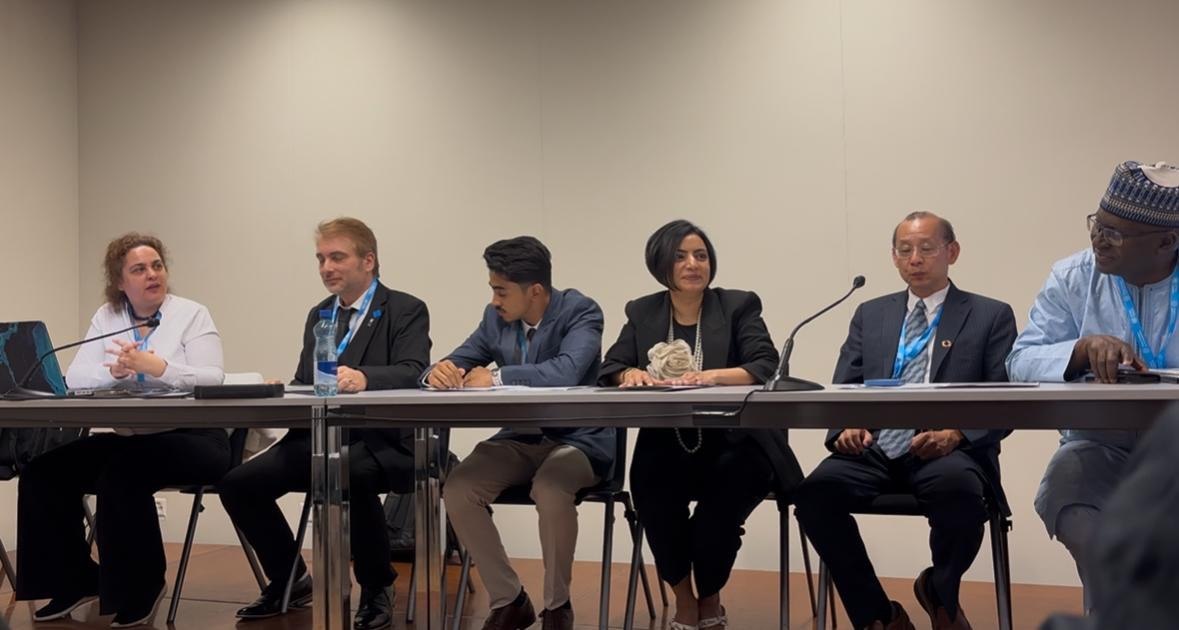
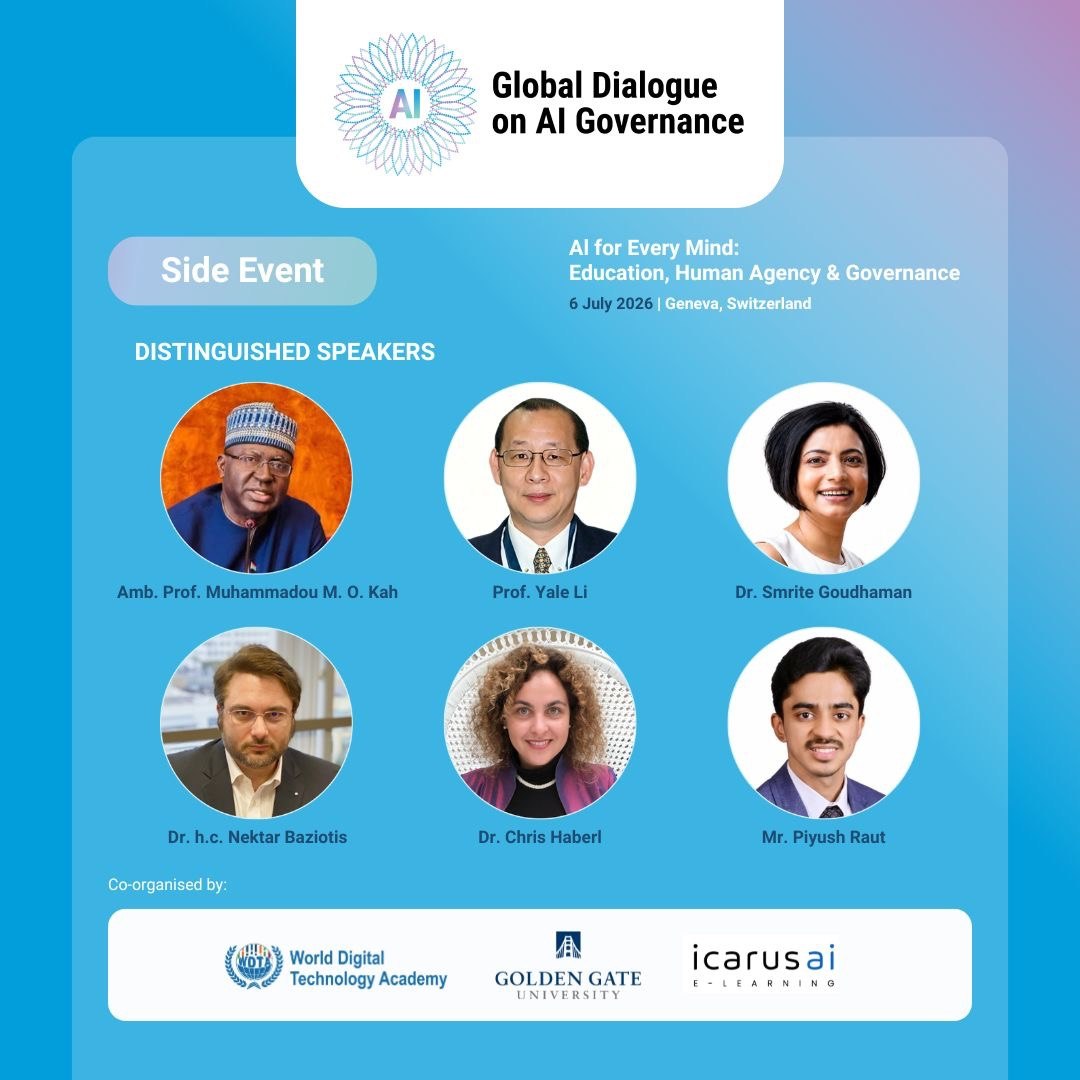
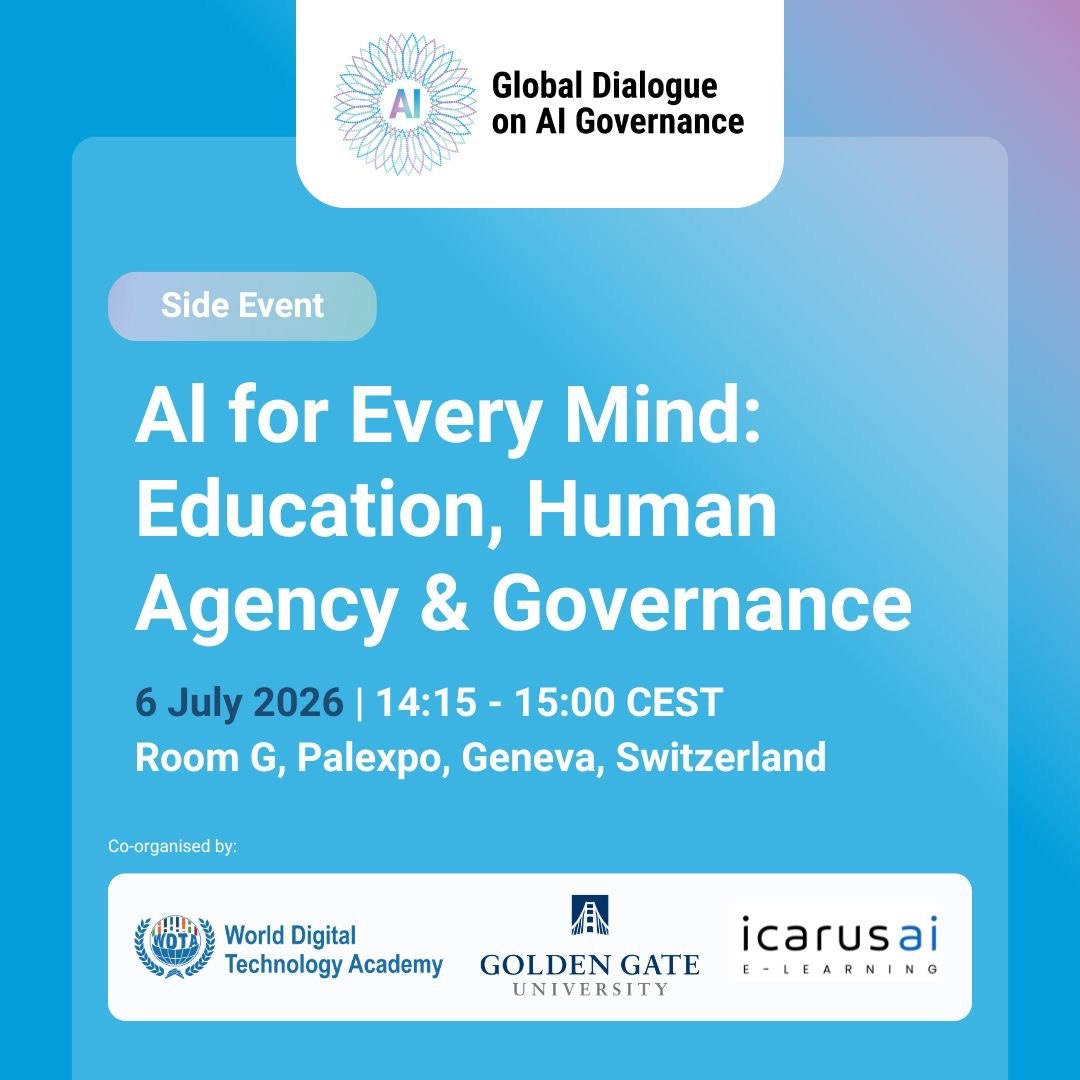
I have stood in front of a lot of rooms. A conference hall in Bengaluru, a lecture theatre at Golden Gate University, a video call with a teacher in a district I'd never heard of before that morning. Nothing quite prepares you for the particular quiet of a UN meeting room before it fills — the microphones being tested one by one, the interpreters' booths glowing at the back, a nameplate with your name on it in a font that isn't yours to choose.
The week opened with a side event I moderated inside the UN Global Dialogue on AI Governance — co-organised by the World Digital Technology Academy, Golden Gate University, and ICARUS AI Inc., opened by Ambassador Prof. Muhammadou M. O. Kah, Vice Chair of the UN Commission on Science and Technology for Development. My task was simple to say and harder to do: keep four institutions, four instincts, and one room full of very different definitions of “access” moving toward the same point.
The session argued a single progression, and asked the panel to defend each step of it: AI Access → AI Literacy → Human Agency → Responsible AI Governance. Education isn't one application of AI policy — it's the foundation the policy has to stand on. I'd made that argument in classrooms before. I had never had to make it with the UN flag behind me.
“For the first time, AI answered me instead of someone answering on my behalf.”A visually impaired student, recounted during the roundtable on AI access
That line — from a classroom in India, long before it reached Geneva — became the thread the whole panel returned to. Access was never about whether someone could open an app. It was about whether they could question what it told them. When we turned to who is really “the human in the loop,” the room agreed on something uncomfortable: a teacher managing forty students, or a frontline worker who received a two-hour AI orientation, isn't really in the loop if they can't challenge what the system tells them. We've too often mistaken accountability for governance.
By the time the closing commitments went around the table, I realised the question I'd carried into that room wasn't really about AI at all. It was the same one my mother asked in her own classroom, decades before either of us had heard the word “algorithm”: does every student in this room actually understand what's in front of them, or only the ones we designed it for?
Where LEGO Bricks Met a Bigger Question
The AI for Good Global Summit, and a conversation about Indian classrooms
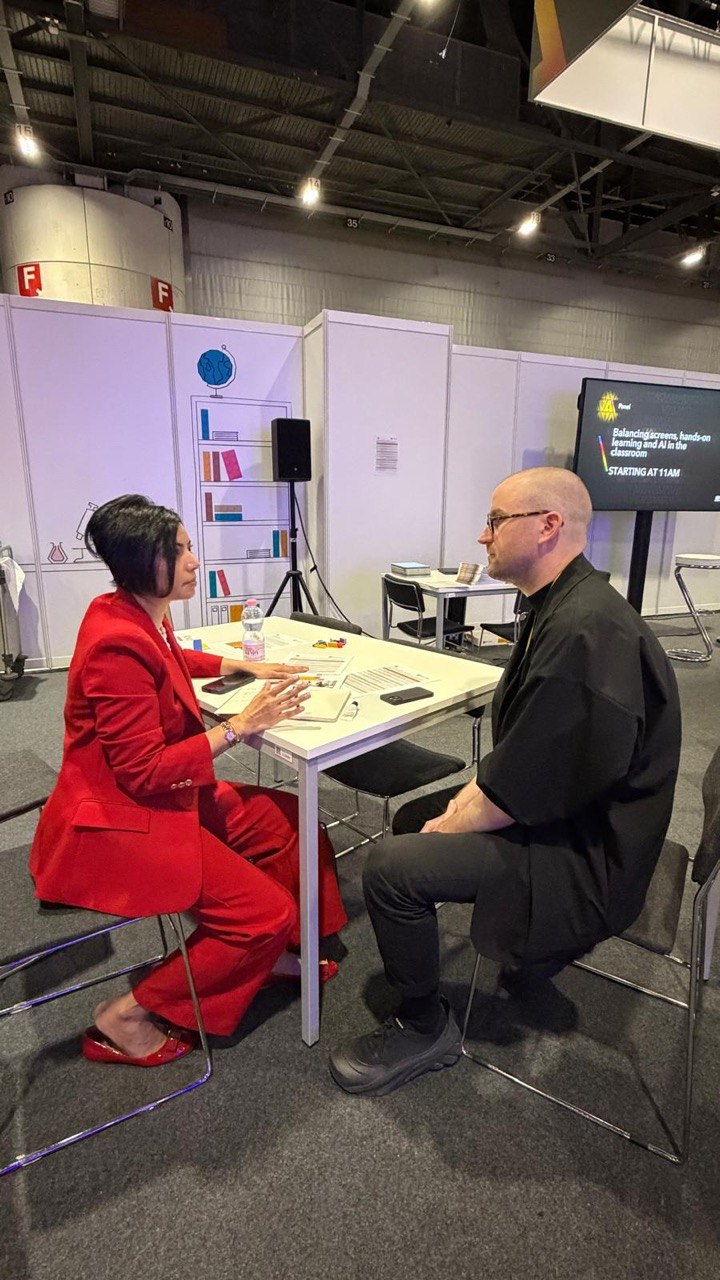
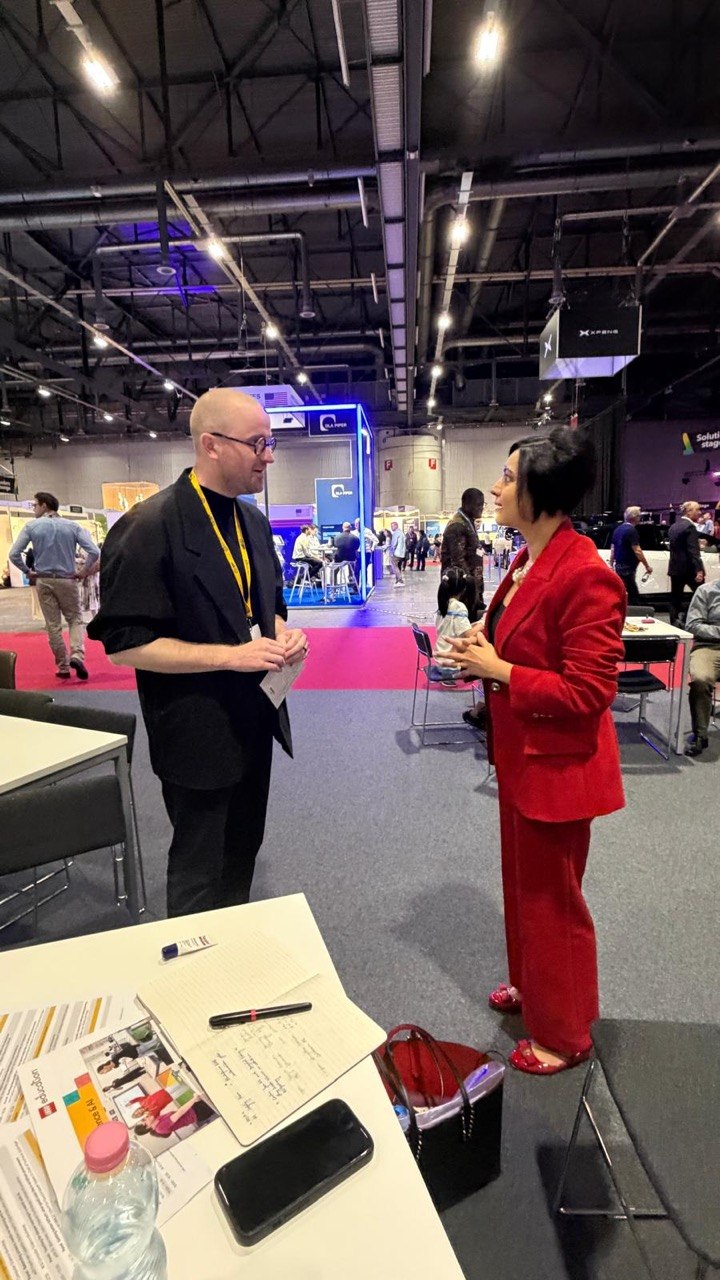
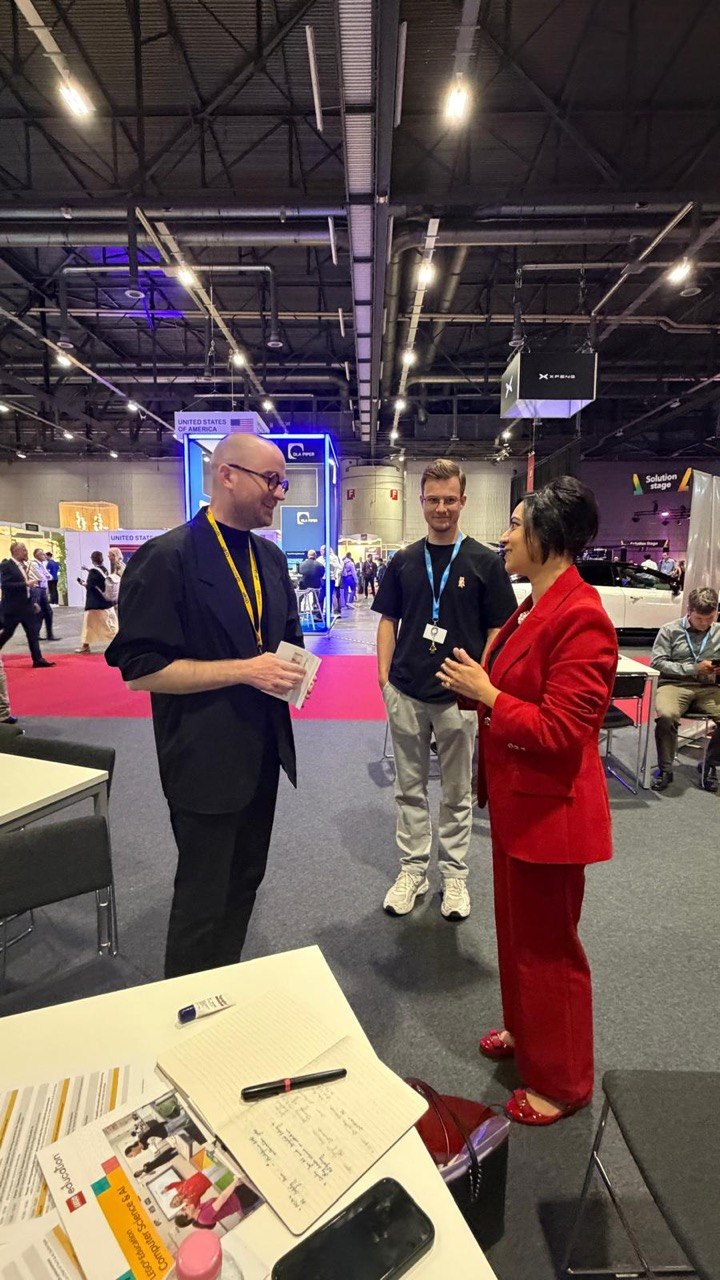
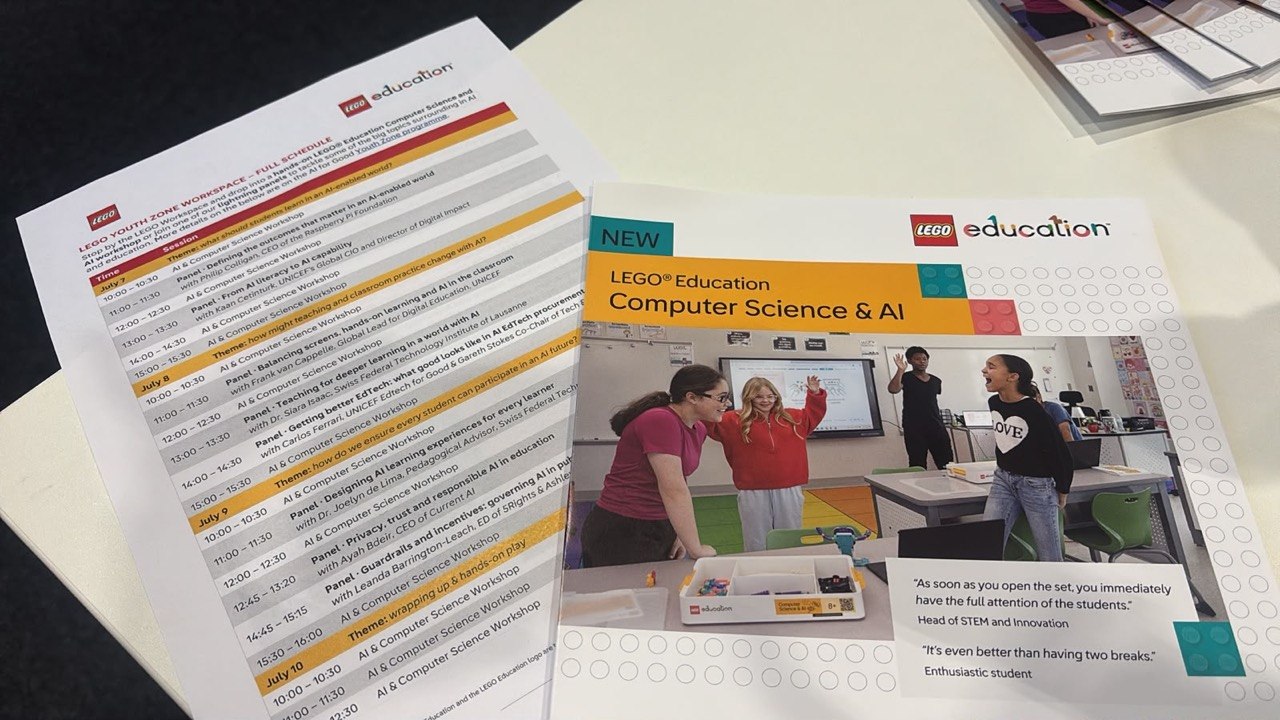
Credentialed as a UN e-Delegate, the days that followed were spent on the summit floor — under the ITU's #ConnectedByITU banner, alongside CTBTO, UNESCO, UNICEF, WHO, WIPO and dozens of other UN bodies exhibiting side by side. Palexpo at scale is disorienting in a way slide decks never capture: fifty-plus UN agencies, a wall of logos taller than most of the people photographed in front of it, robots that draw crowds two aisles over from a panel on export controls. It would be easy to mistake the noise for the point. It wasn't.
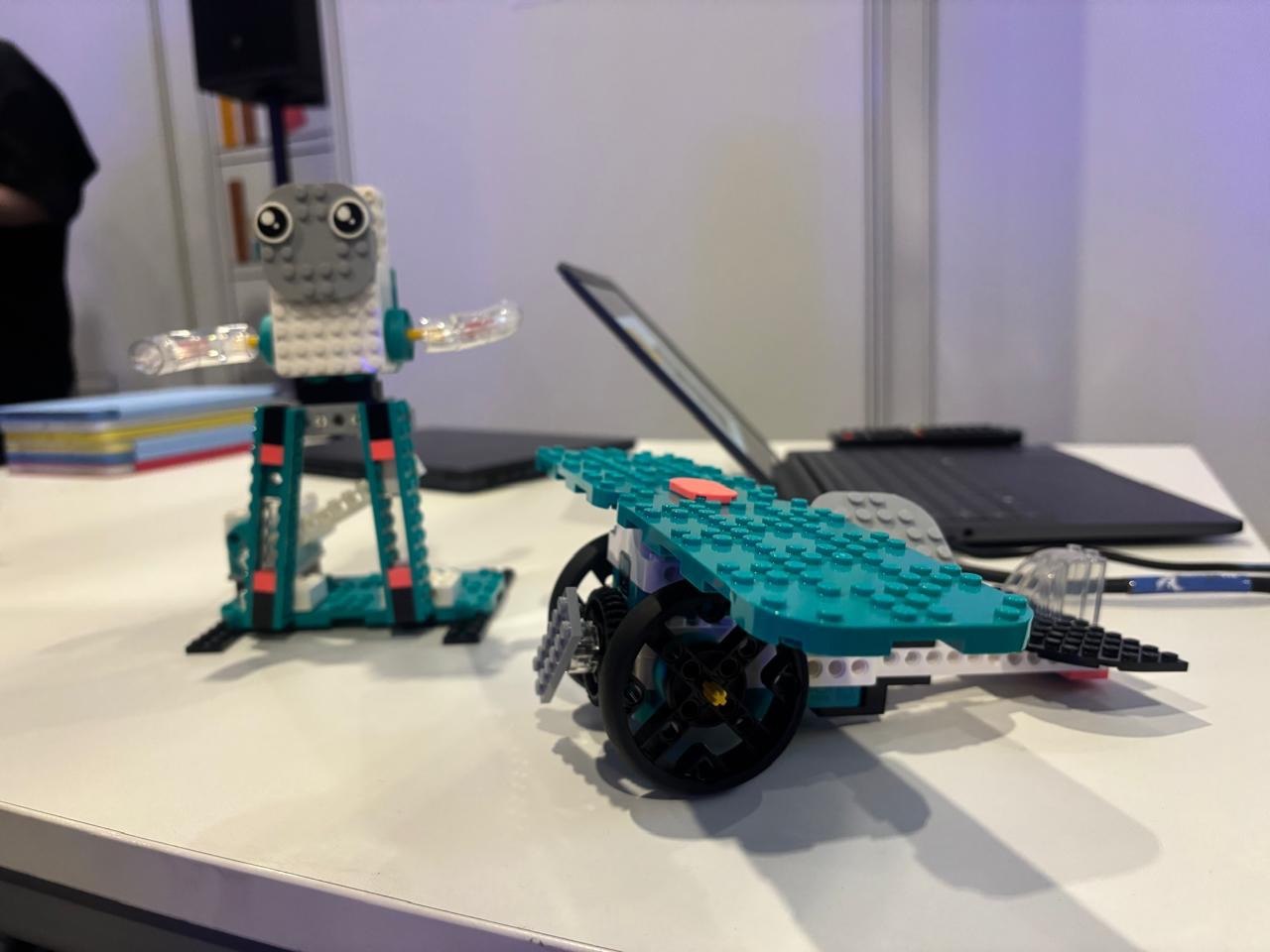
The most useful hours weren't on a stage. They were at the LEGO Education booth, inside the Youth Zone Workspace, in a direct conversation about what LEGO Education's Computer Science & AI kits could look like inside Indian classrooms — hands-on learning that doesn't ask a child to already read fluently in English to understand a concept. Watching a Youth Zone student redesign a lesson plan mid-conversation, correcting an AI-generated answer without being asked to, was the clearest five minutes of the whole summit.
That conversation sat inside a wider panel track, Balancing screens, hands-on learning and AI in the classroom — the exact tension AI for Every Mind exists to answer for learners who are deaf, blind, autistic, or simply under-resourced. It's the same tension enterprises keep asking me about, just dressed differently. Companies often ask, “Is the AI ready?” I usually answer with another question: “Are our people ready?” An organisation can buy the best technology in the world — but if the people using it don't know when to trust it, question it, or override it, the risk doesn't disappear. It grows quietly, in the gap between deployment and readiness.
By the third day on that floor, the pattern was hard to miss: every booth was selling capability. Almost none of them were selling confidence. That gap — not the technology — is the one AI for Every Mind was built to close.
Mother's Love in the Age of AI
Guiding AI with human heart — maternal values as a framework for safe AGI
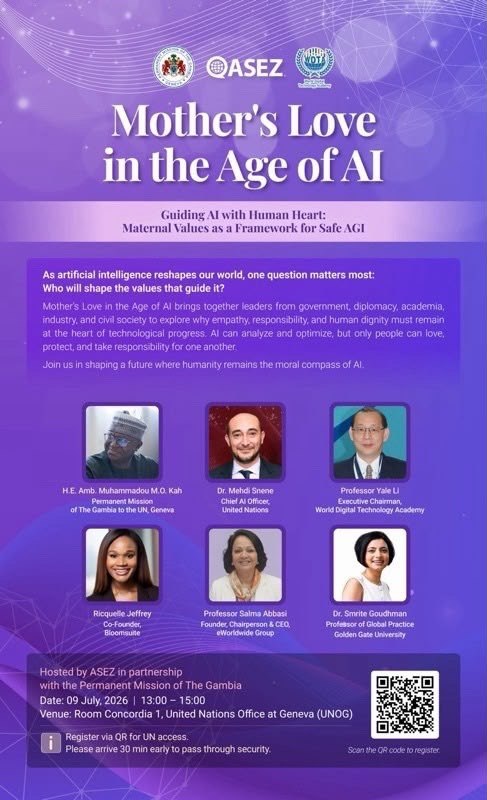
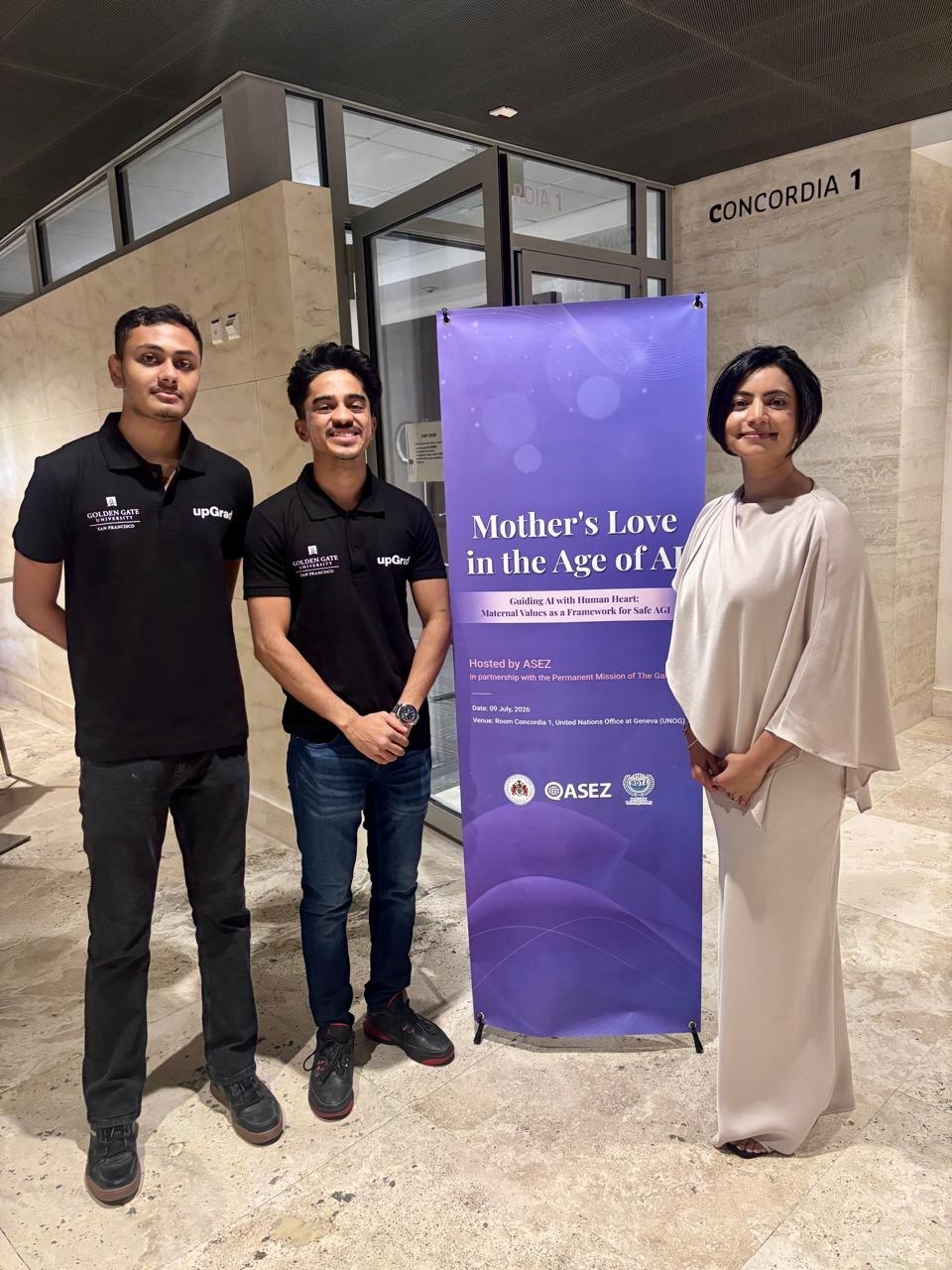
The last engagement moved from classrooms to something more foundational. Room Concordia 1 at UNOG doesn't look like a place built for tenderness — travertine floors, a banner instead of a stage, security thirty minutes deep. And yet the question sitting at the centre of it was the most human one asked all week: as AI reshapes the world, who shapes the values that guide it?
I grew up in a family where the water, the mine shaft, the classroom, and the school office each asked the same thing of the person inside them: serve something larger than yourself. My mother stood in front of a classroom and gave children the language to understand their world. My grandmother led a school as its principal. Neither of them ever used the word “governance.” Both of them practised it daily, in the only way it has ever actually worked — one person, choosing to be accountable for another.
The position I carried into that room was simple, and I said it plainly: empathy and responsibility aren't soft add-ons to AI safety — they're the compass, because only people can love, protect, and take responsibility for one another. Algorithms can optimise. They cannot care. If AGI is coming whether we're ready or not, the question was never whether to build it safely. It was whose values get to decide what “safe” means.
Alongside H.E. Amb. Muhammadou M.O. Kah, Dr. Mehdi Snene, Professor Yale Li, Ricquelle Jeffrey, and Professor Salma Abbasi — this was the panel where AI for Every Mind's premise met AI governance's biggest open question, head-on. It was also, quietly, the panel that felt least like work.
The Seven Teams That Traveled With Me
Every one of them mentored, not mine — now on the UN's own registry of initiatives
None of the four rooms above were the part I'm proudest of. That part happened months earlier, in ordinary video calls, workshopping ideas with students who had never written a submission for the United Nations and had no reason to assume anyone there would read it.
I measure mentoring the way I measure teaching: not by attendance, but by whether someone makes a different decision after they leave. Twenty-four students, working in seven teams of three to five, did. They took an ordinary Tuesday-evening idea — a career platform, a deepfake detector, a farmer's voice assistant — and turned it into a formal submission to the UN's AI Dialogue Partnerships Hub. The target for this cycle was six teams. Seven were completed. All seven are now live on the UN's own registry of initiatives, searchable by anyone, anywhere, permanently.
I didn't write a line of any of them. I only asked the questions that made the students defend their own thinking one more time before it went out into the world. That's the whole job, most days.
100 Certified Voices, One Shared Belief
Taking what Geneva taught us and building it into the foundation of the students shaping tomorrow
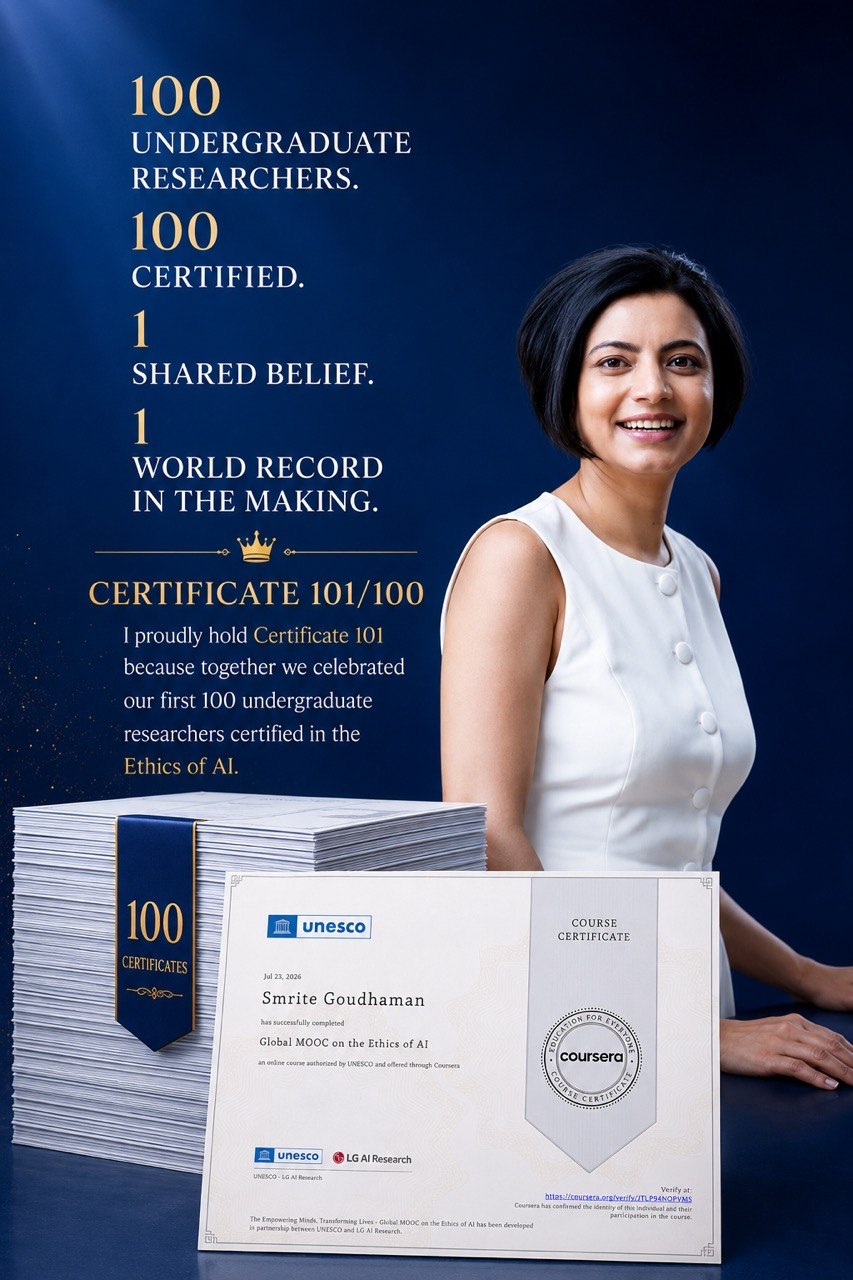
Geneva didn't end when the badges came off. What I carried back from Nations Room G and Room Concordia 1 was a question, not a souvenir: if AI governance is going to be shaped by people who understand both the technology and the responsibility that comes with it, where does that understanding actually get built?
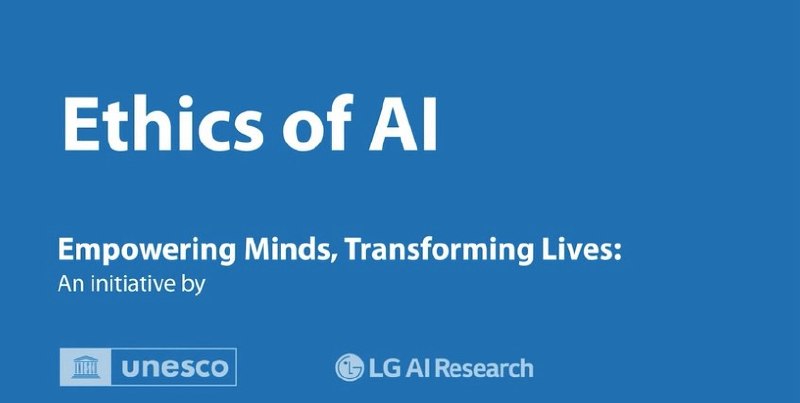
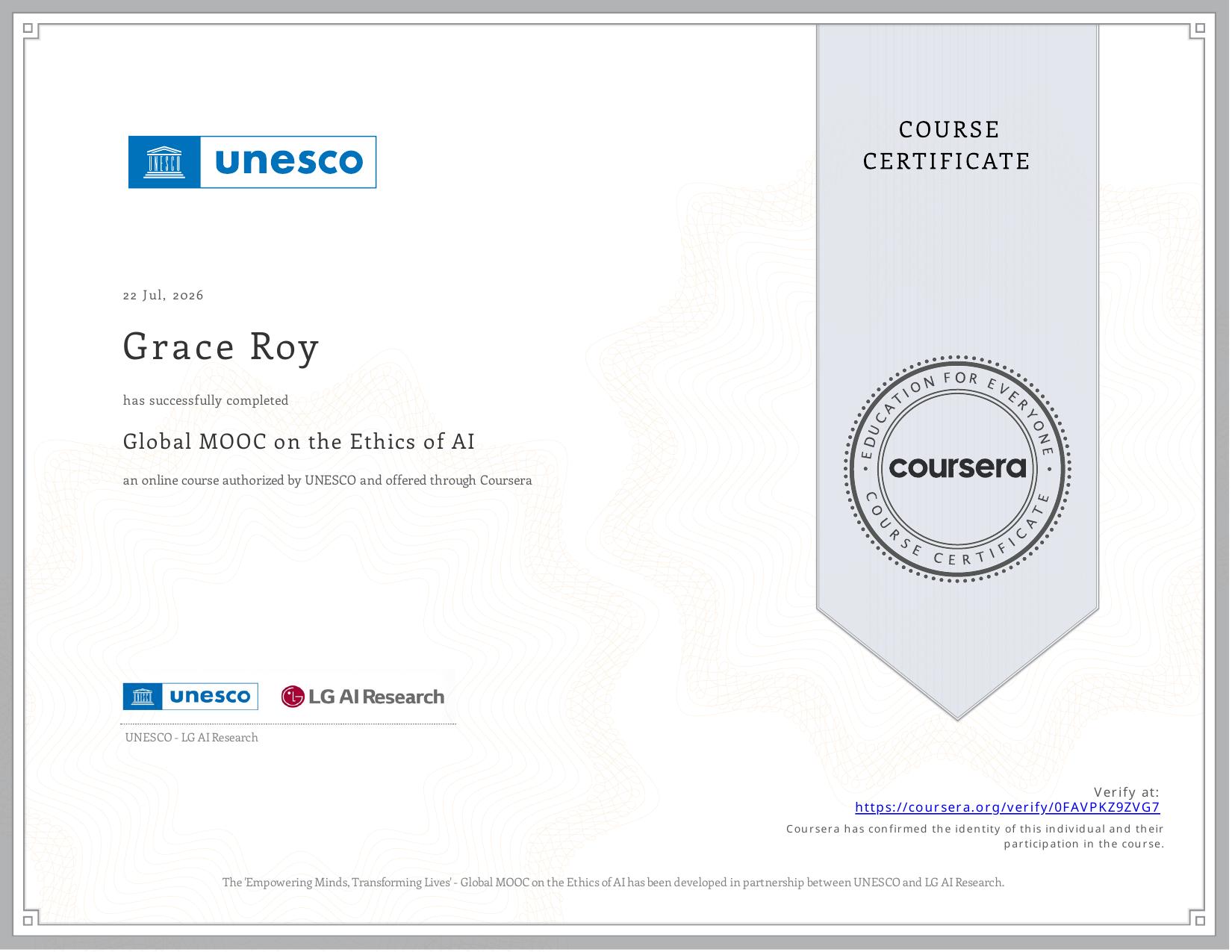
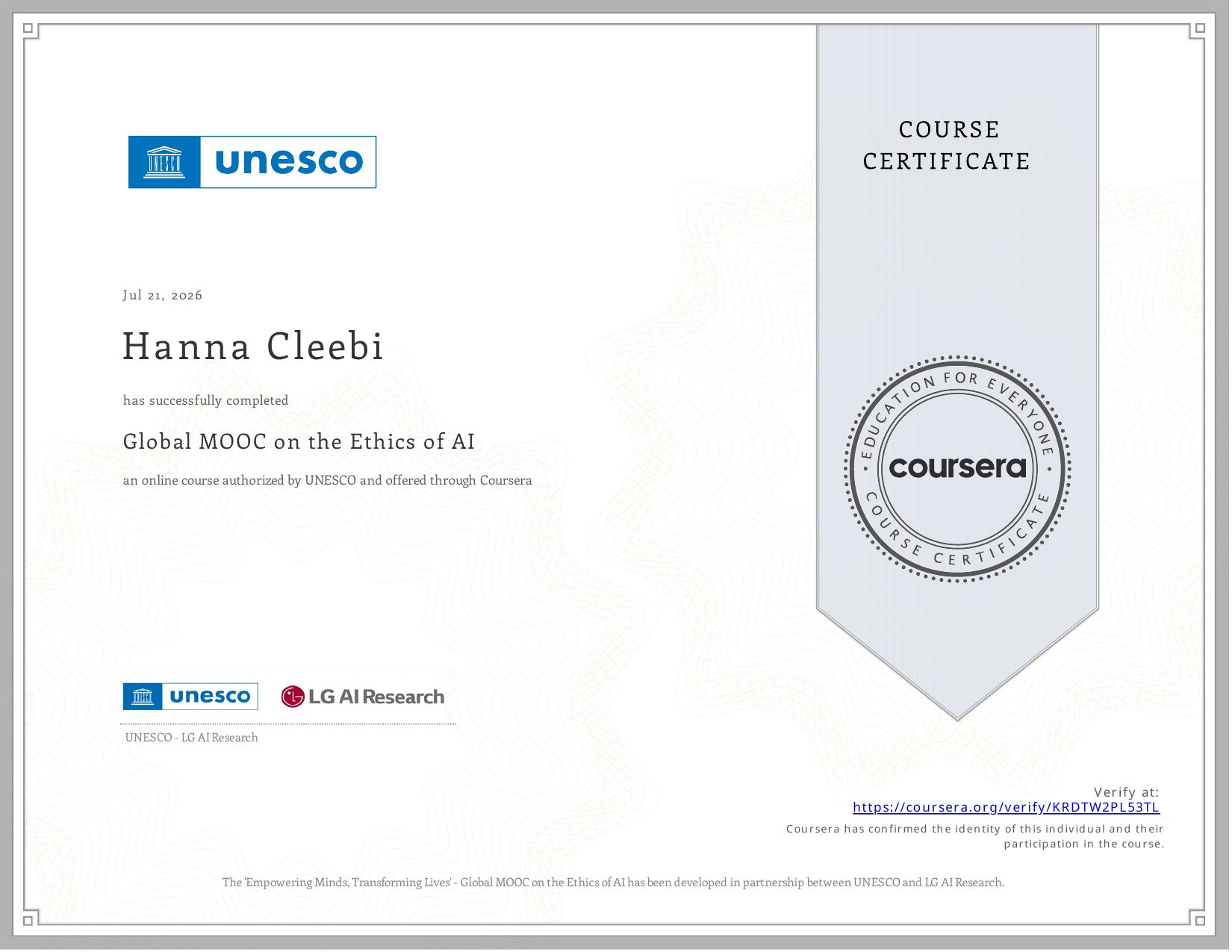
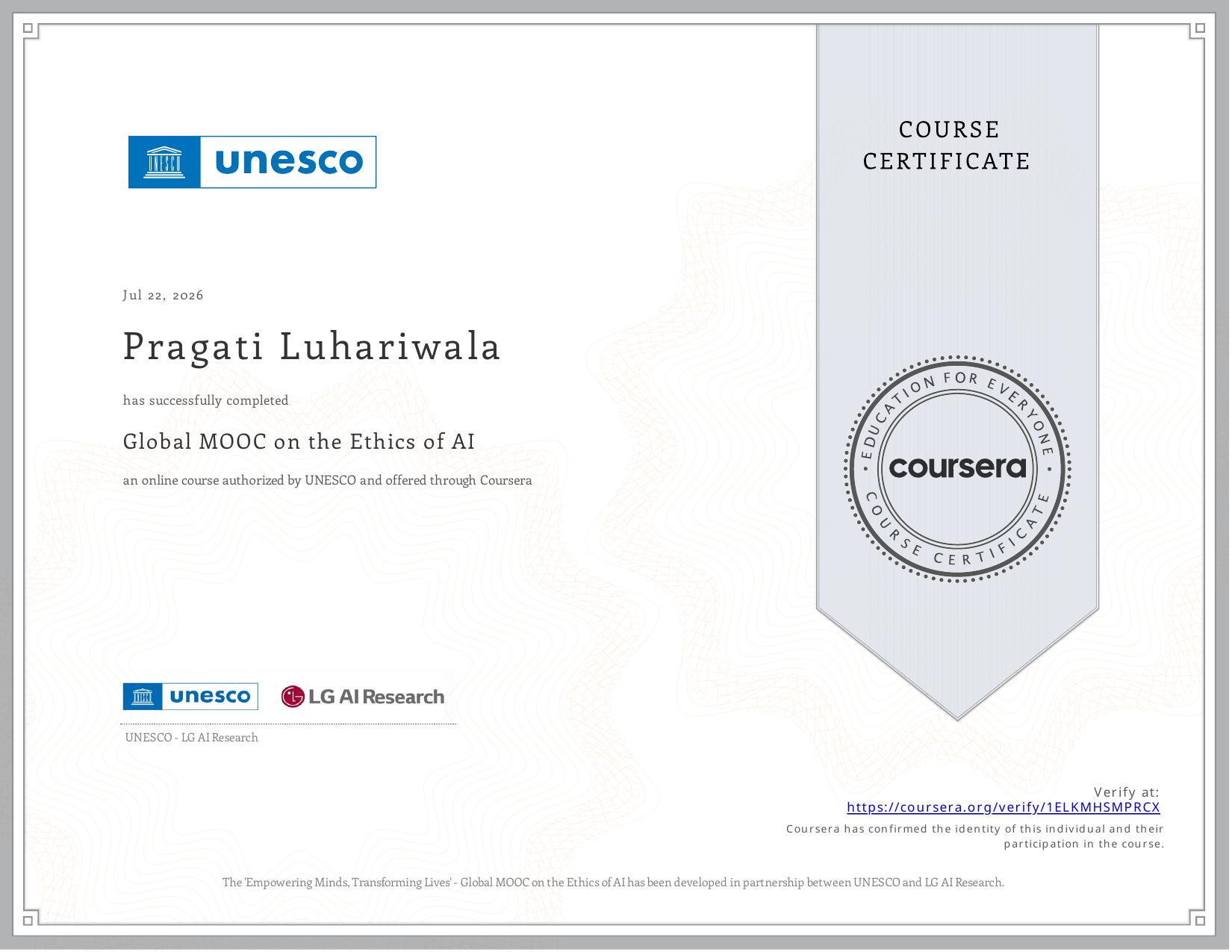
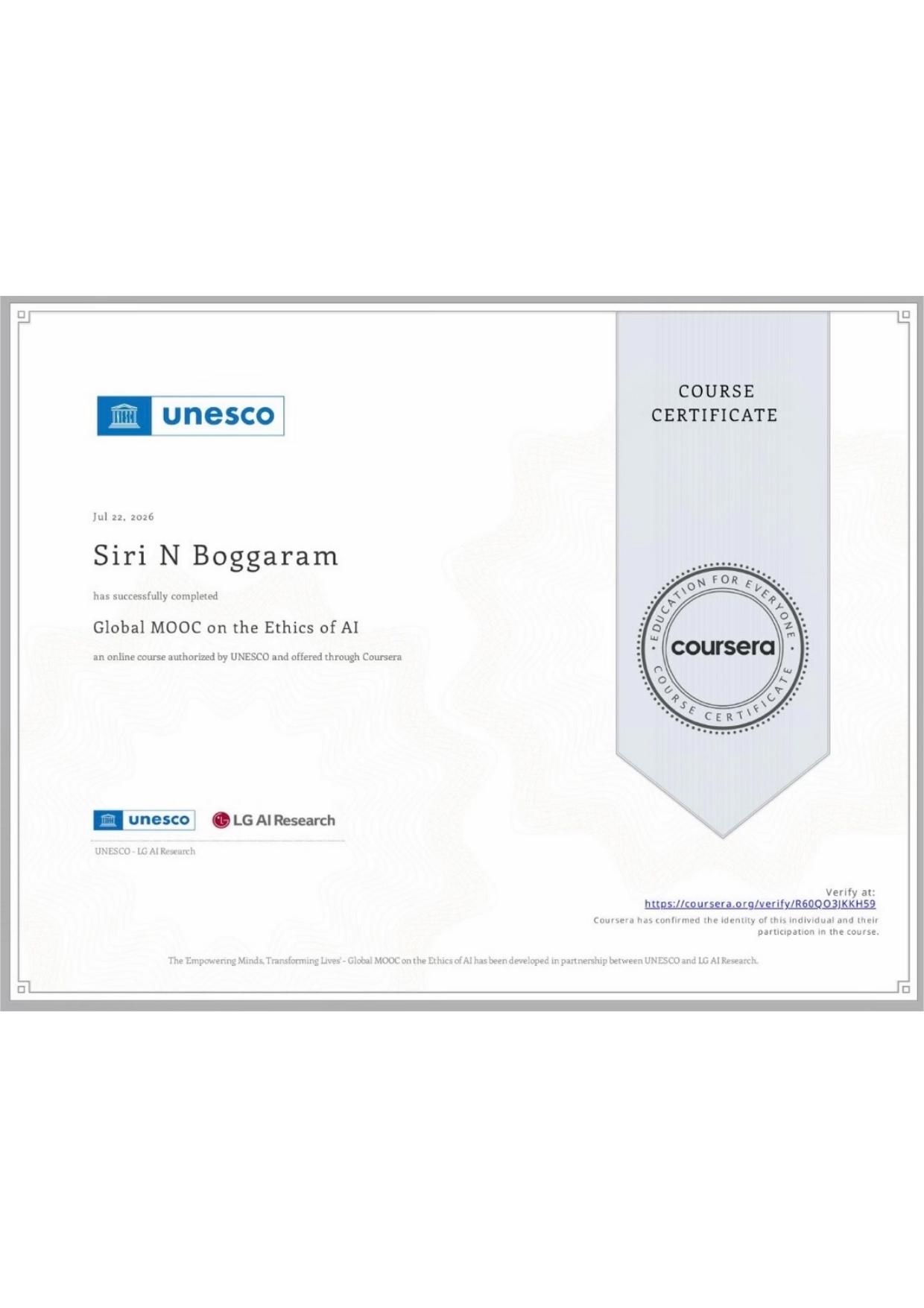
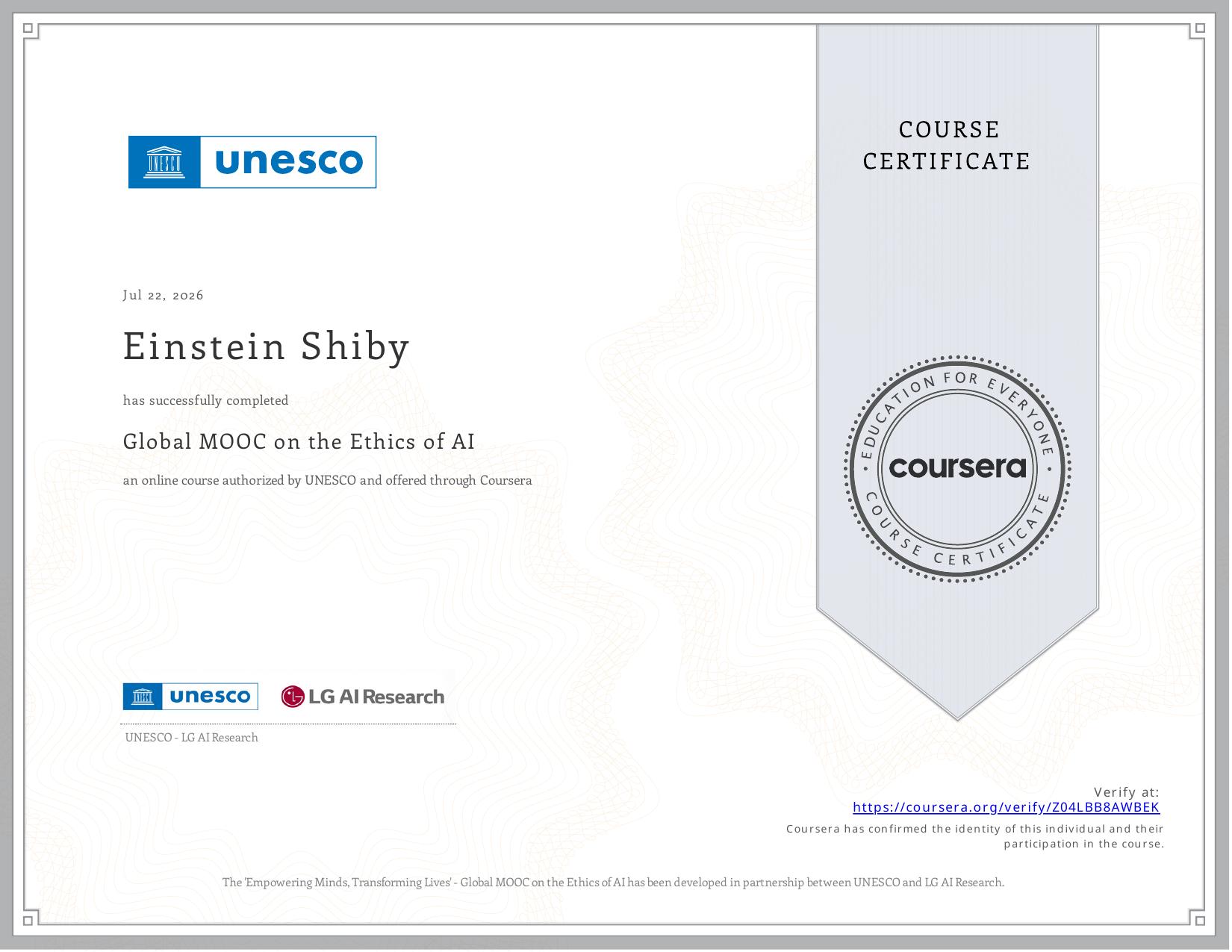
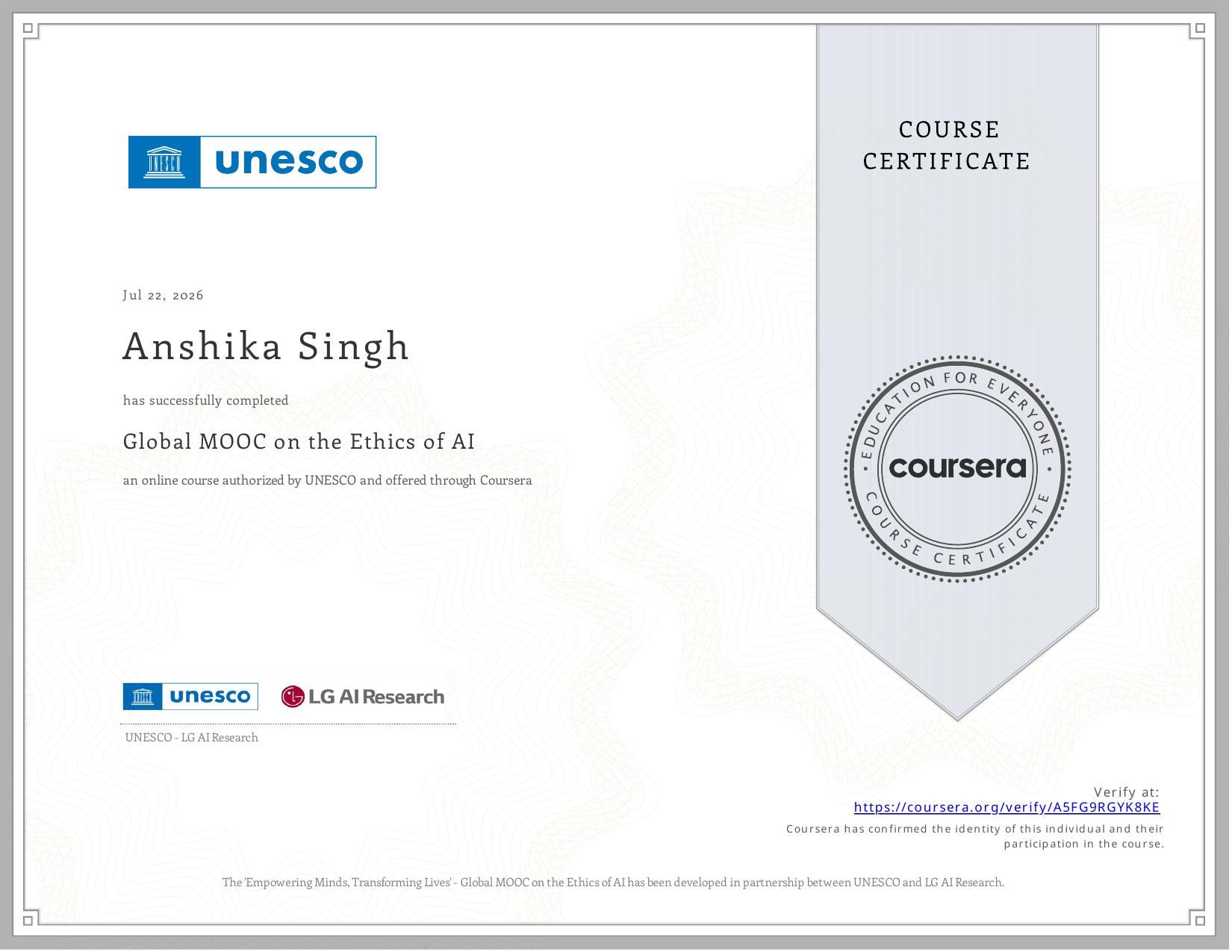
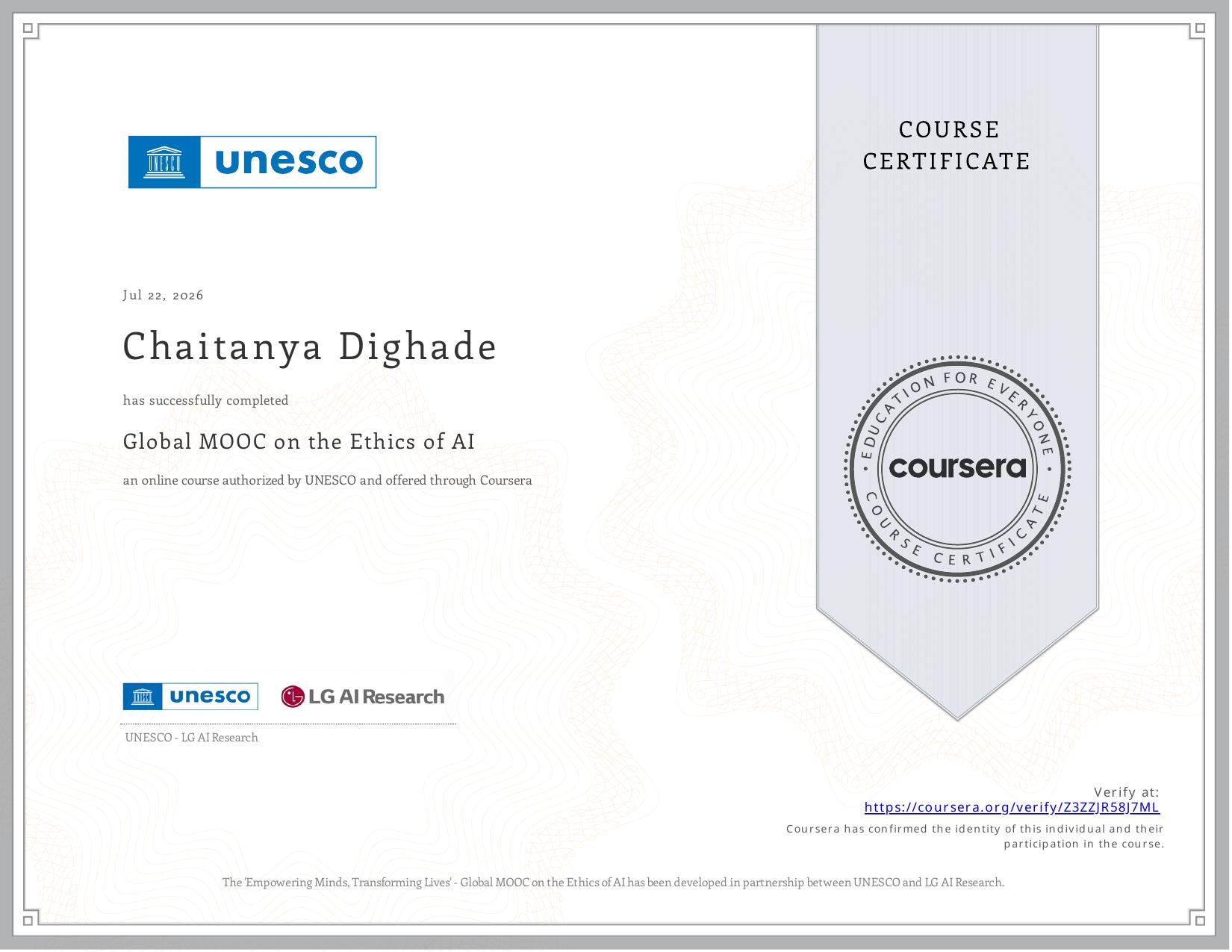
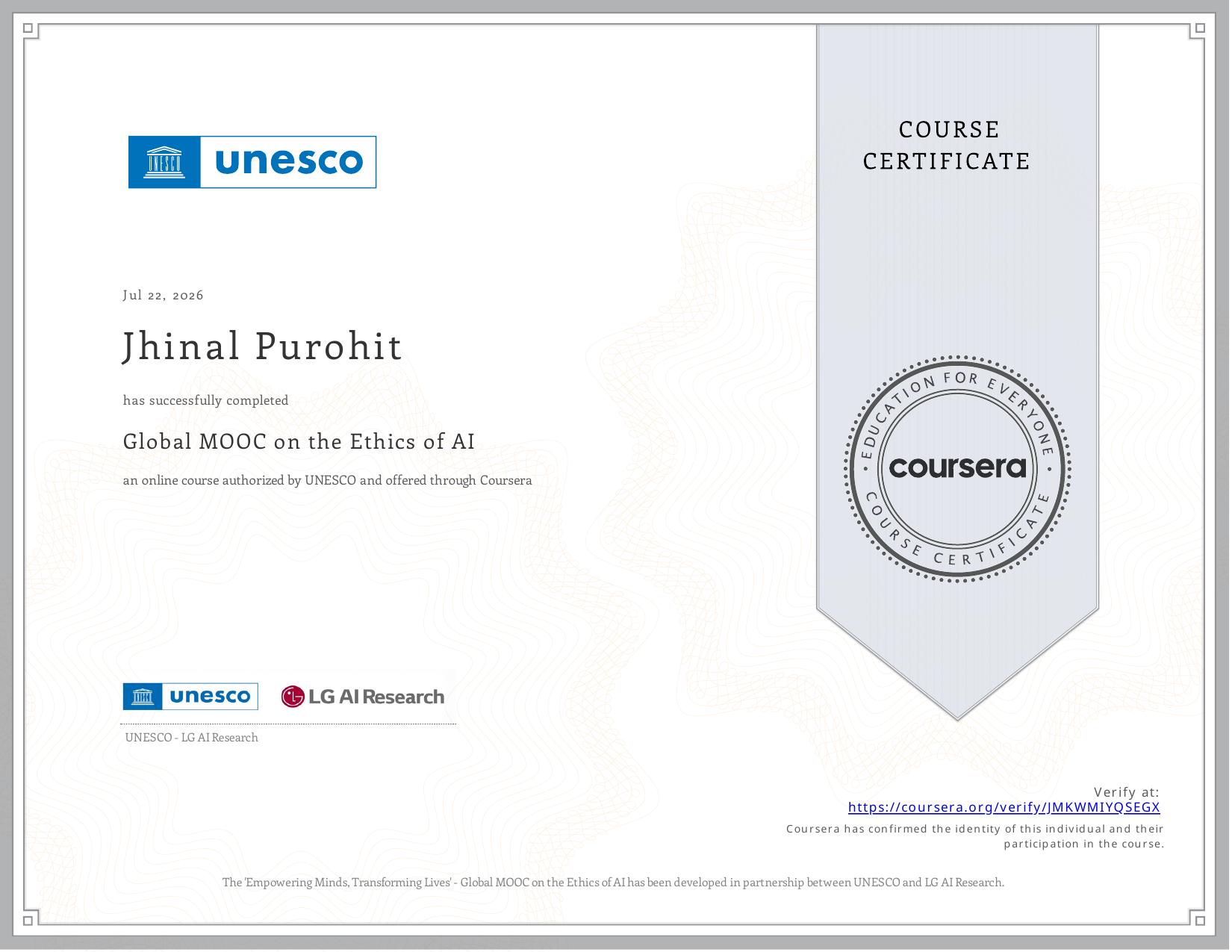
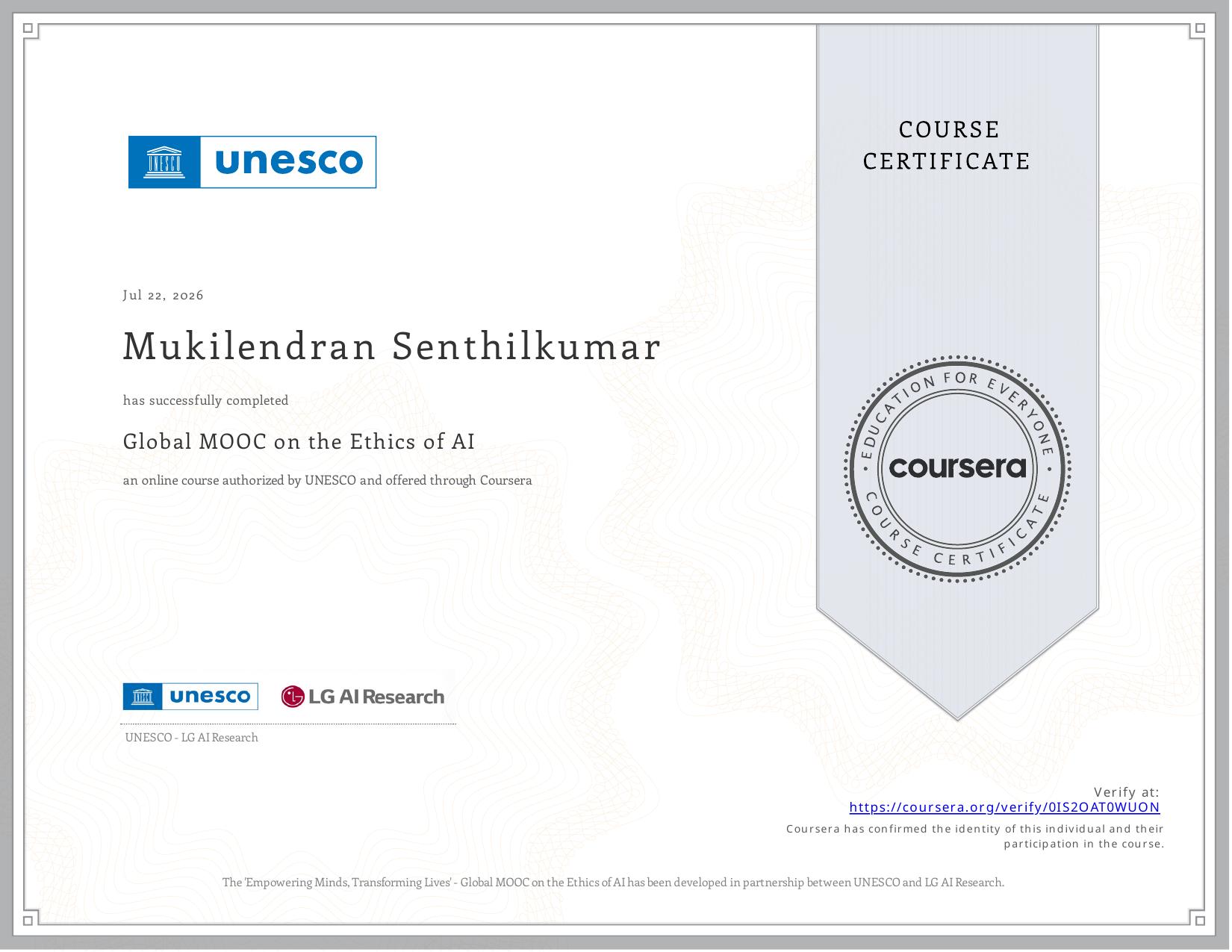
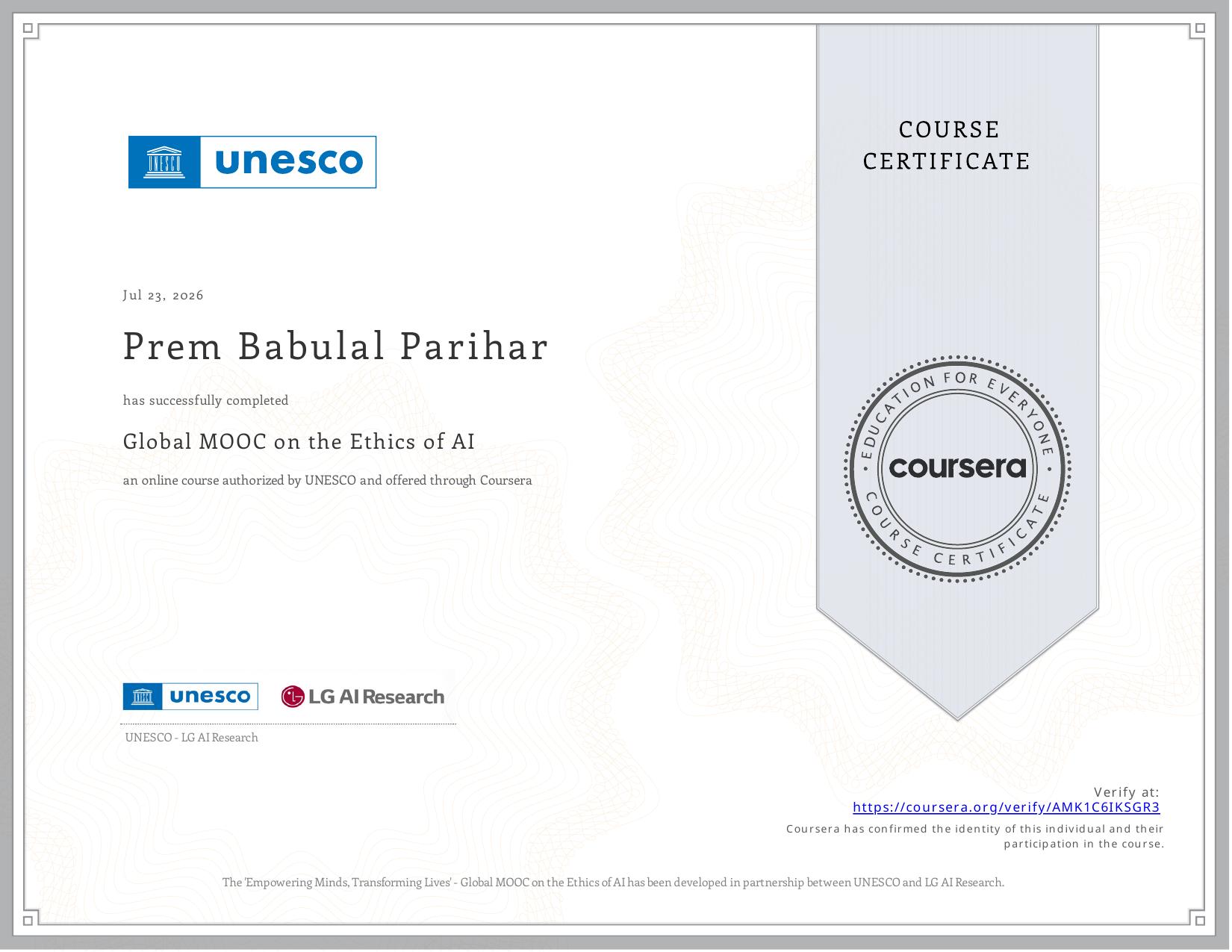
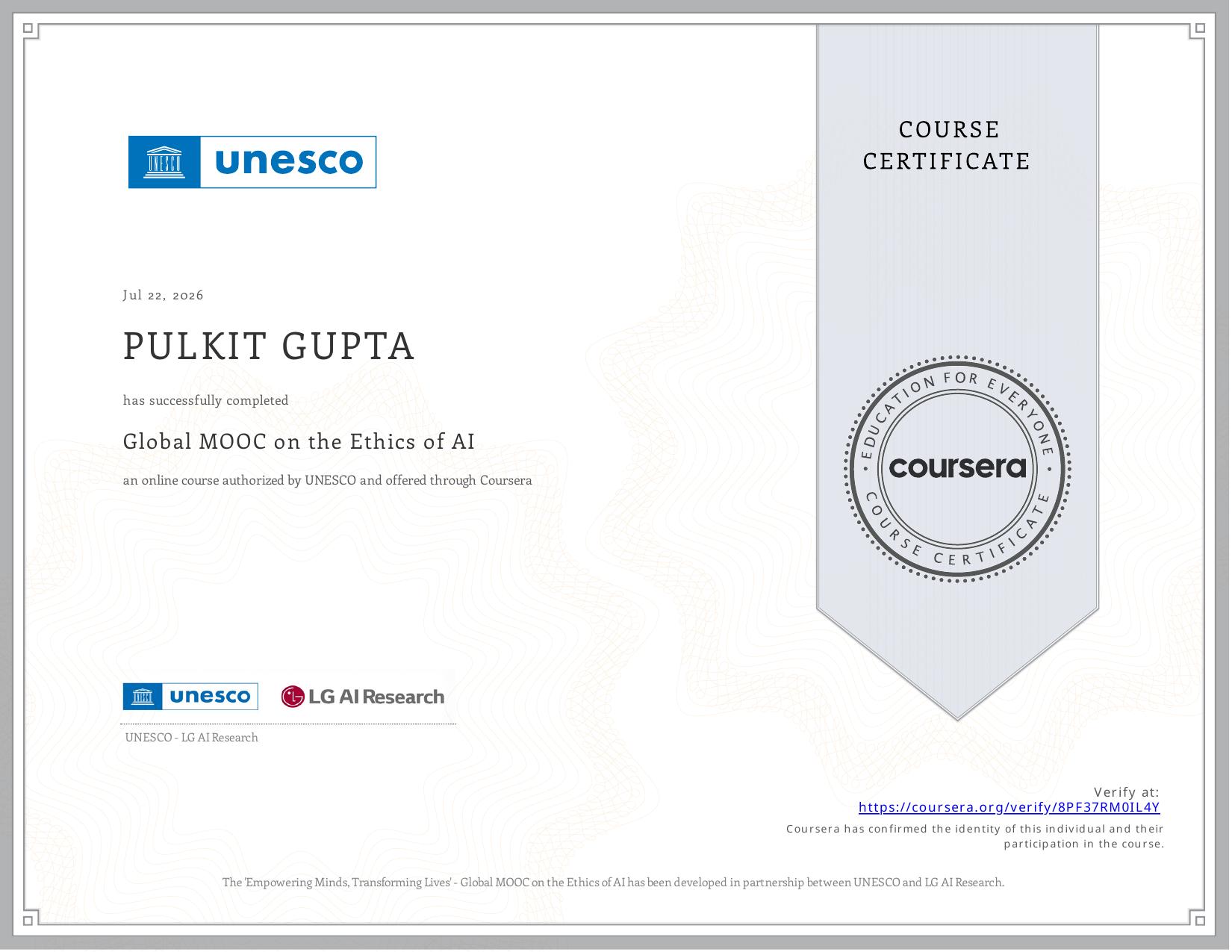
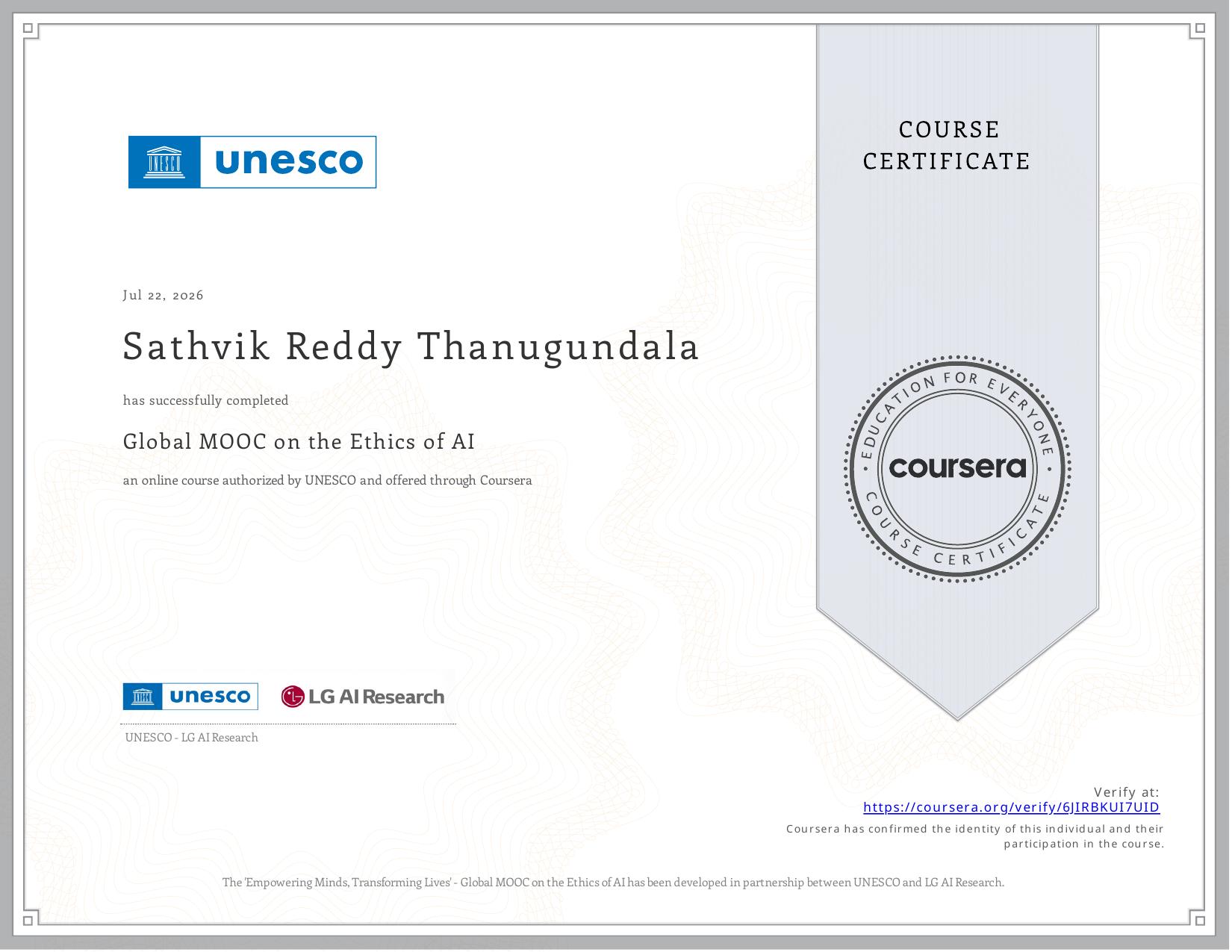
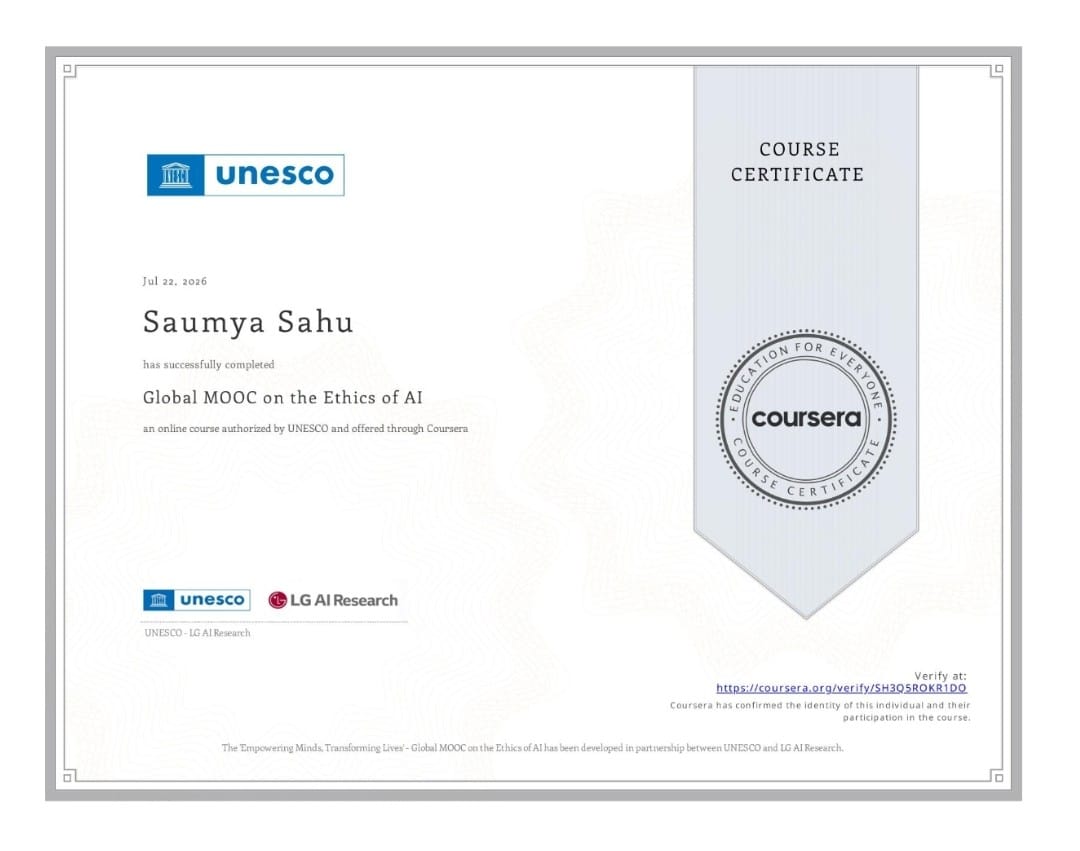
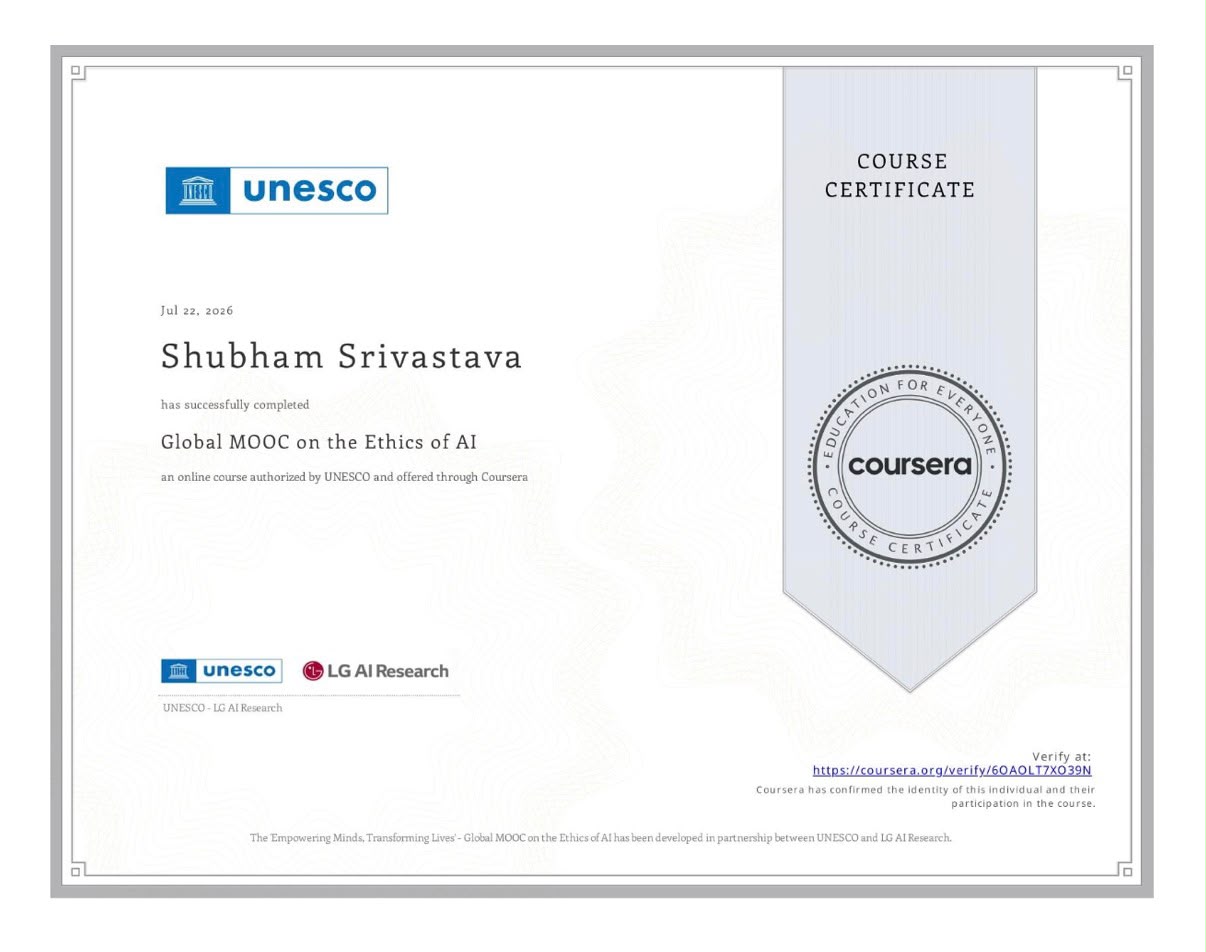
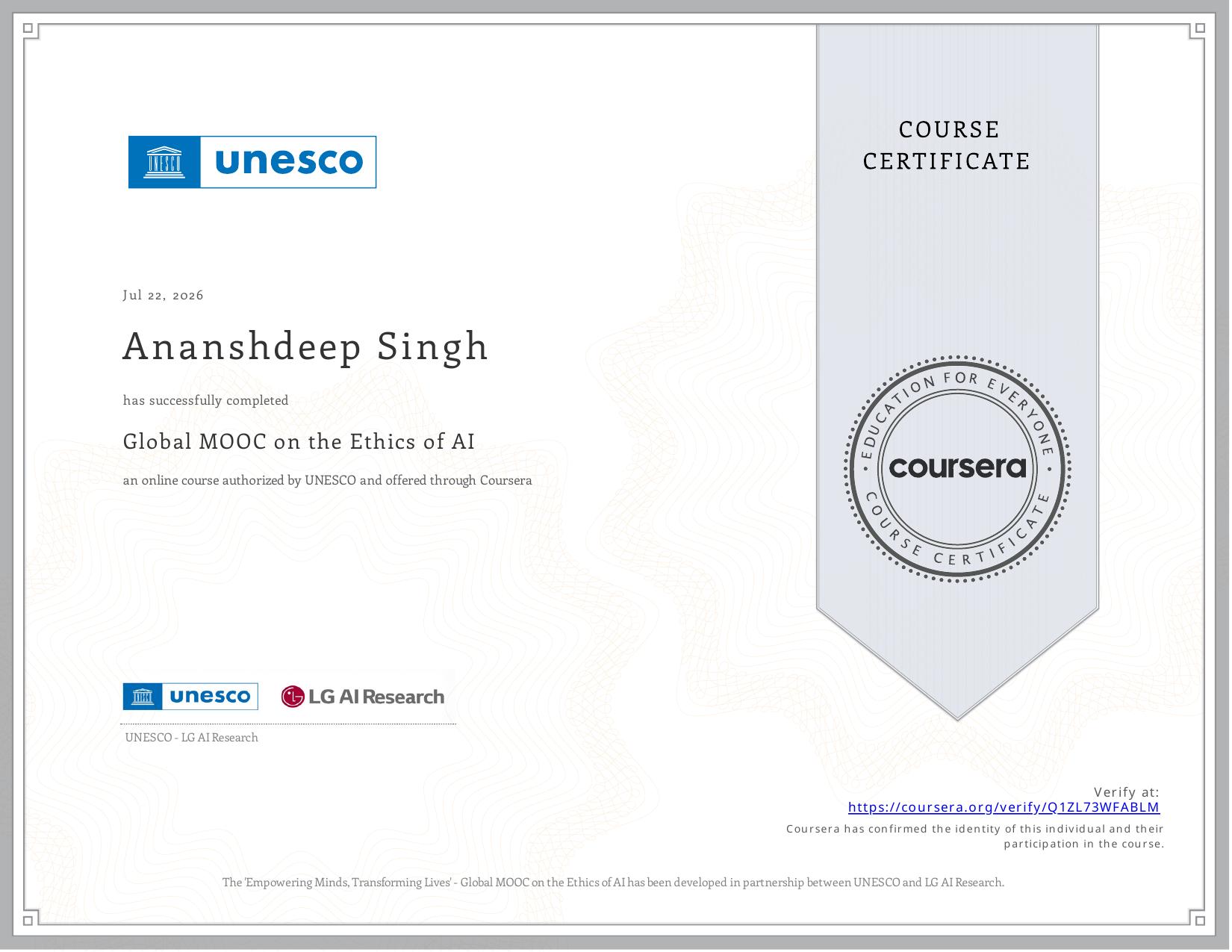
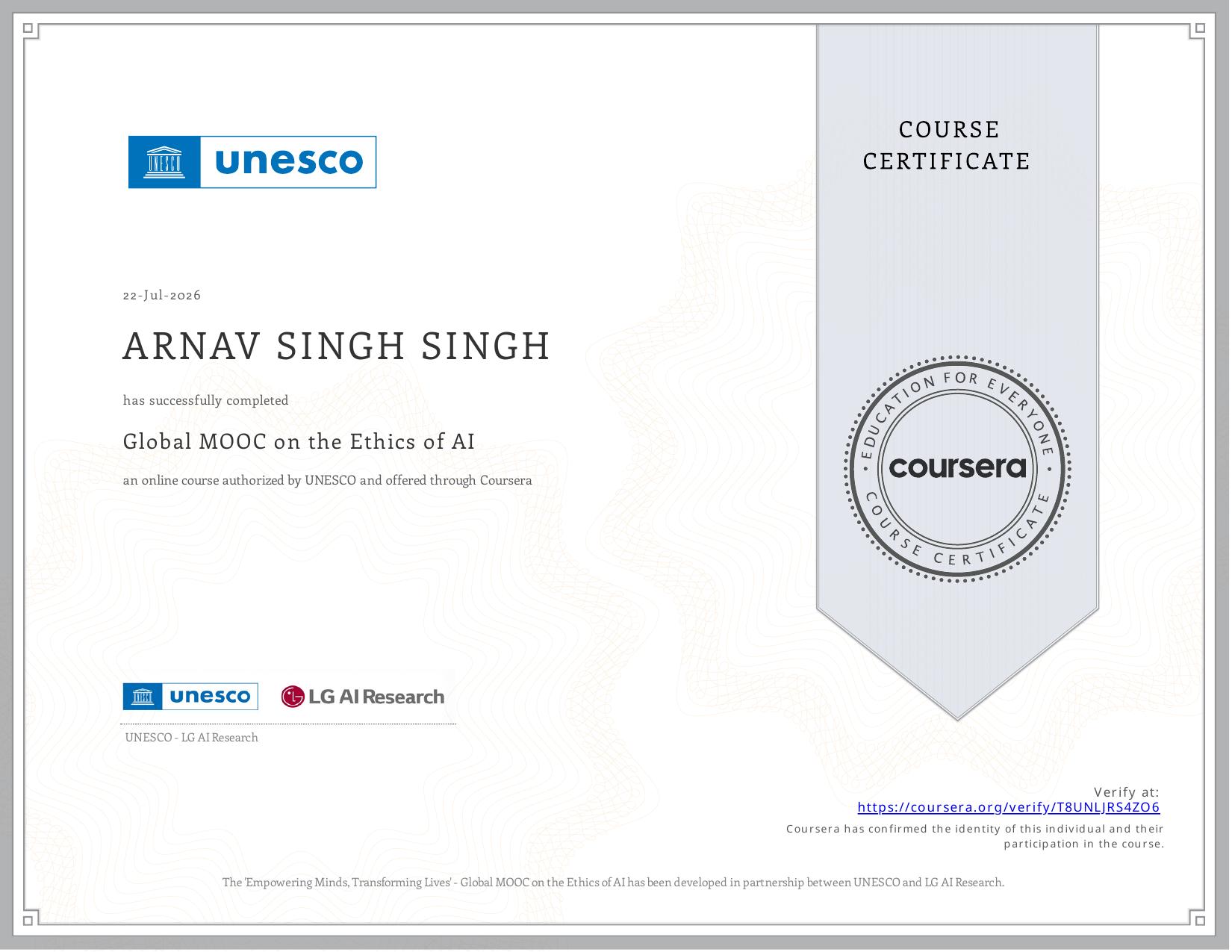
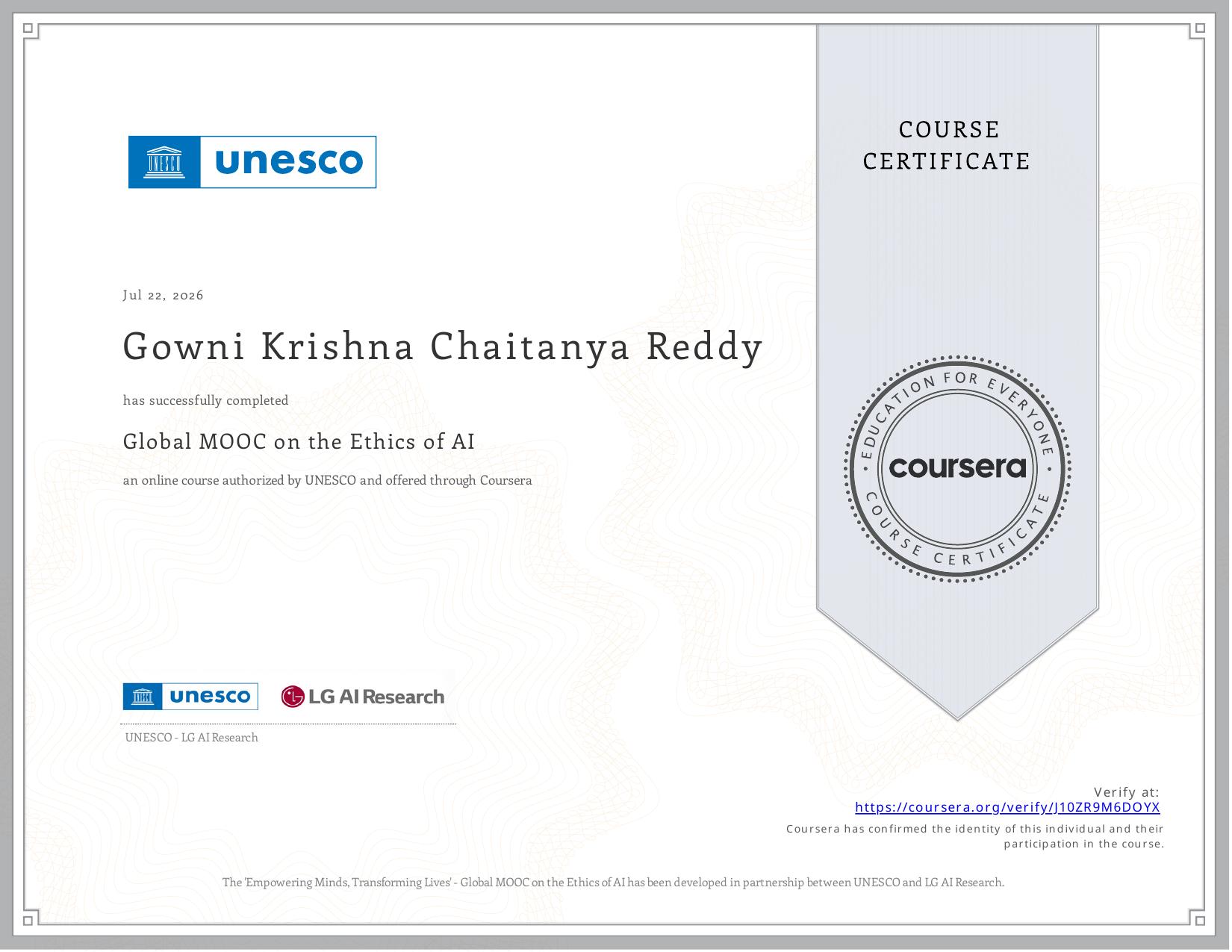
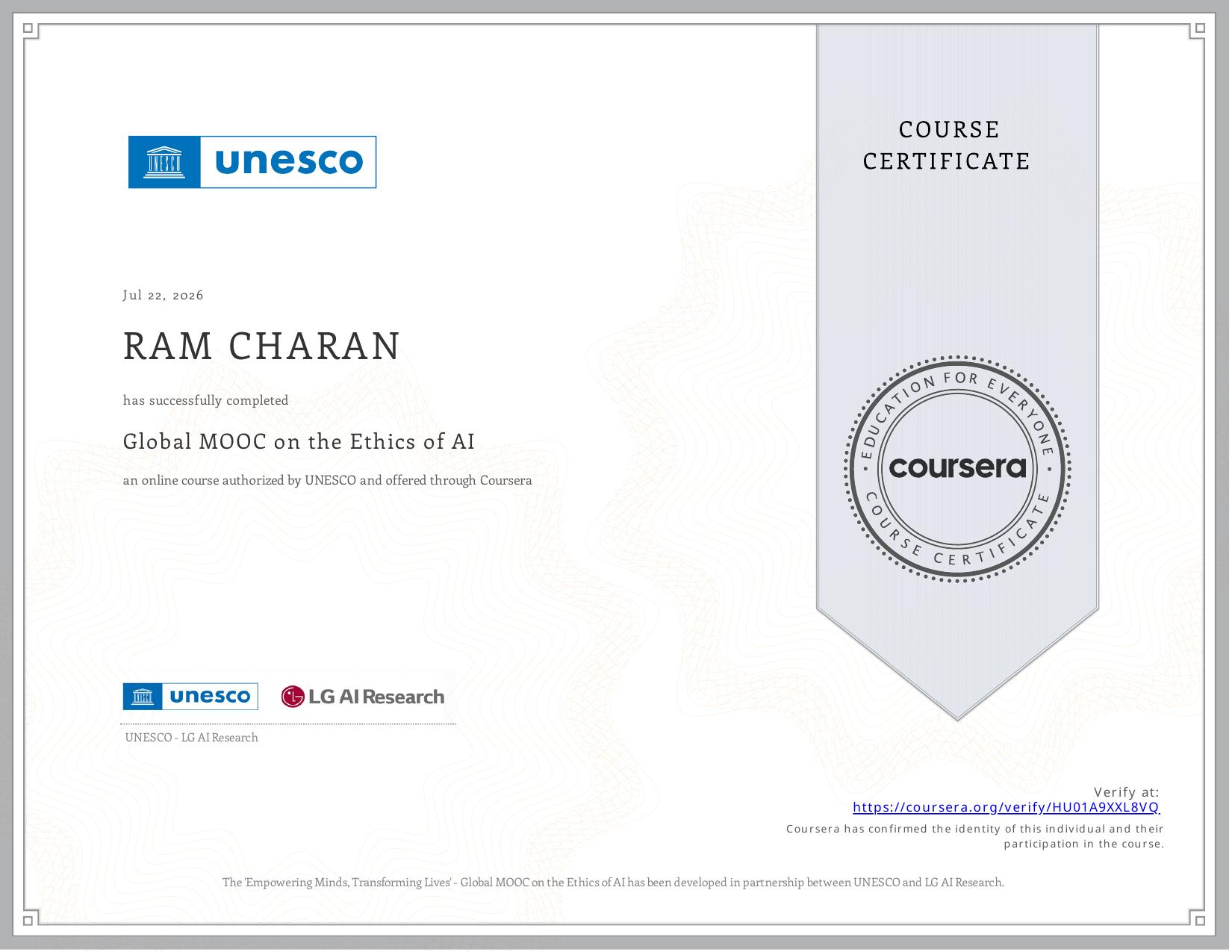
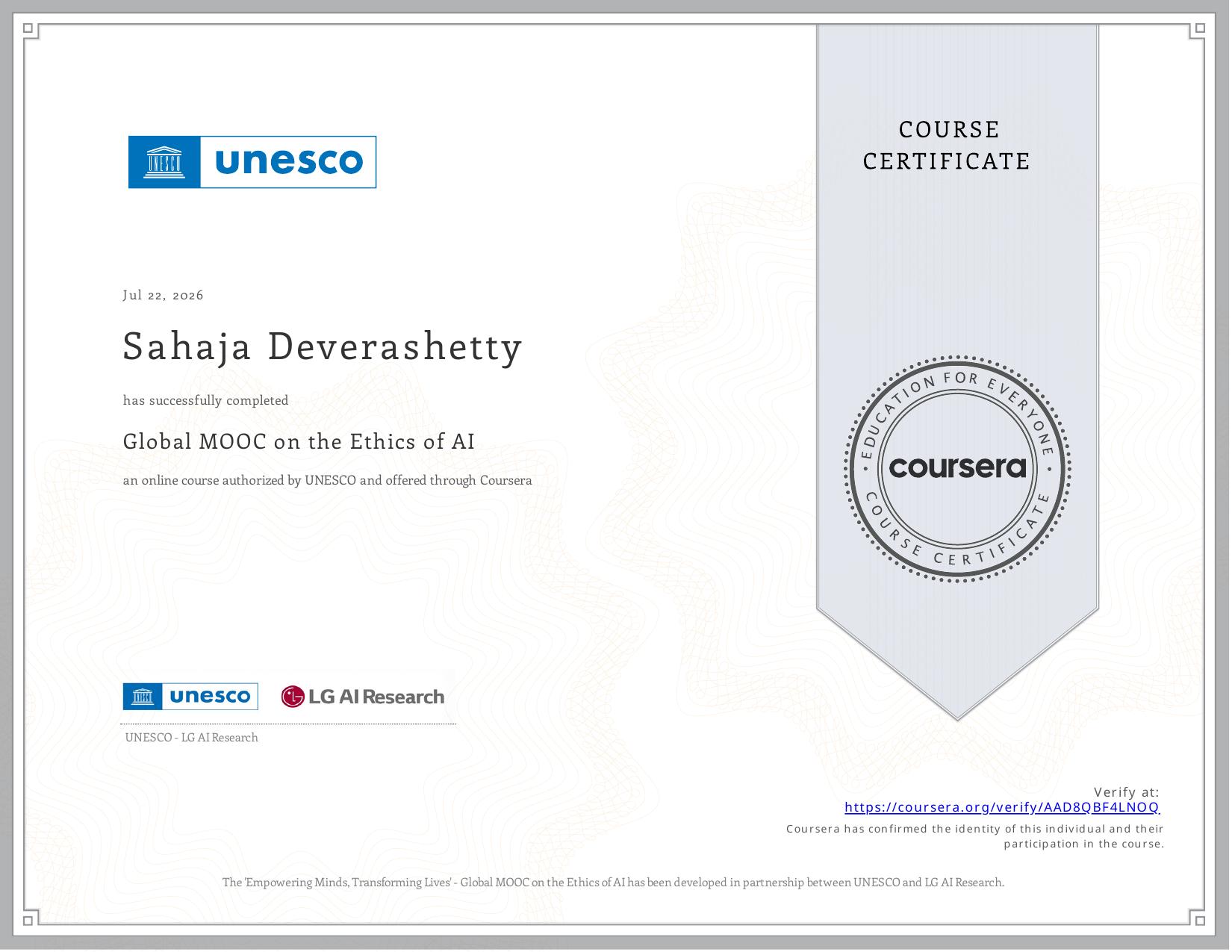
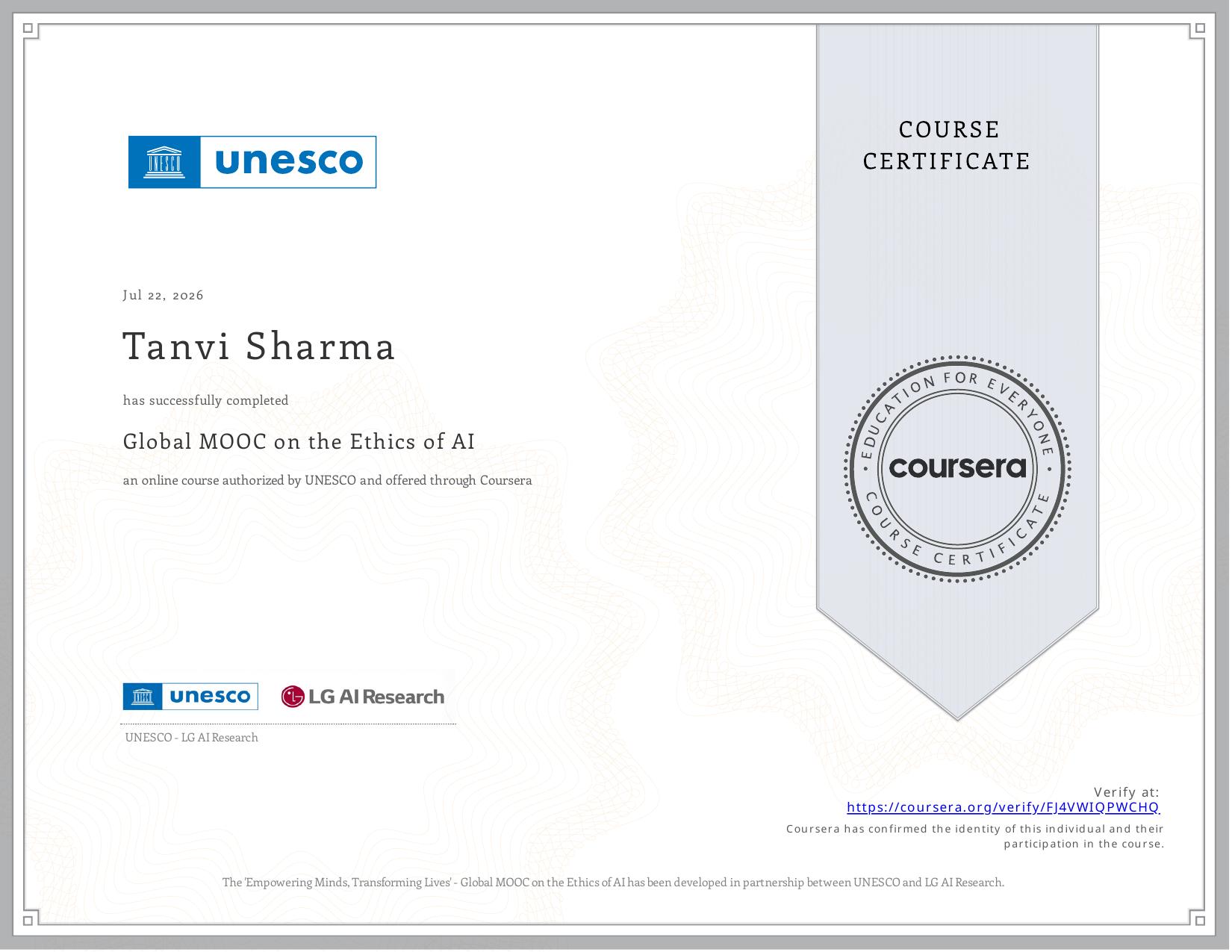
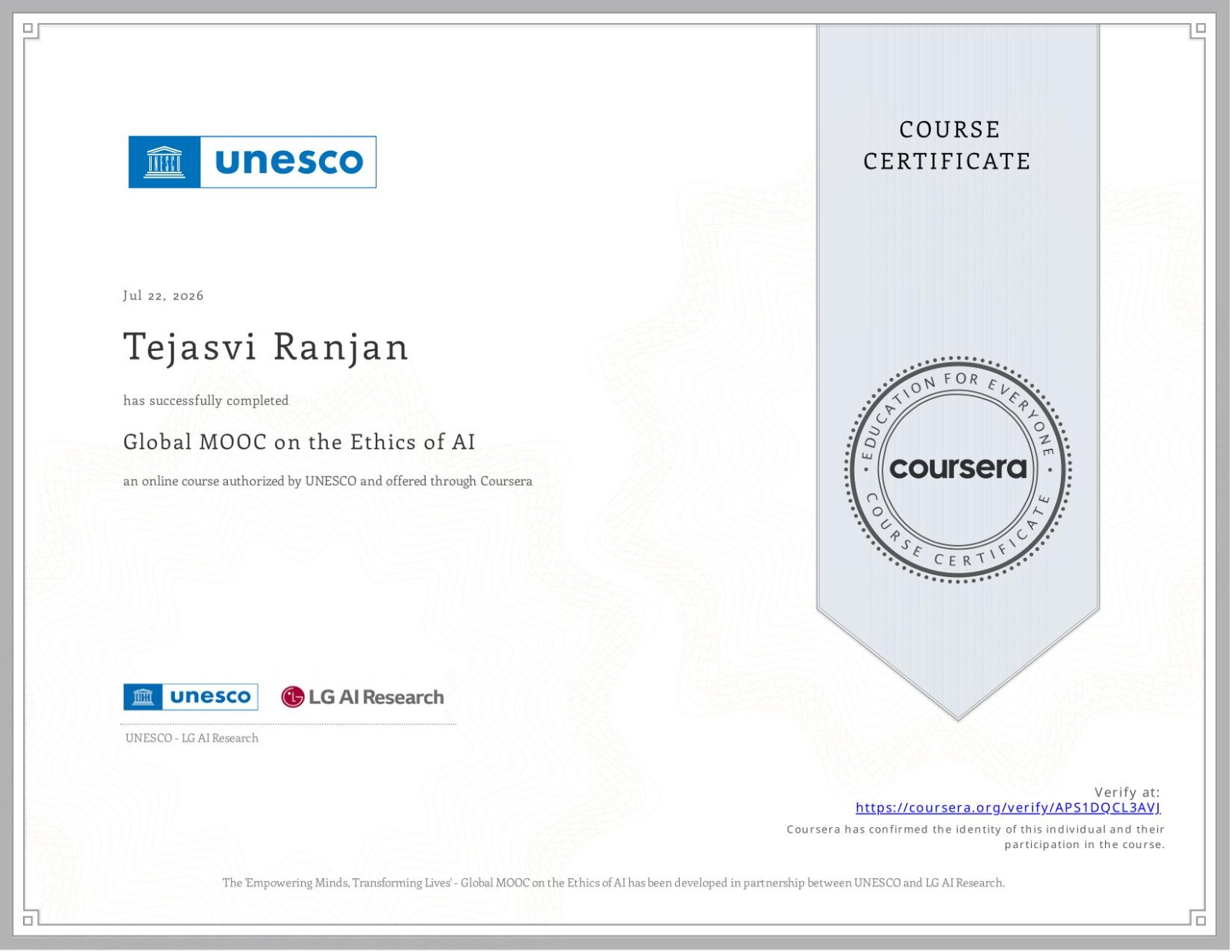
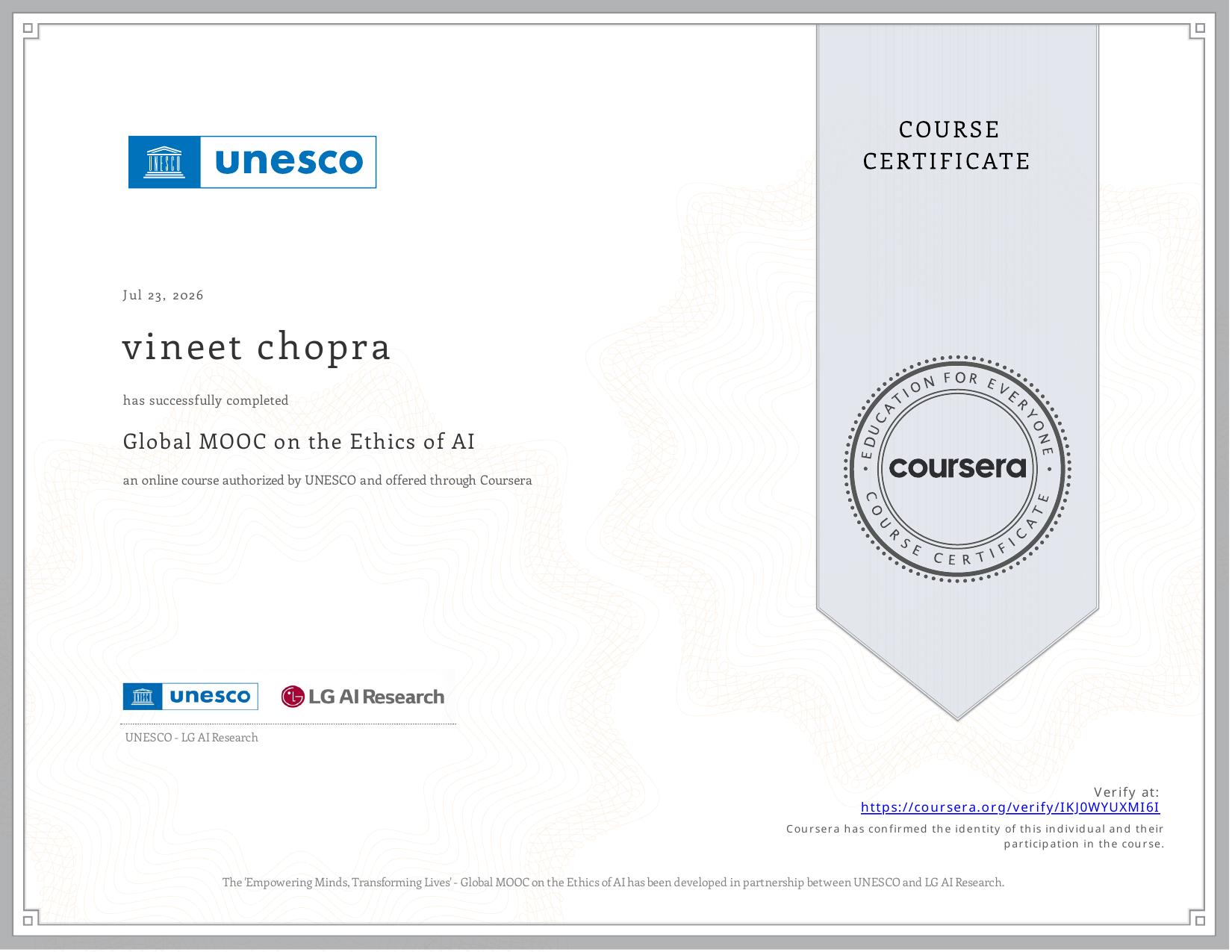
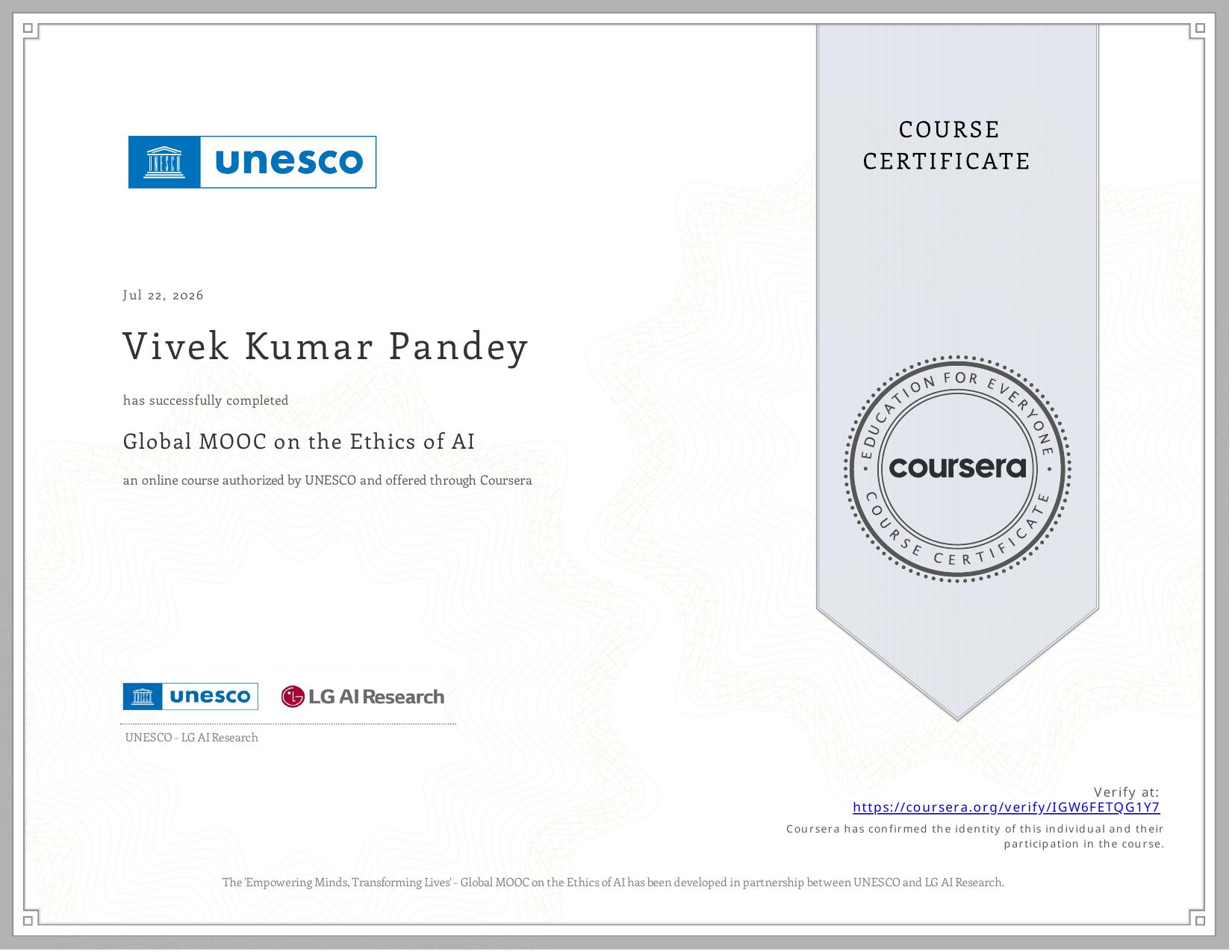
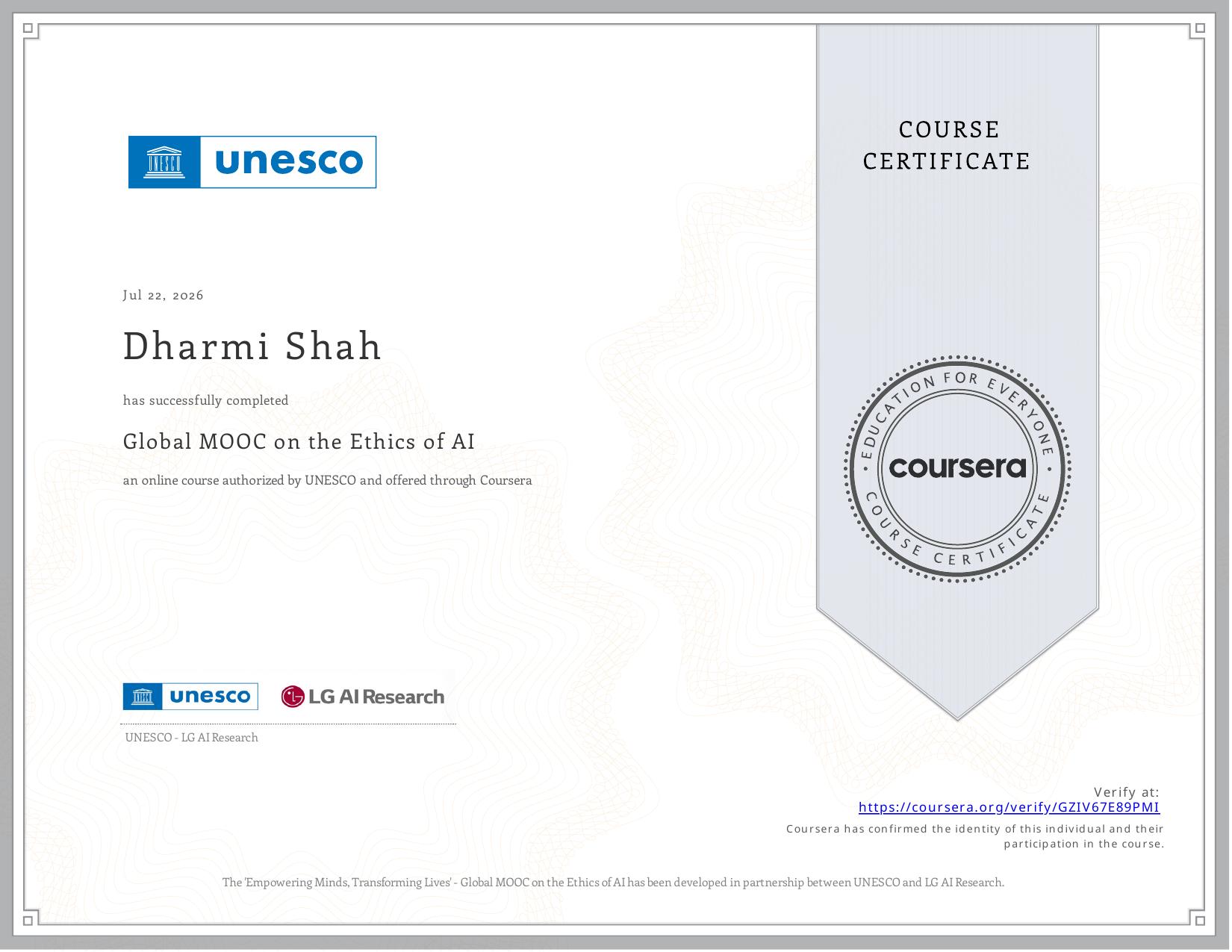
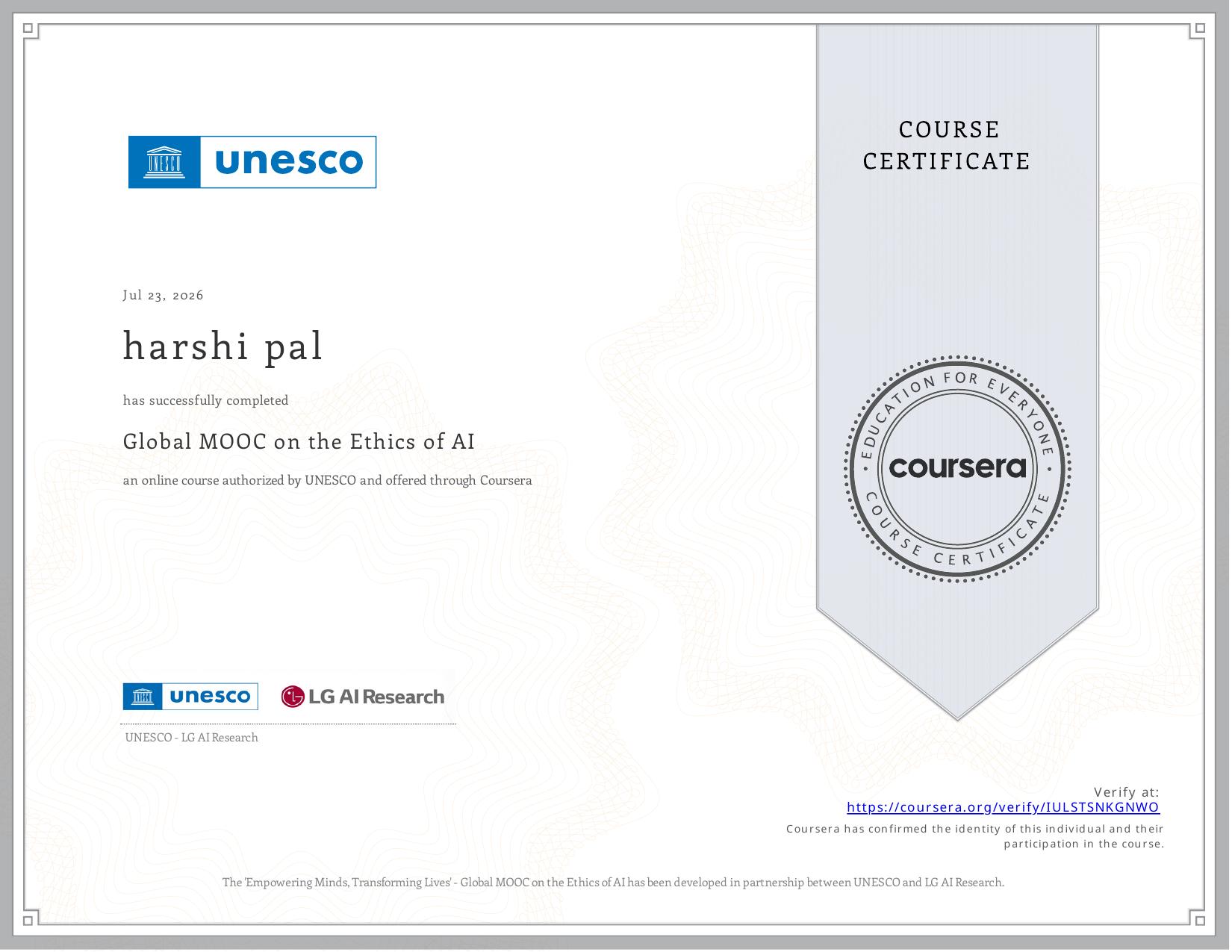
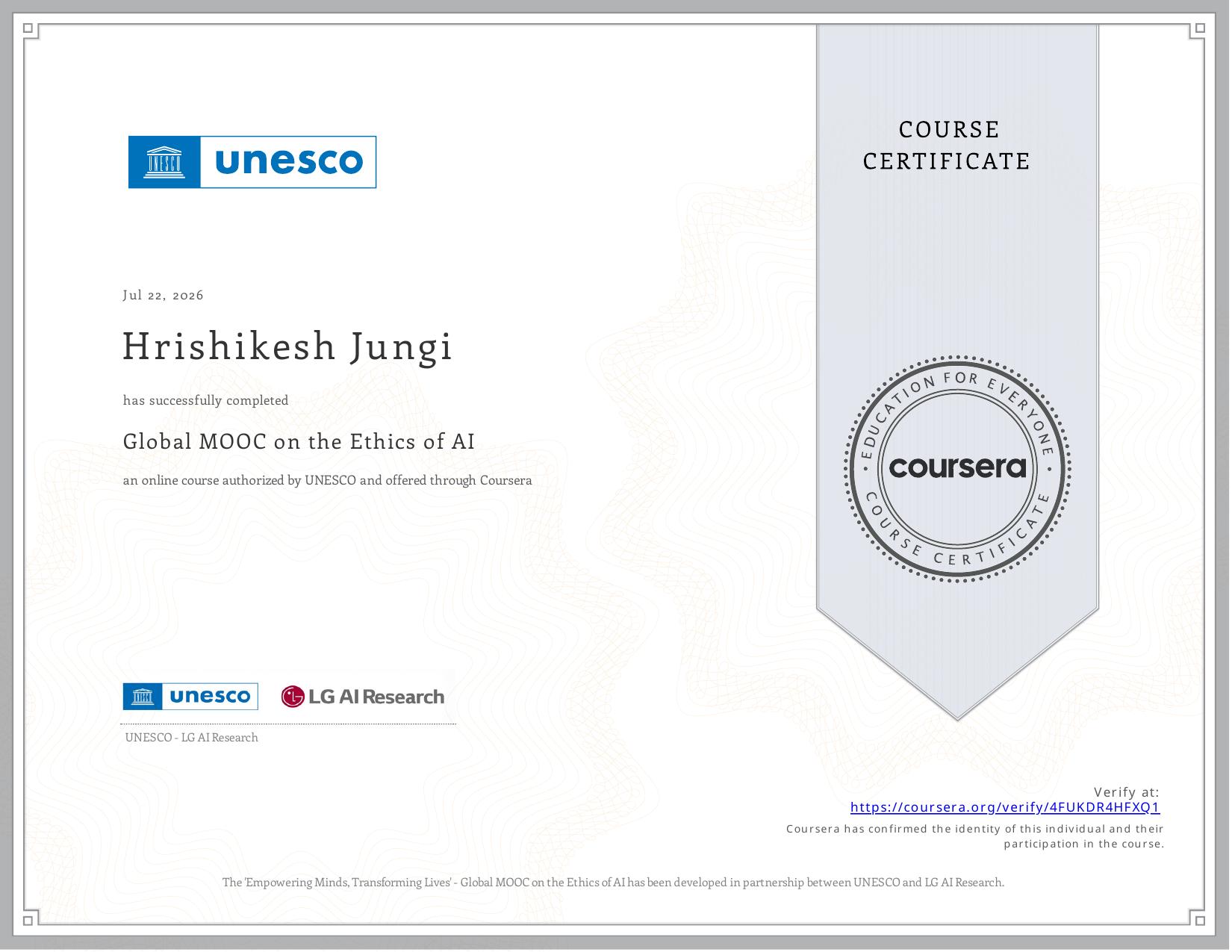
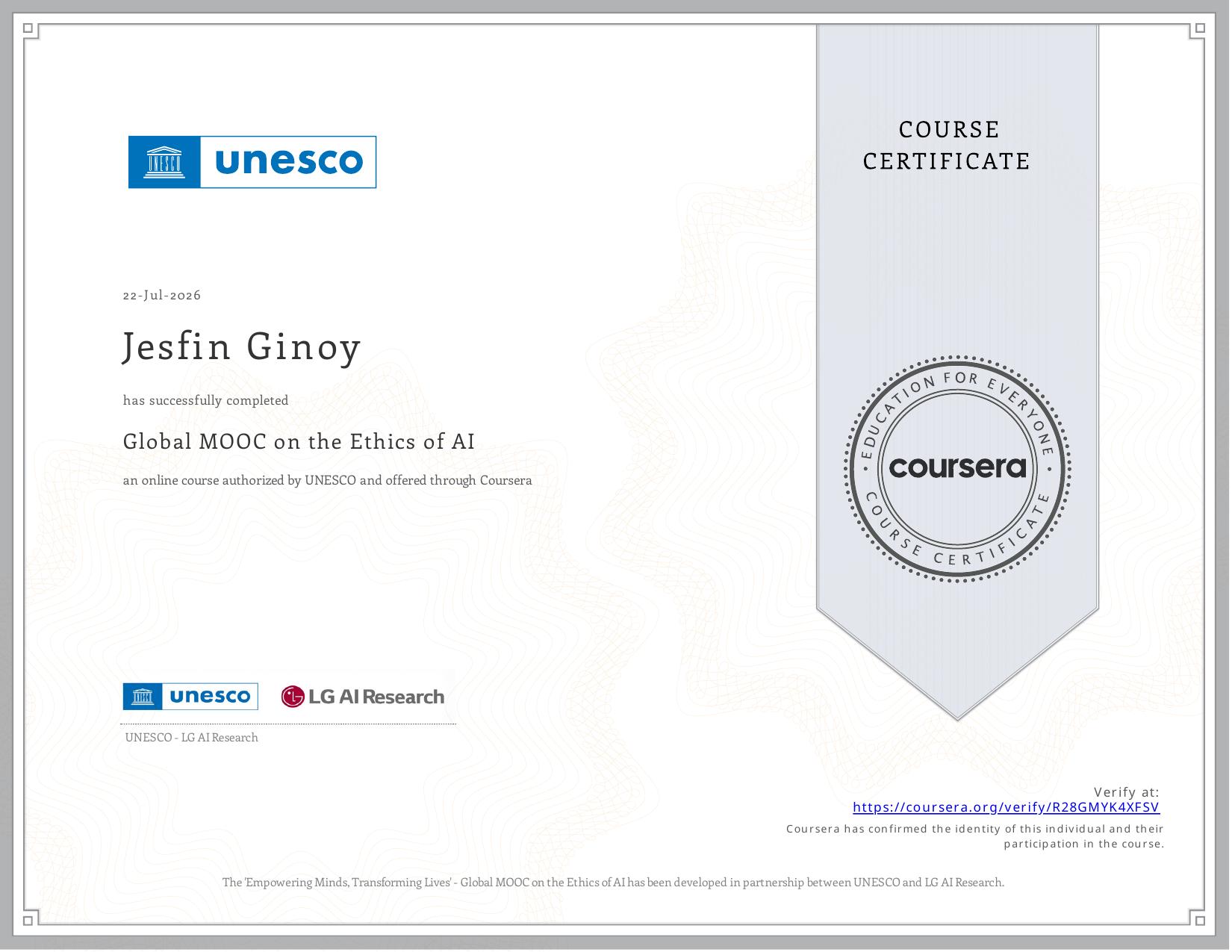
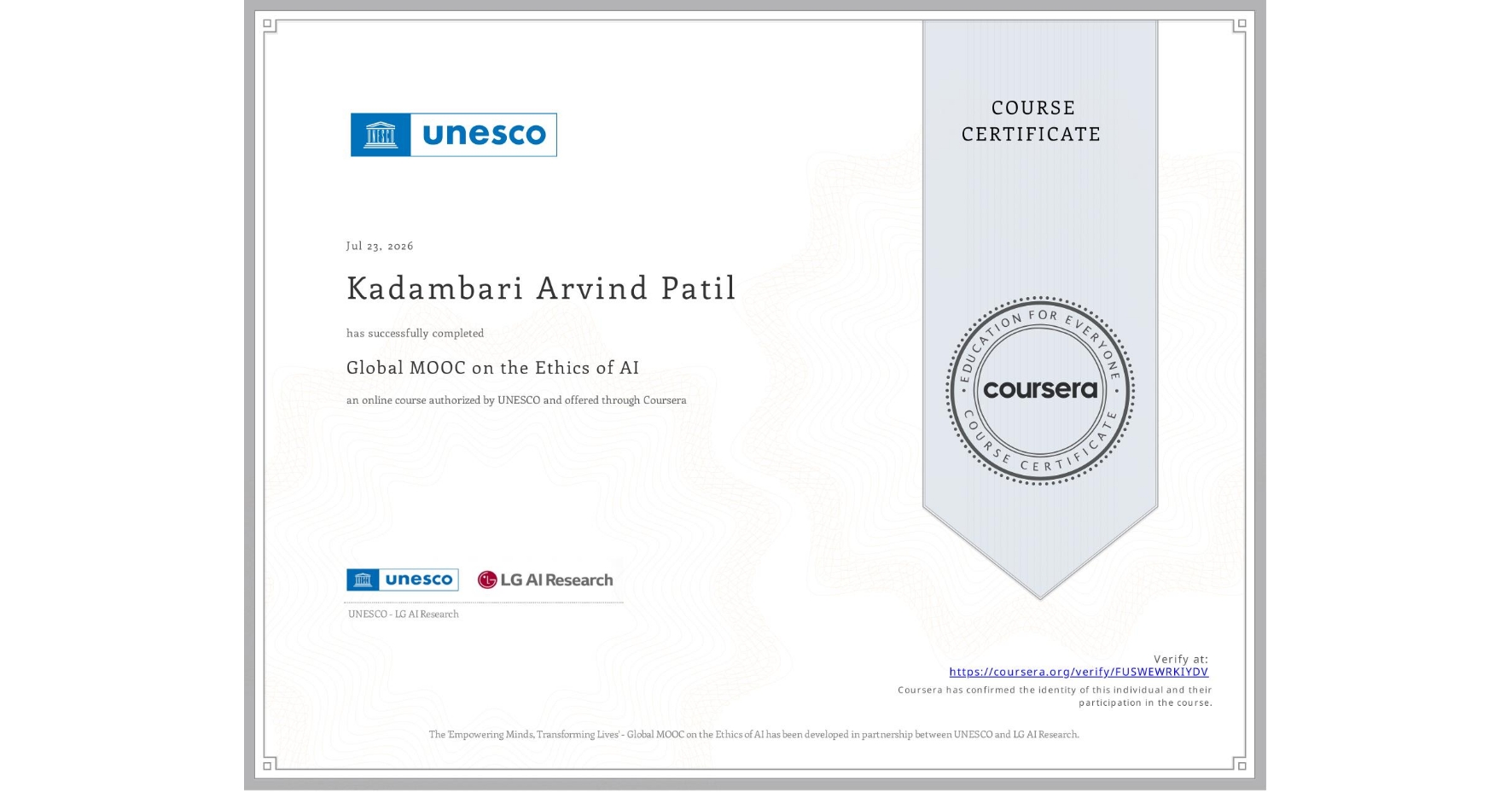
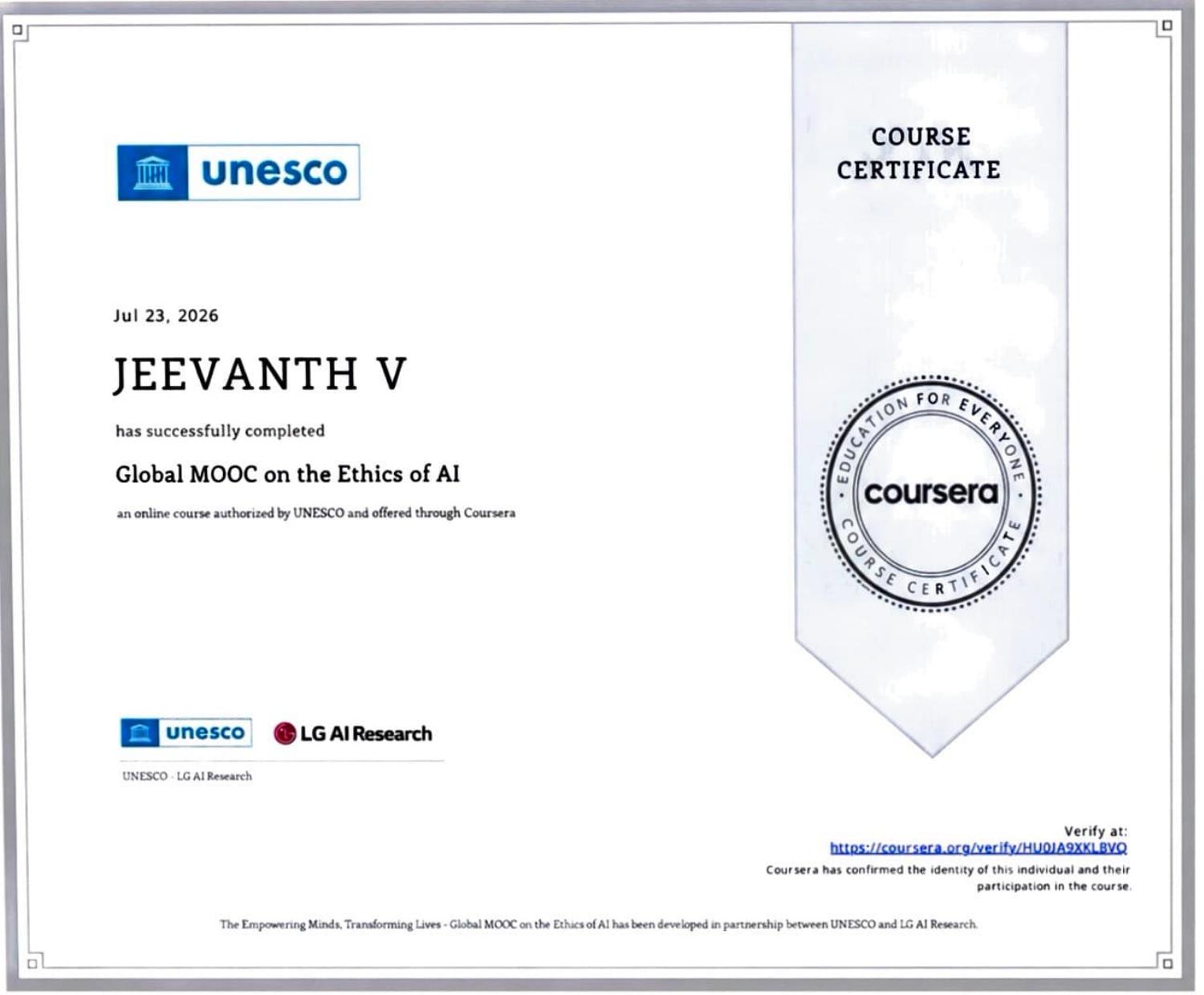
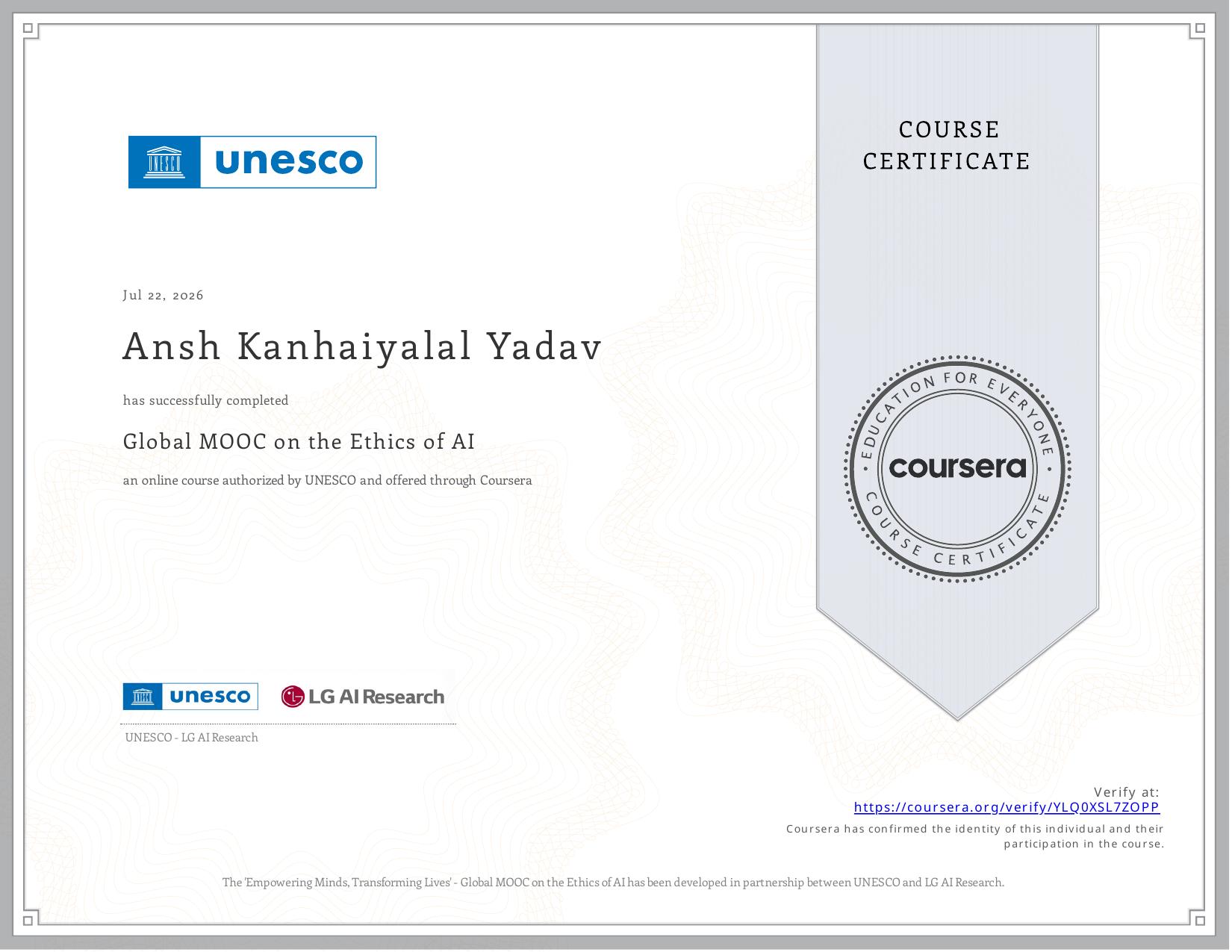
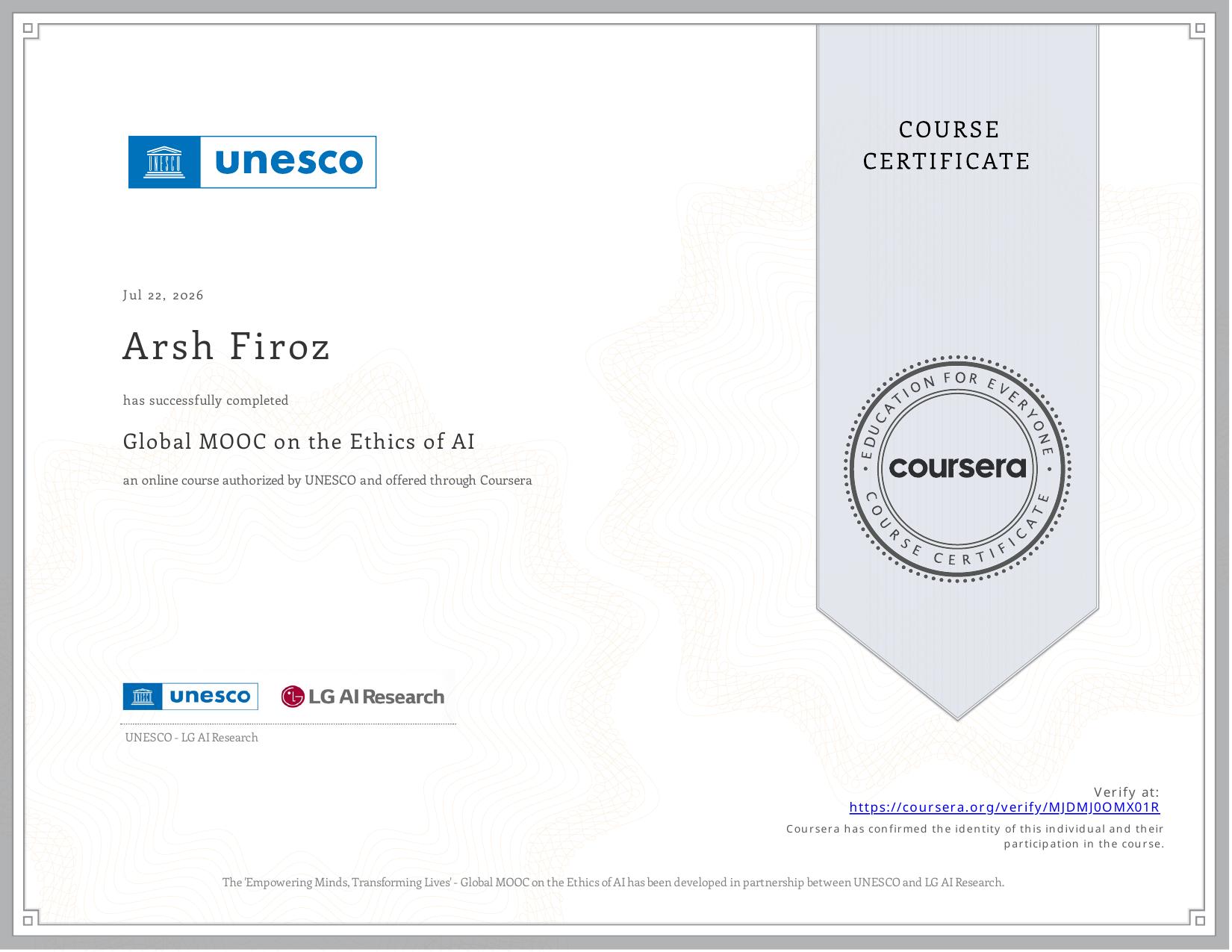
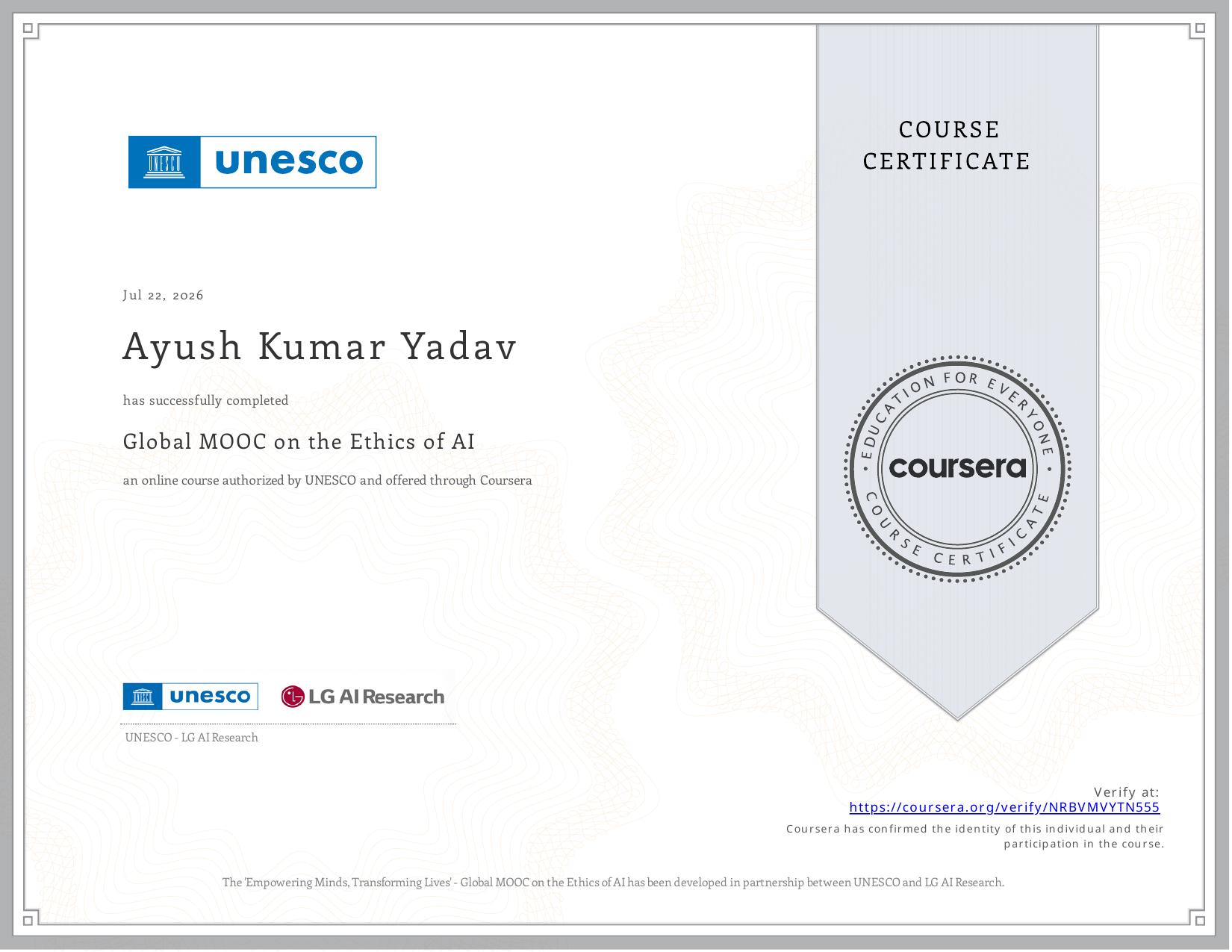
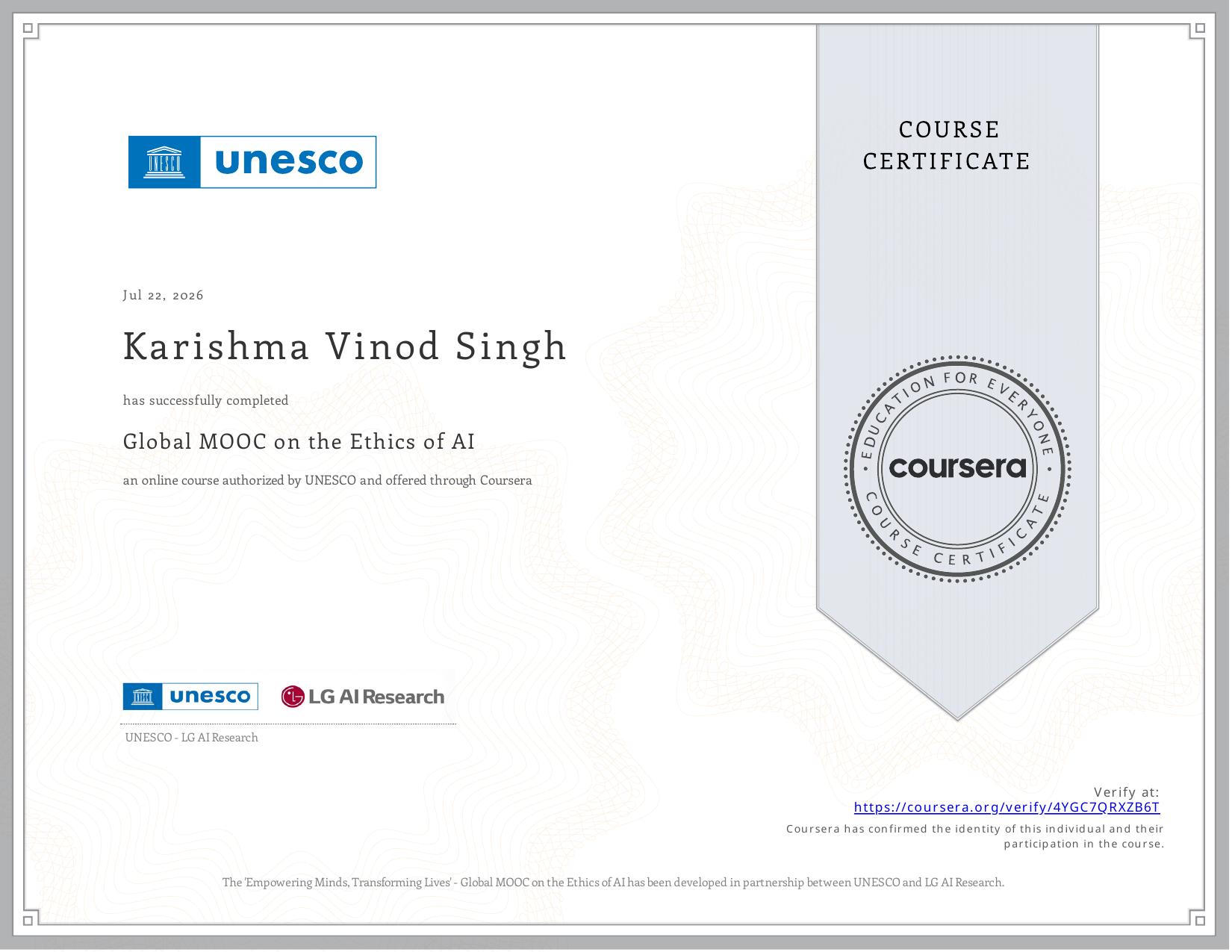
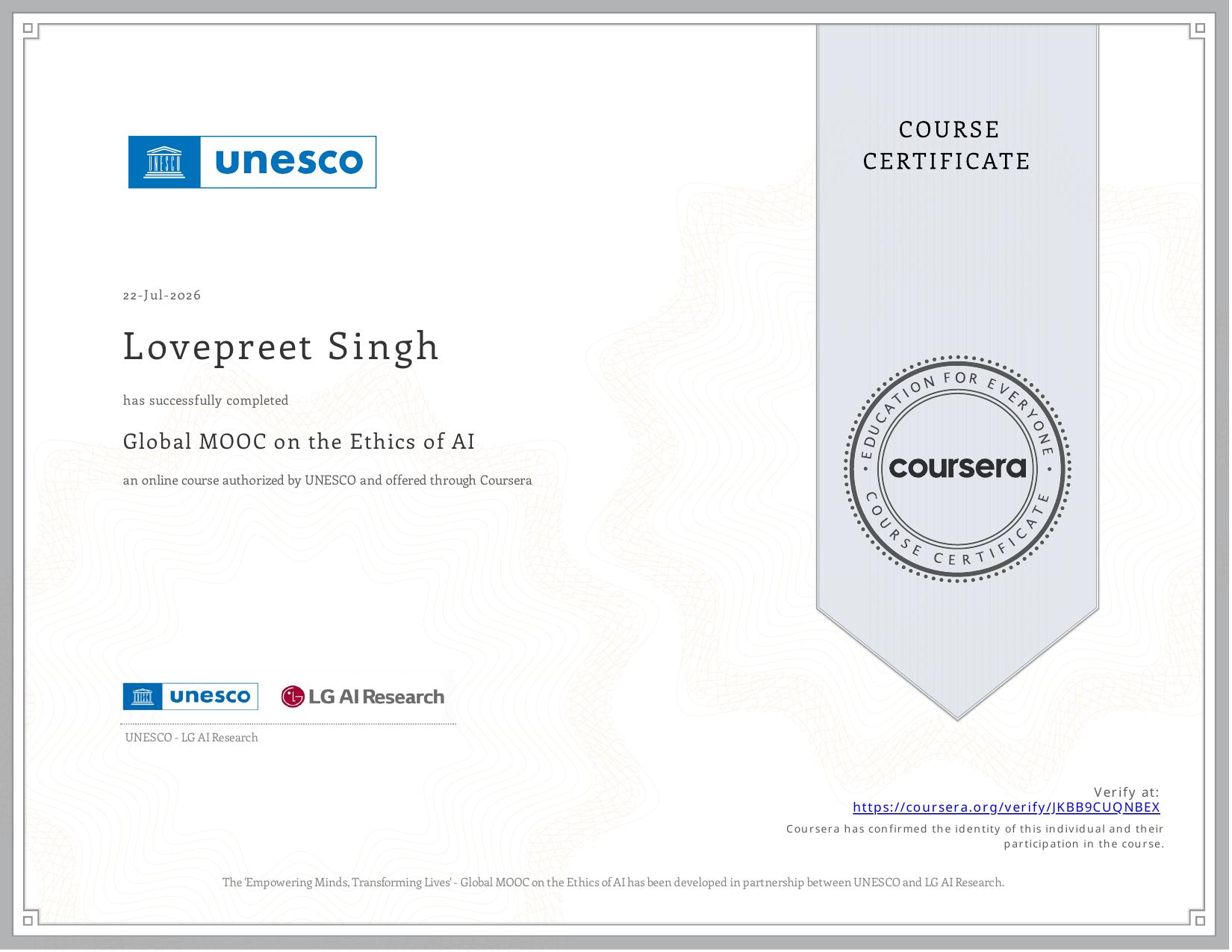
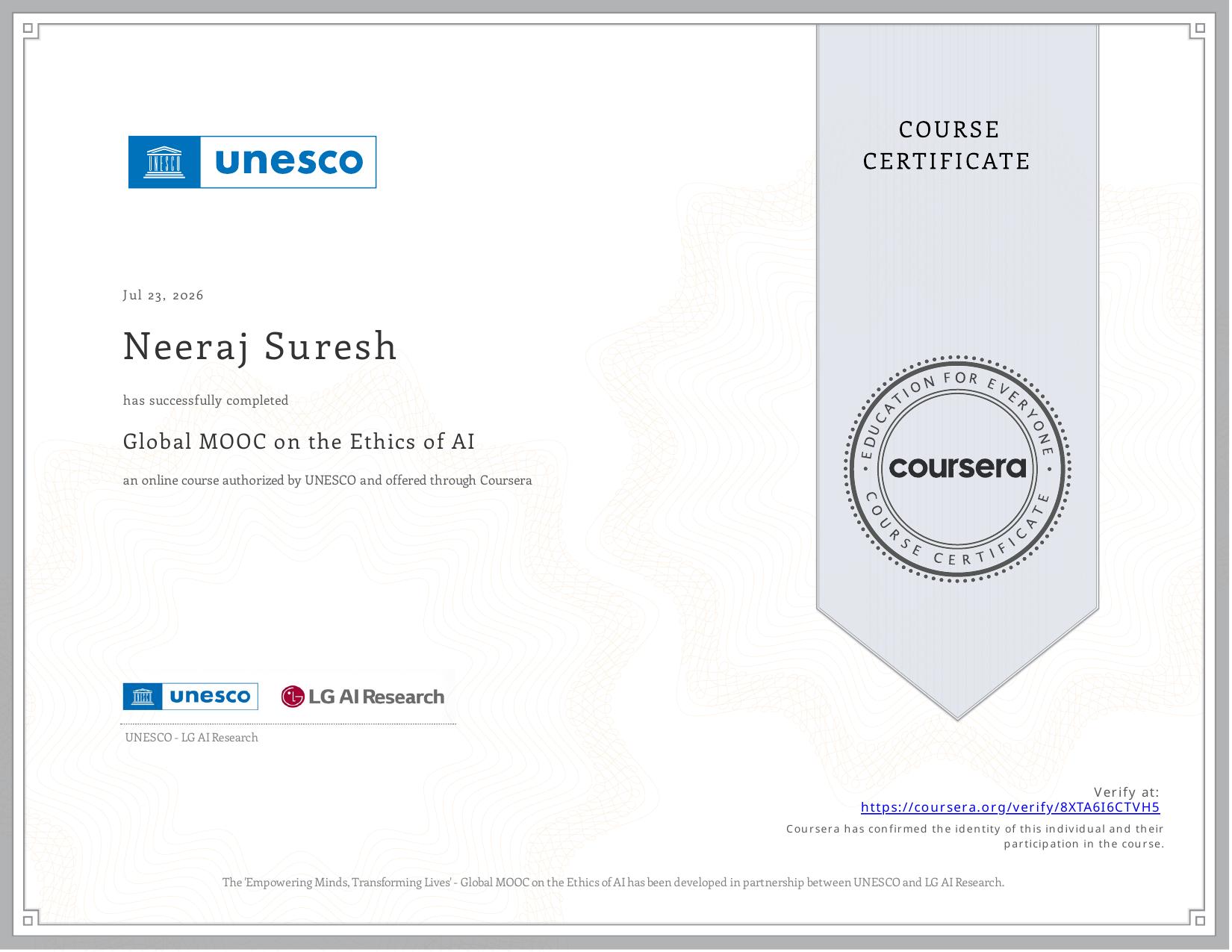
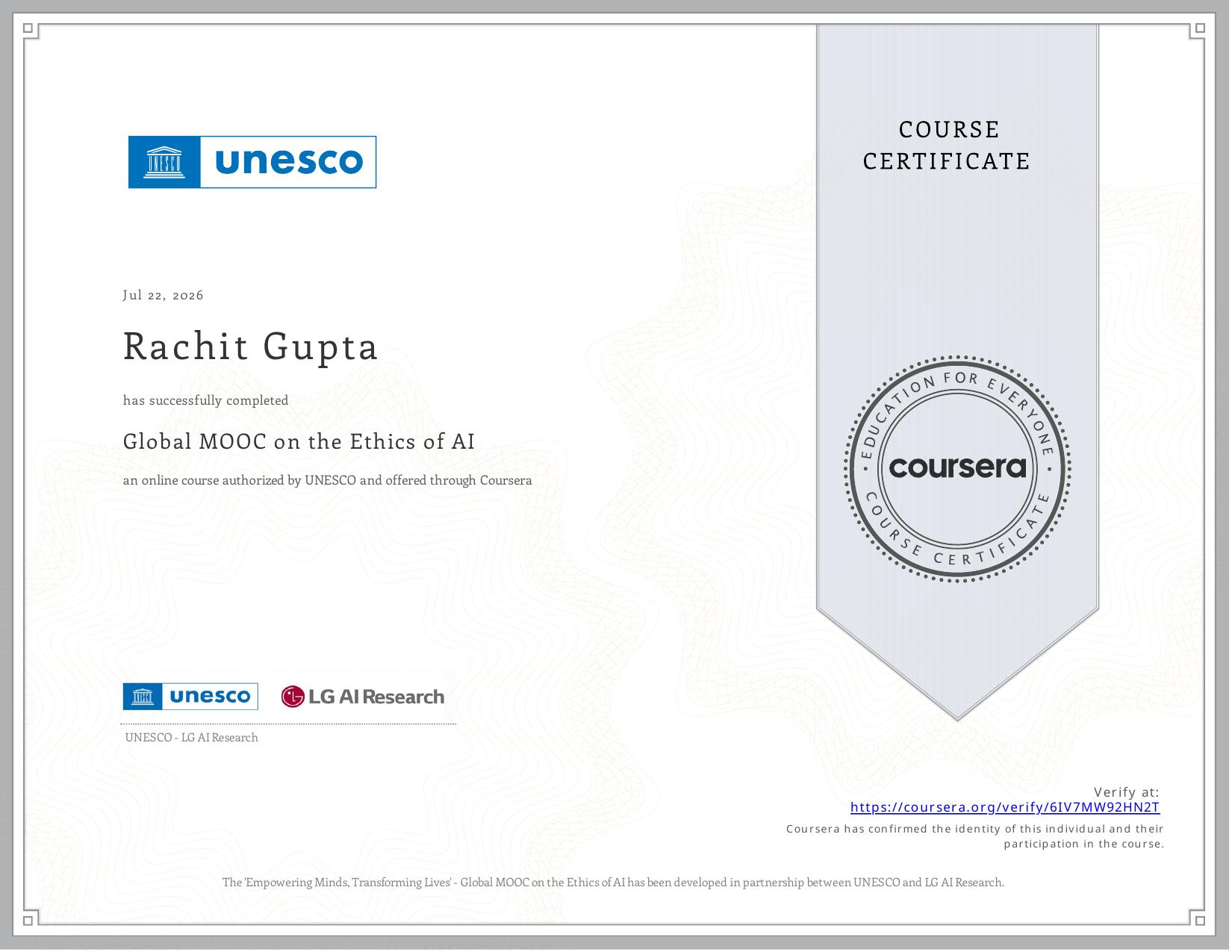
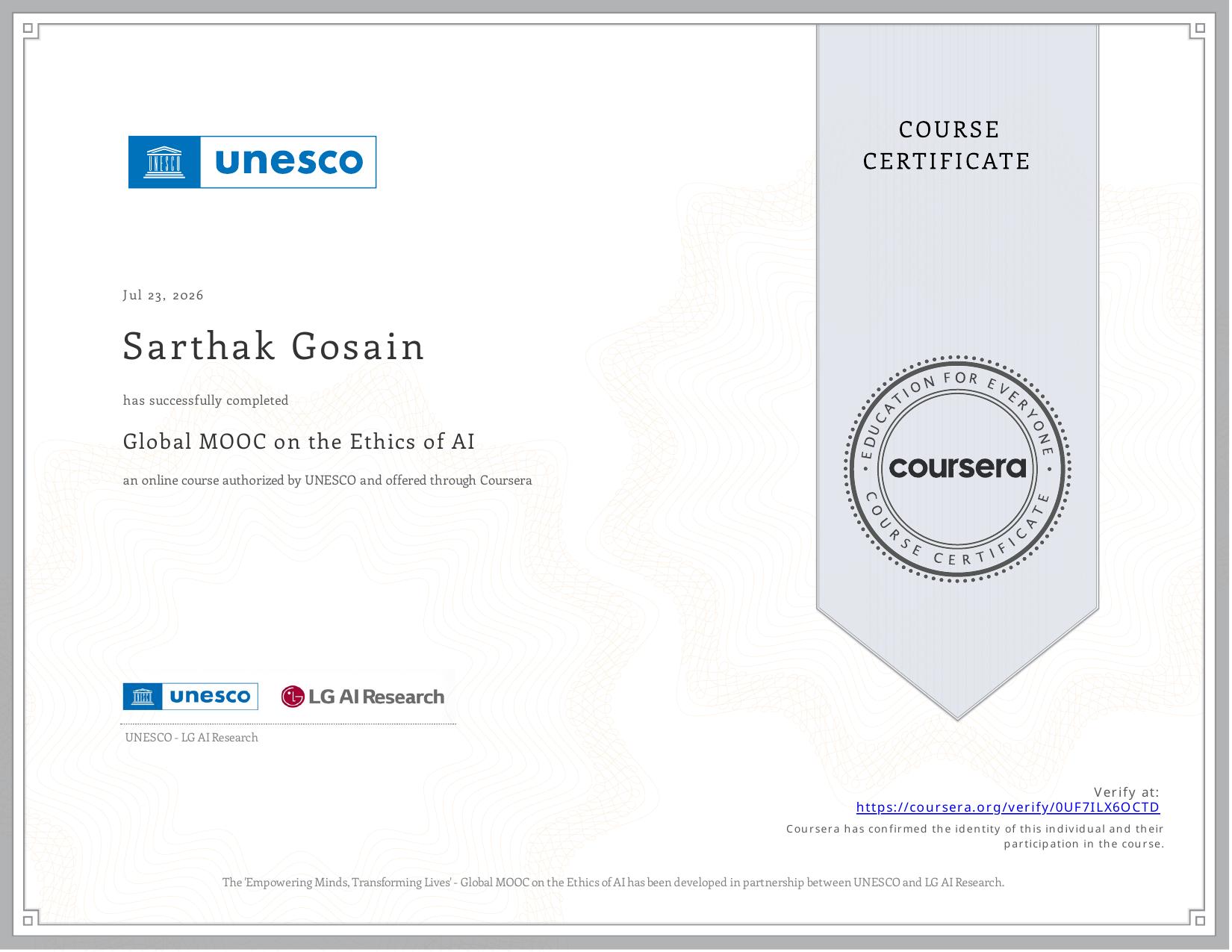
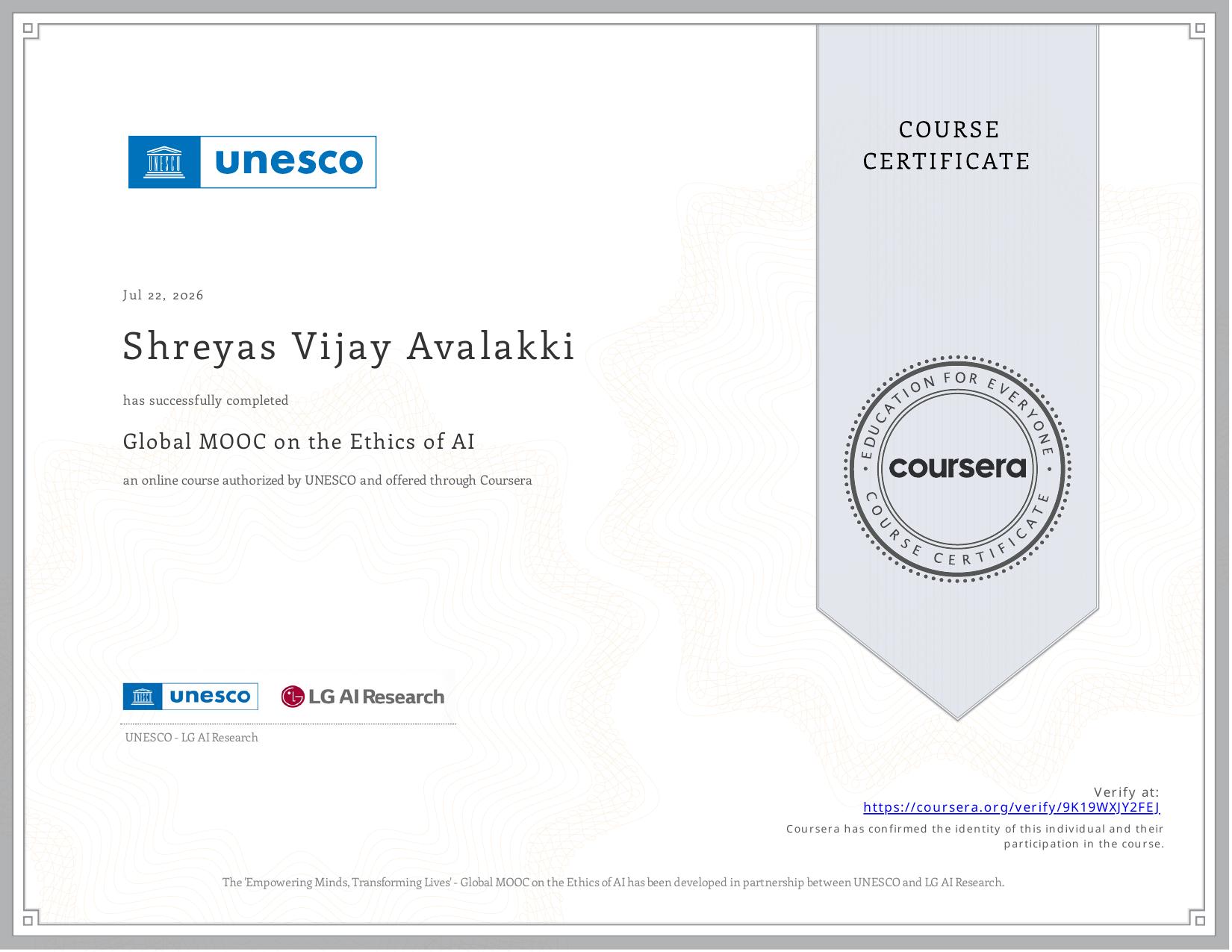
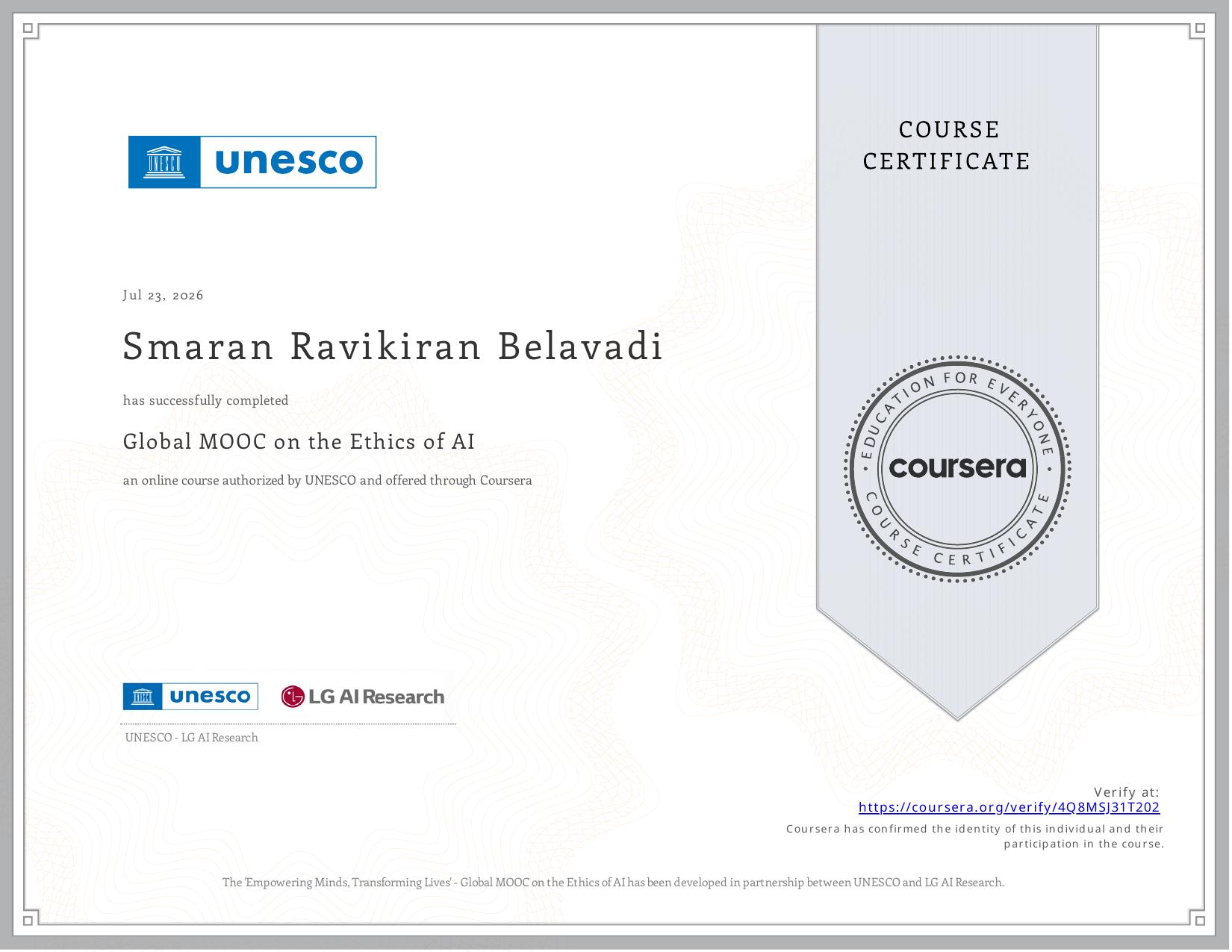
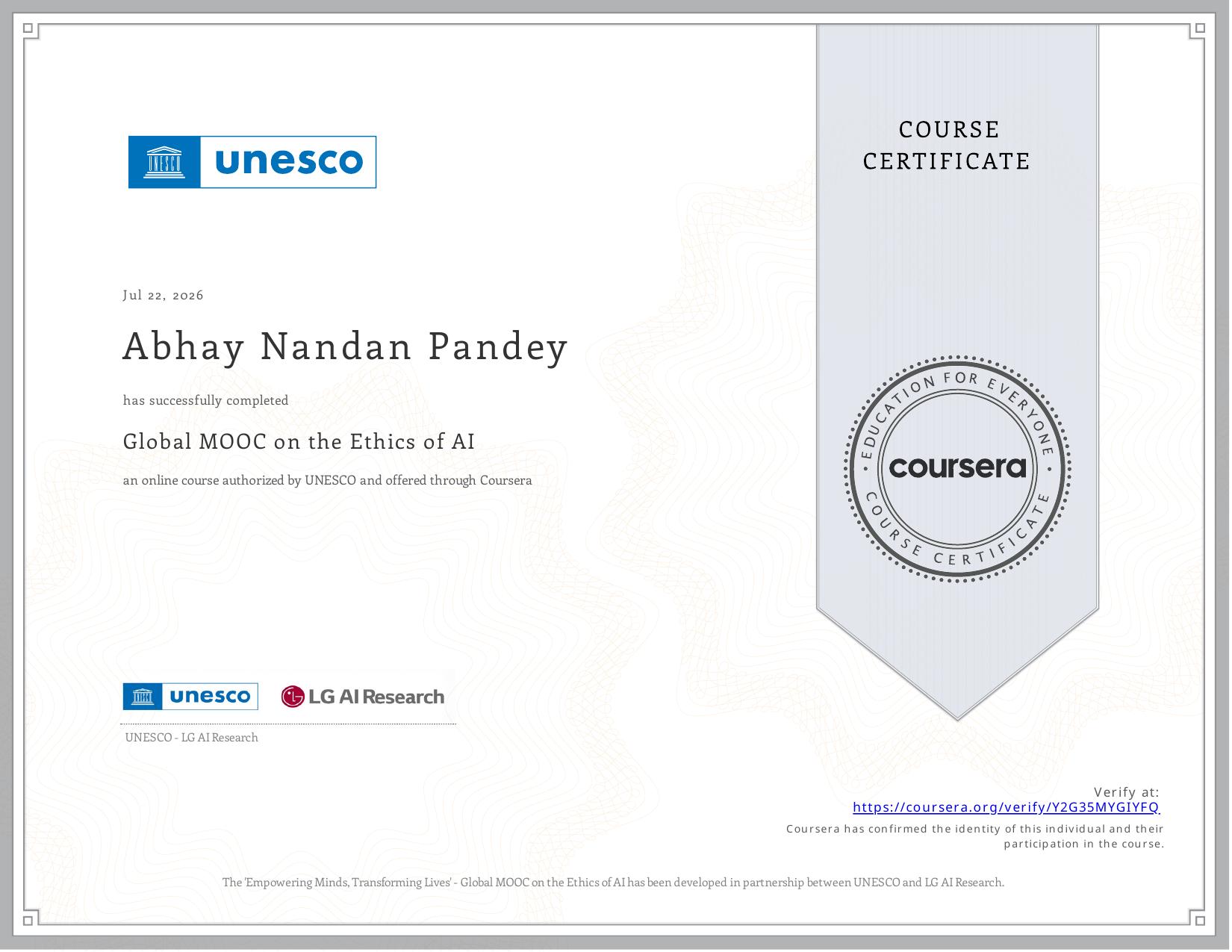
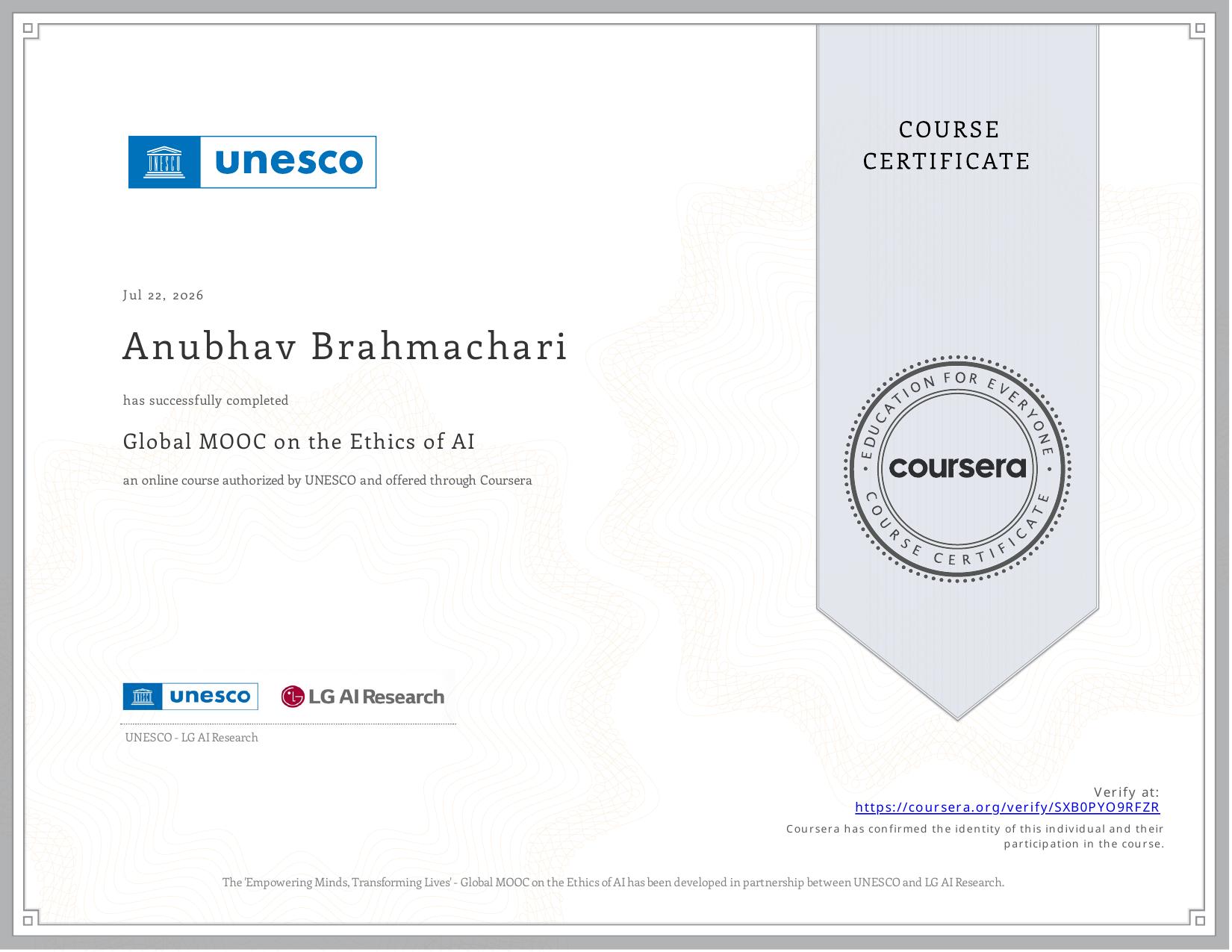
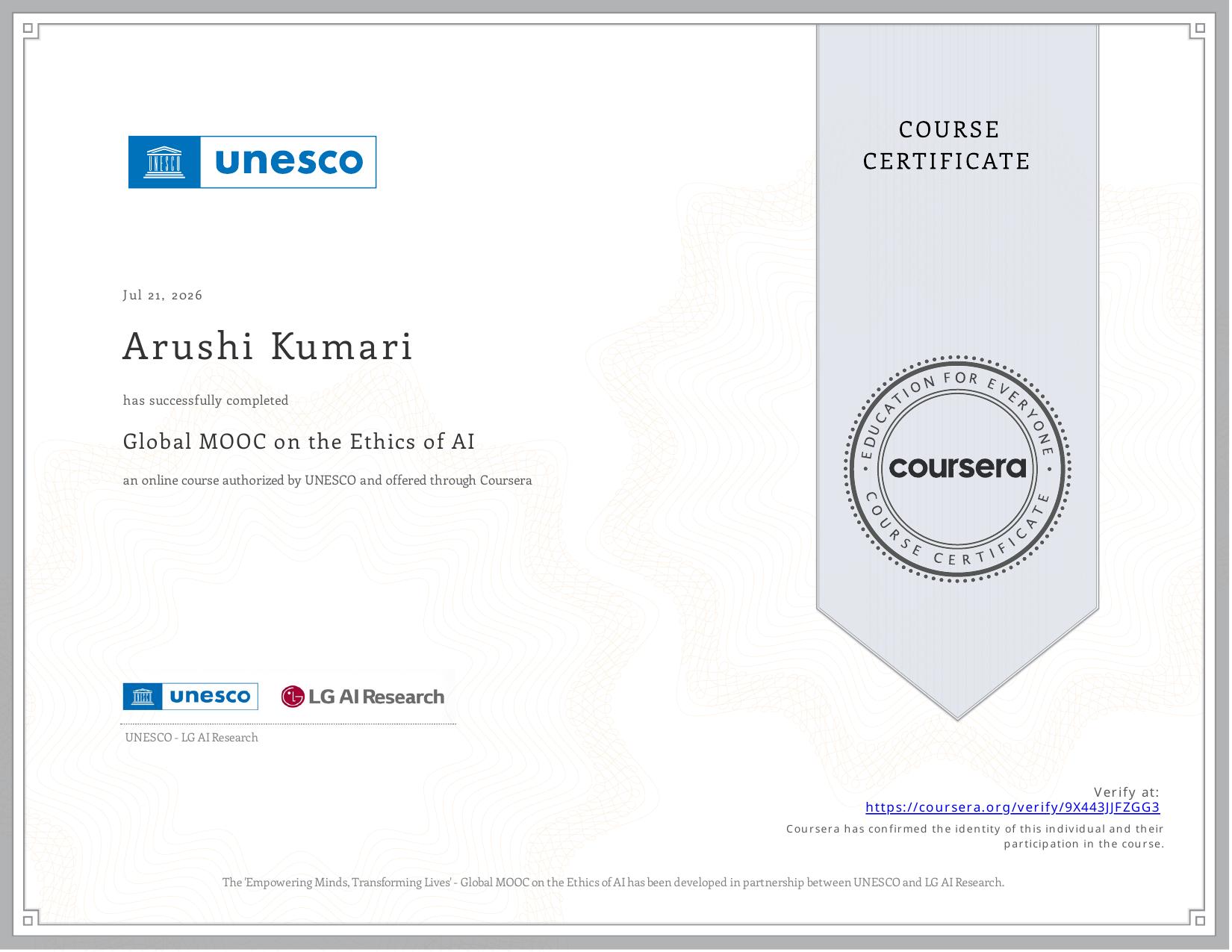
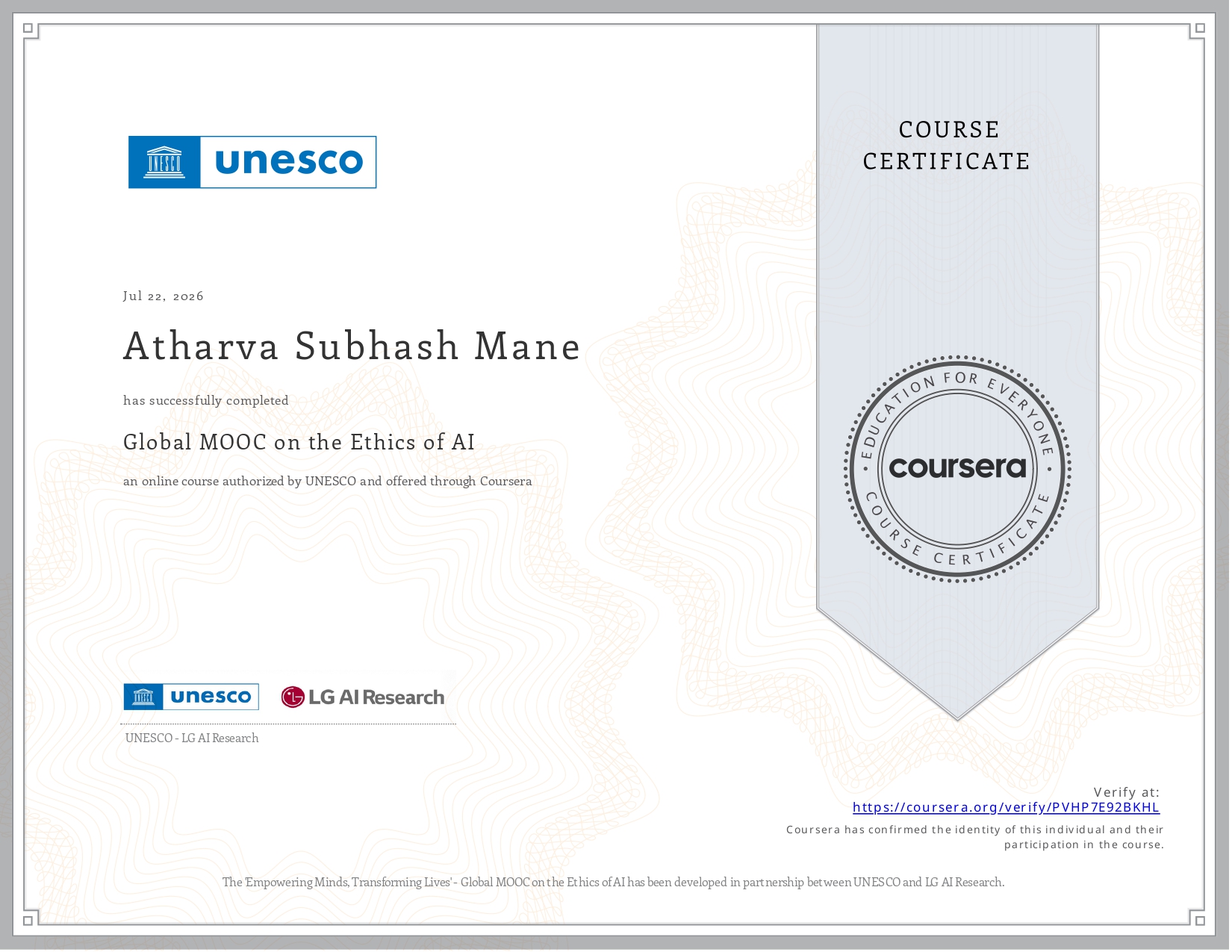
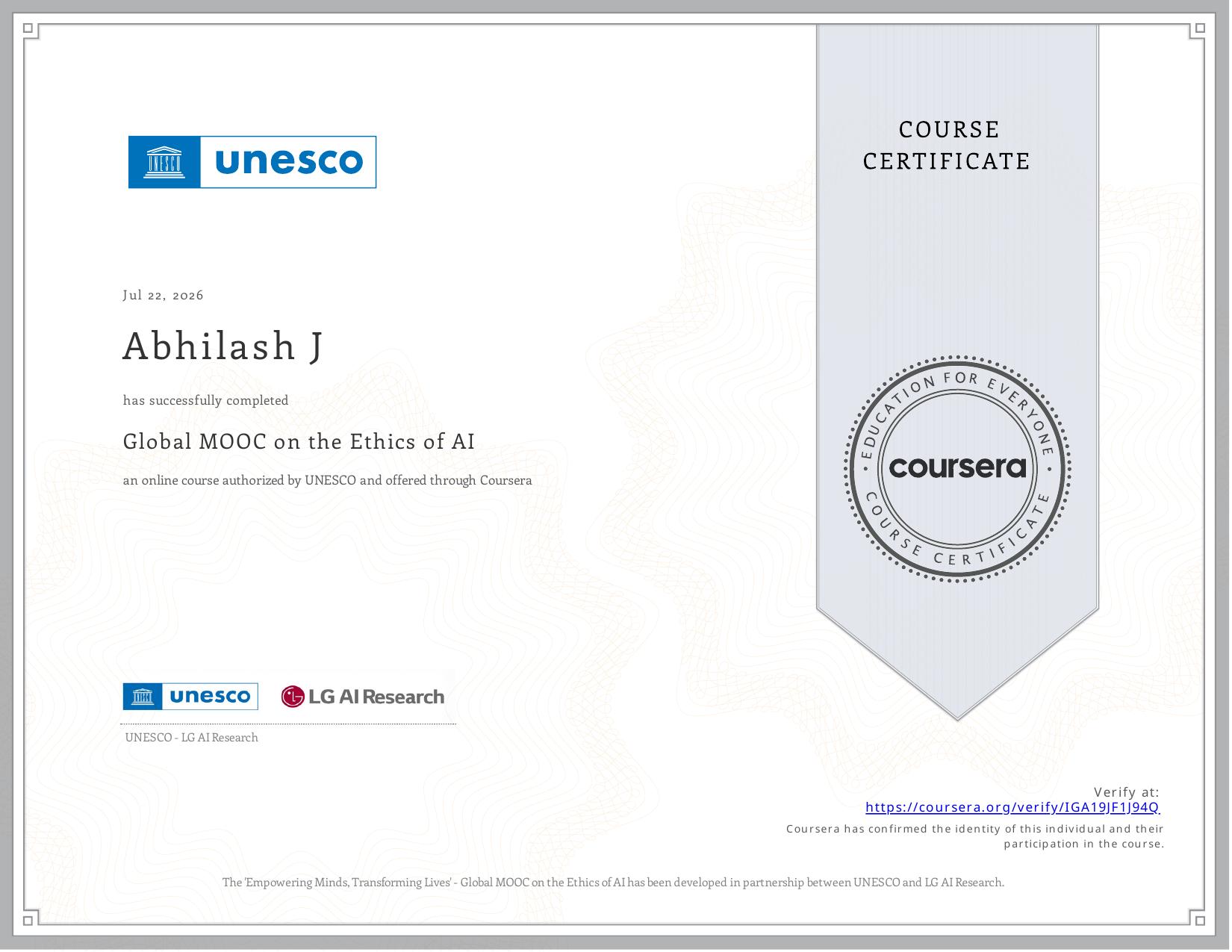
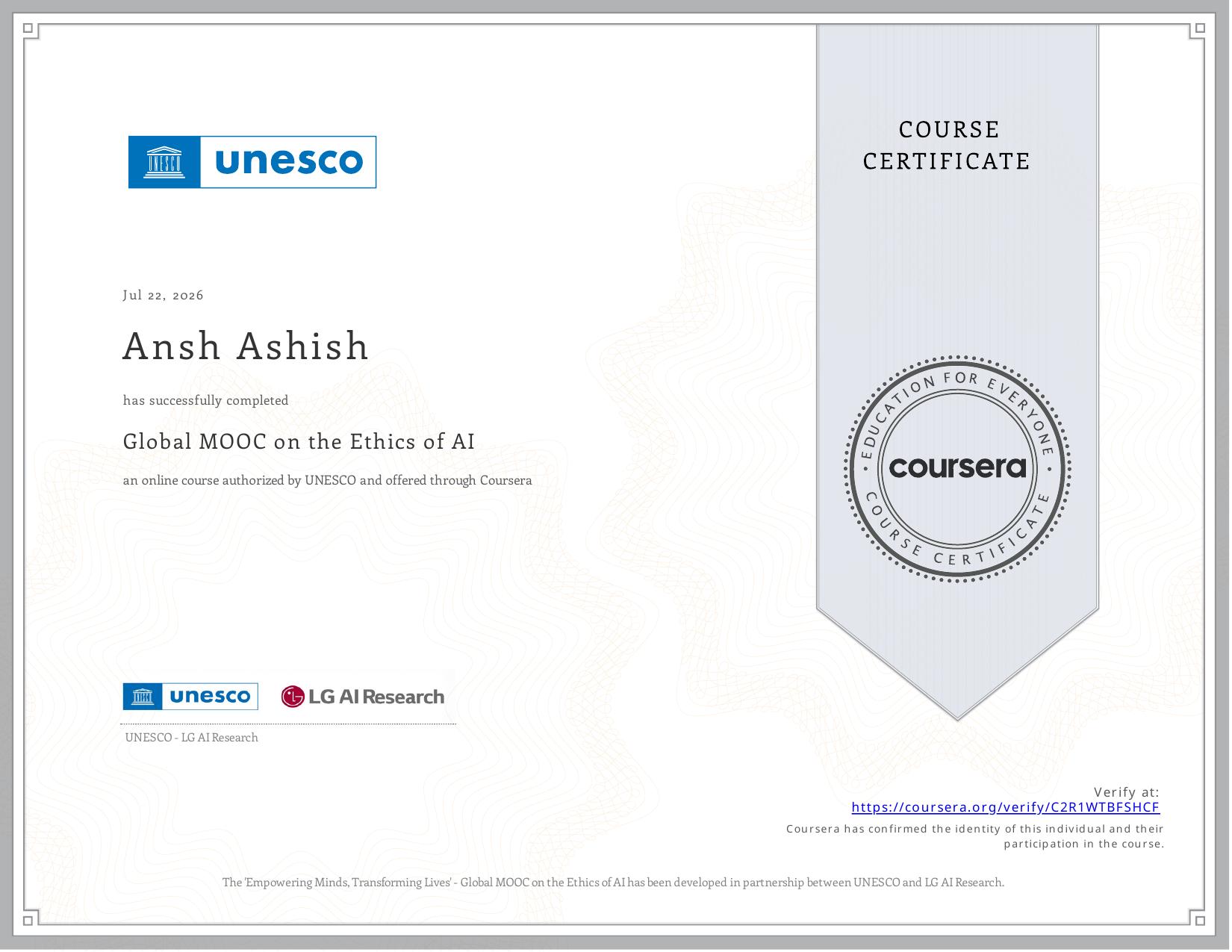
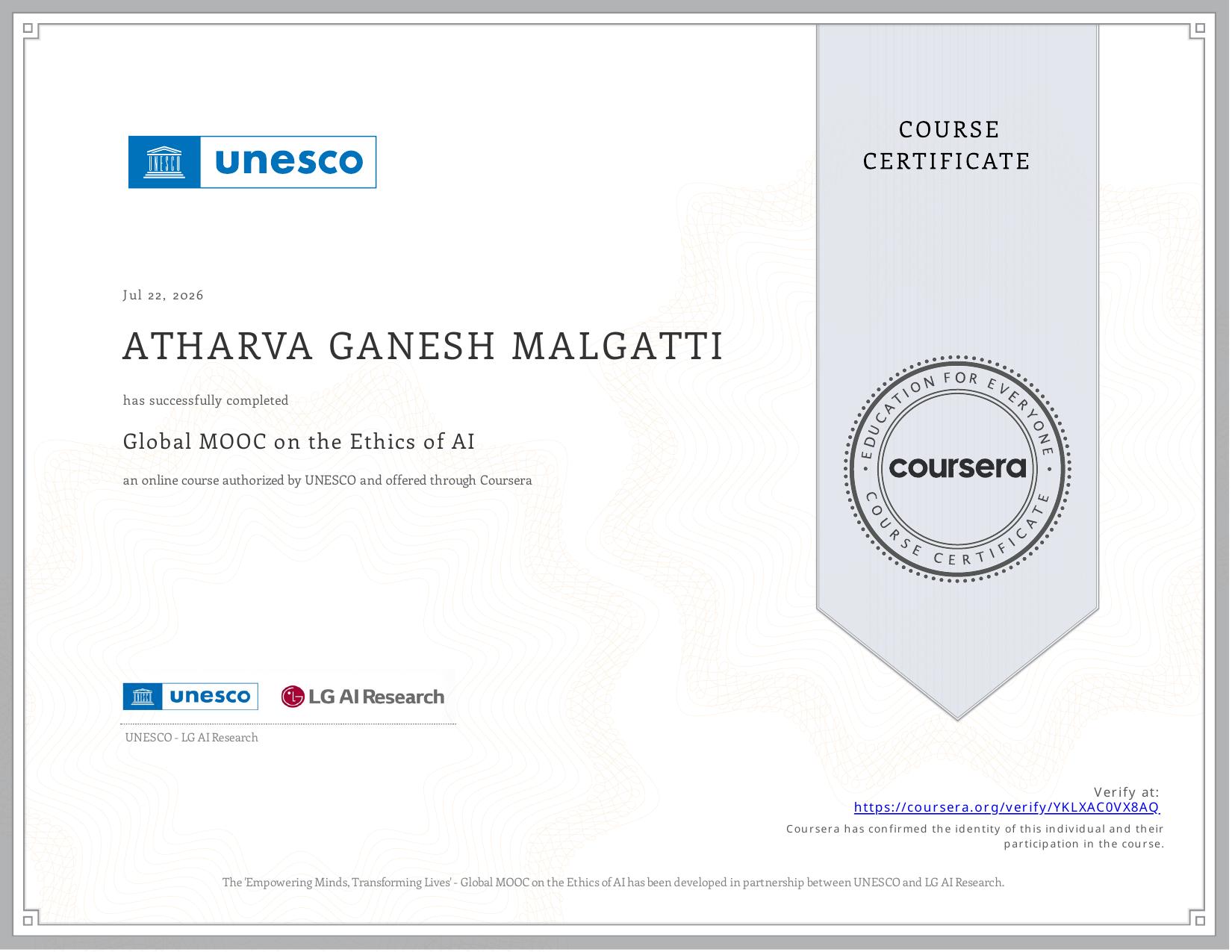
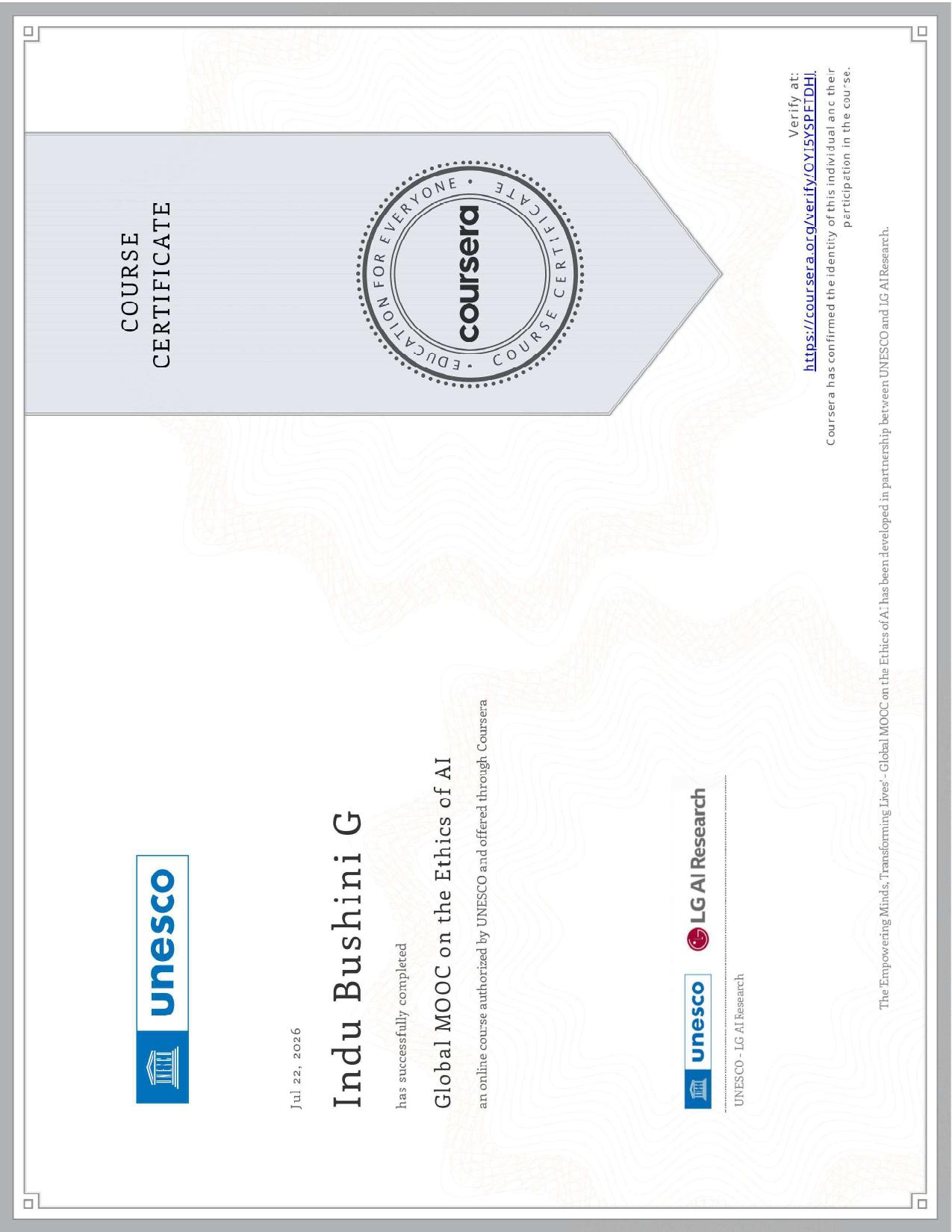
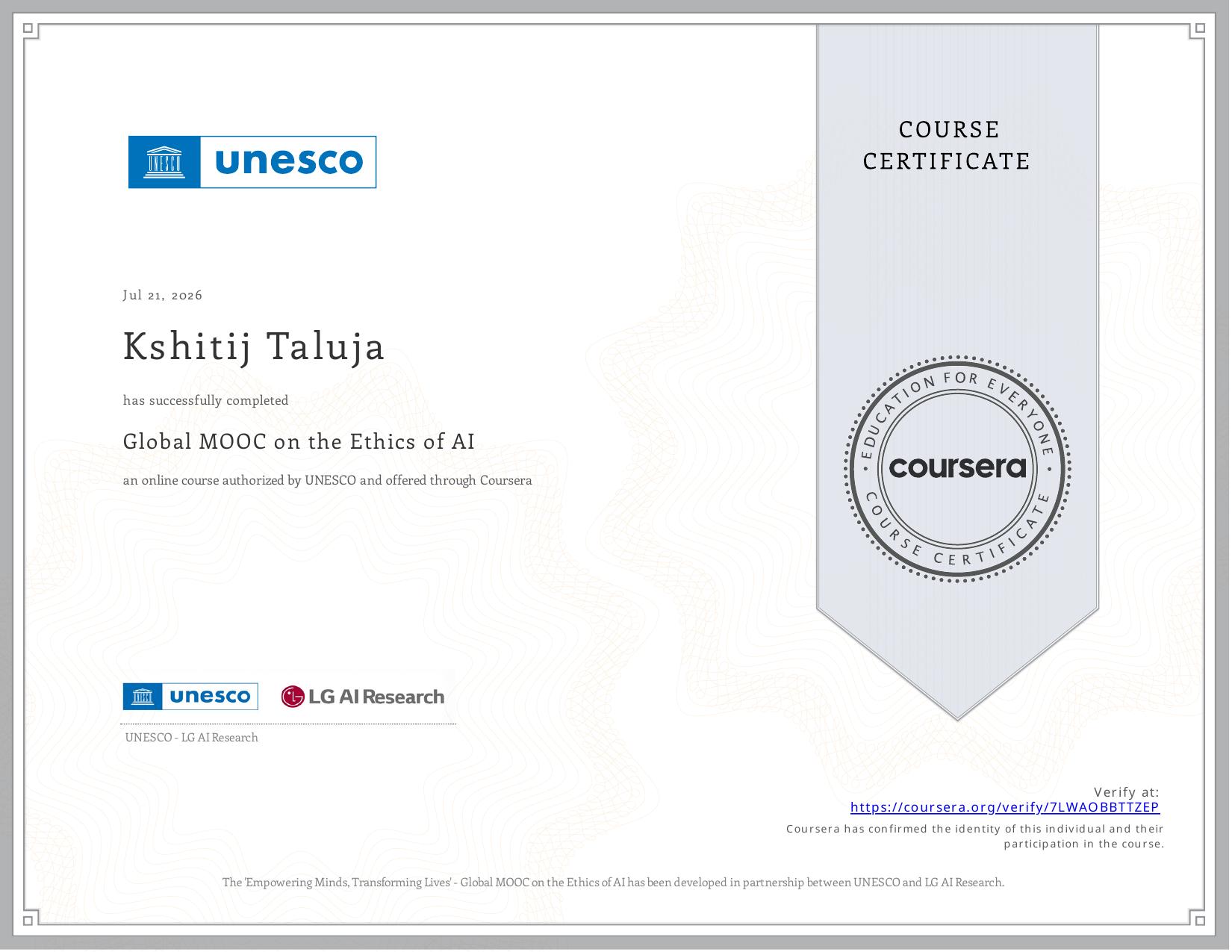
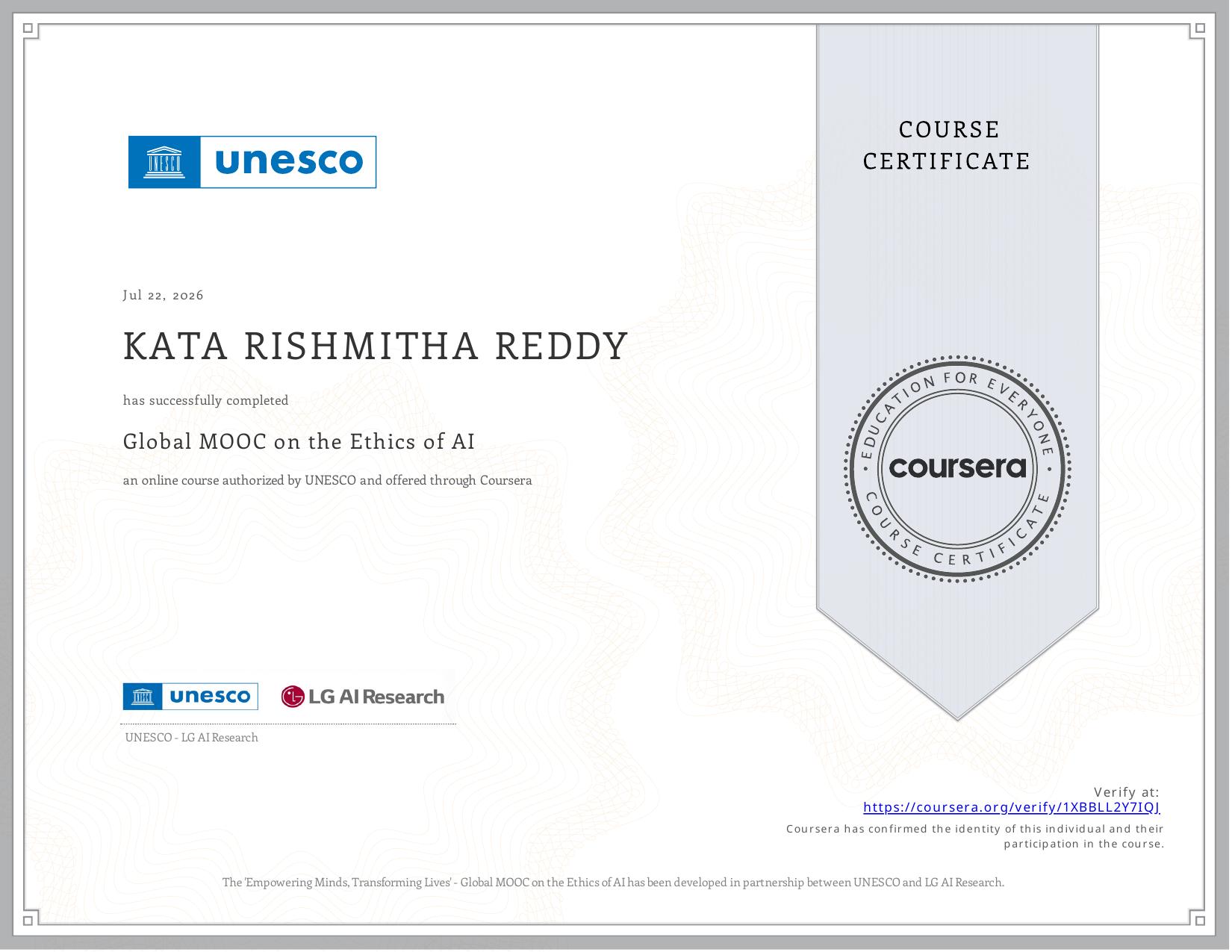
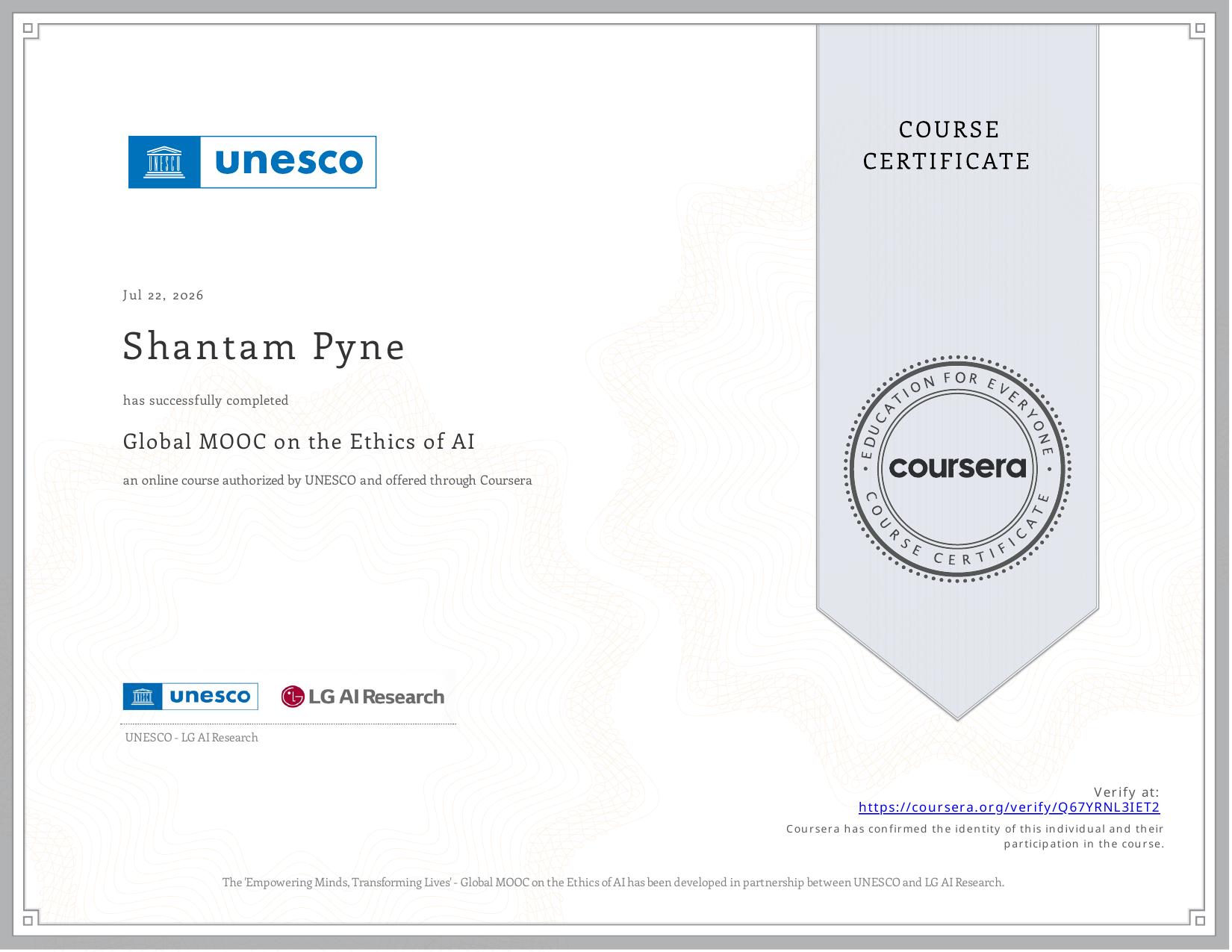
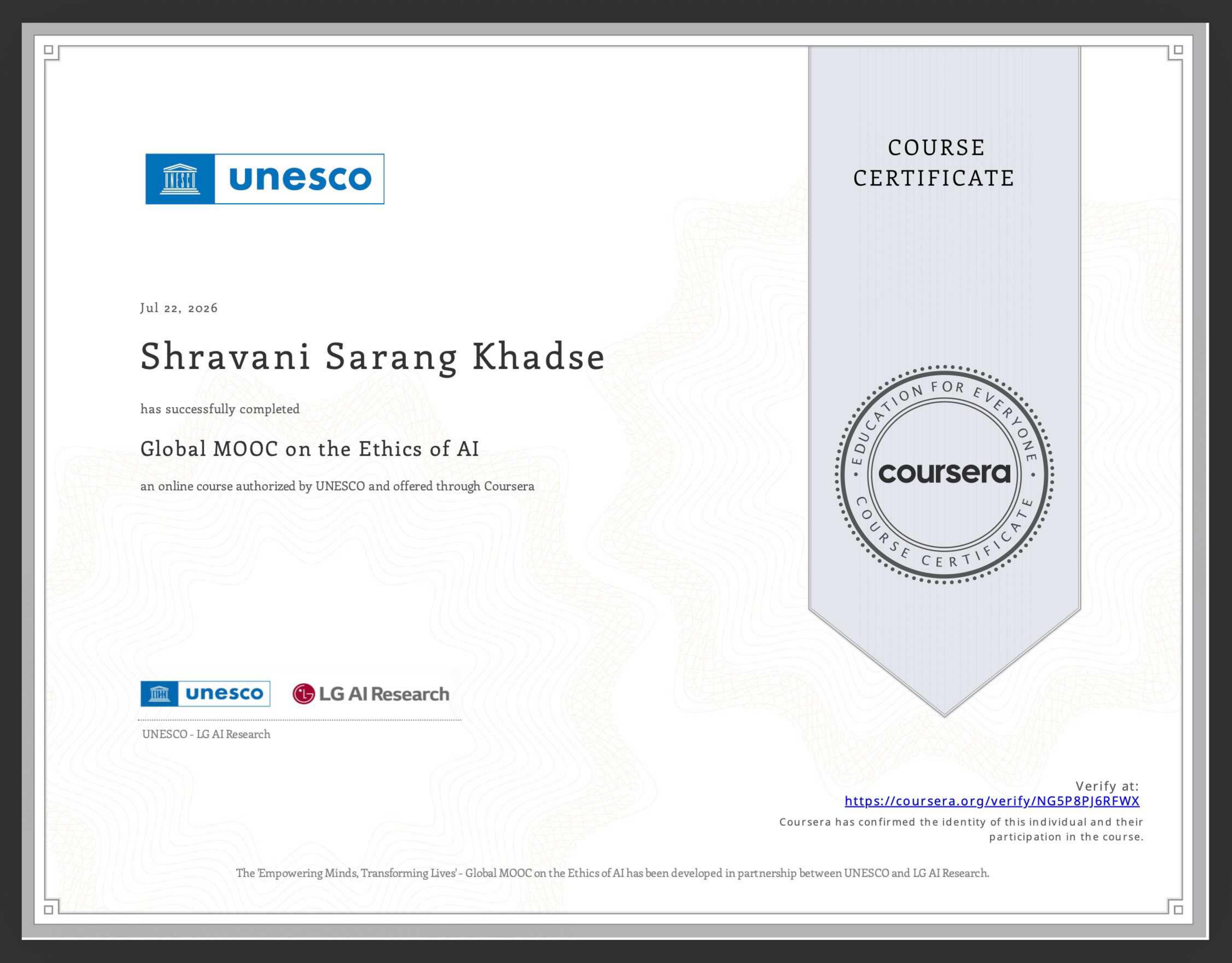
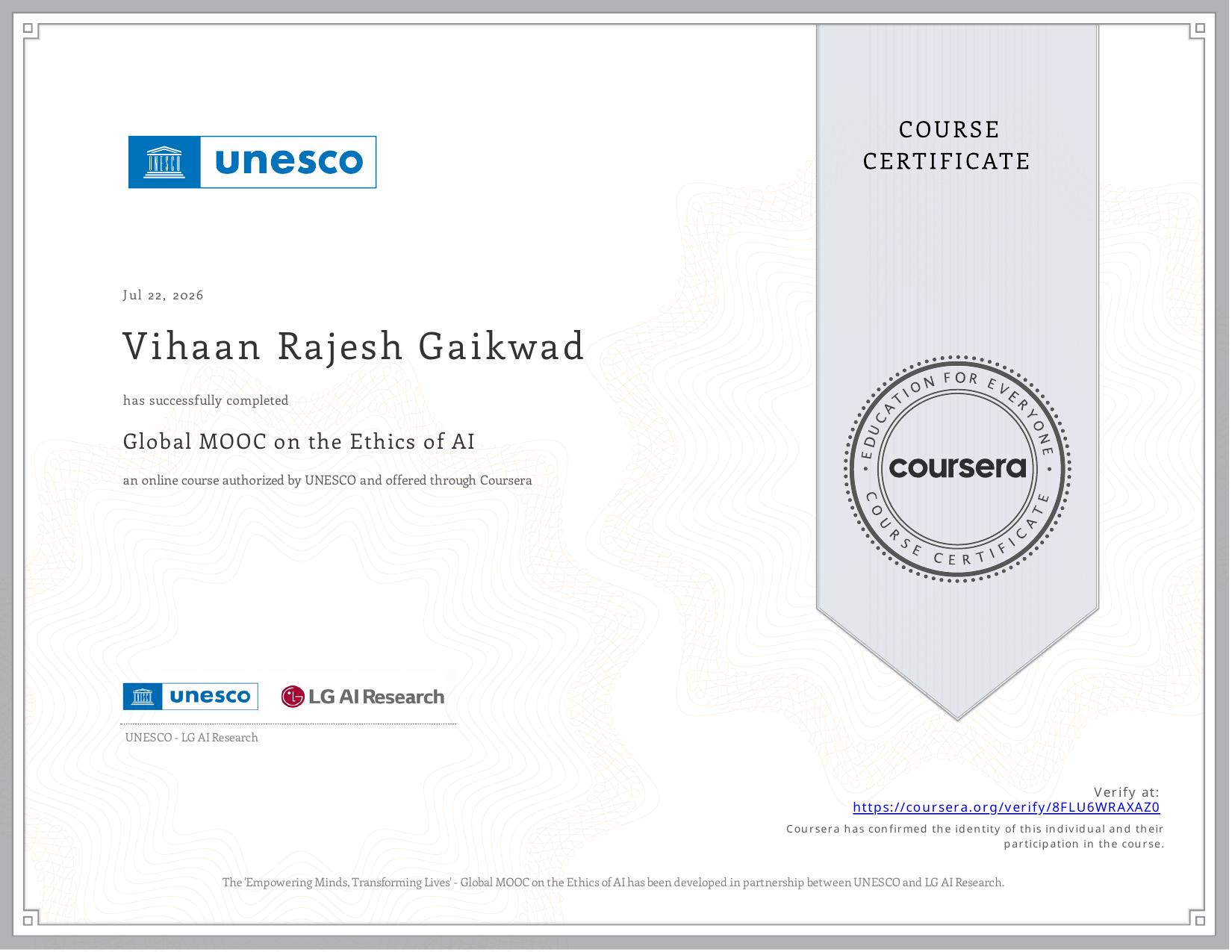
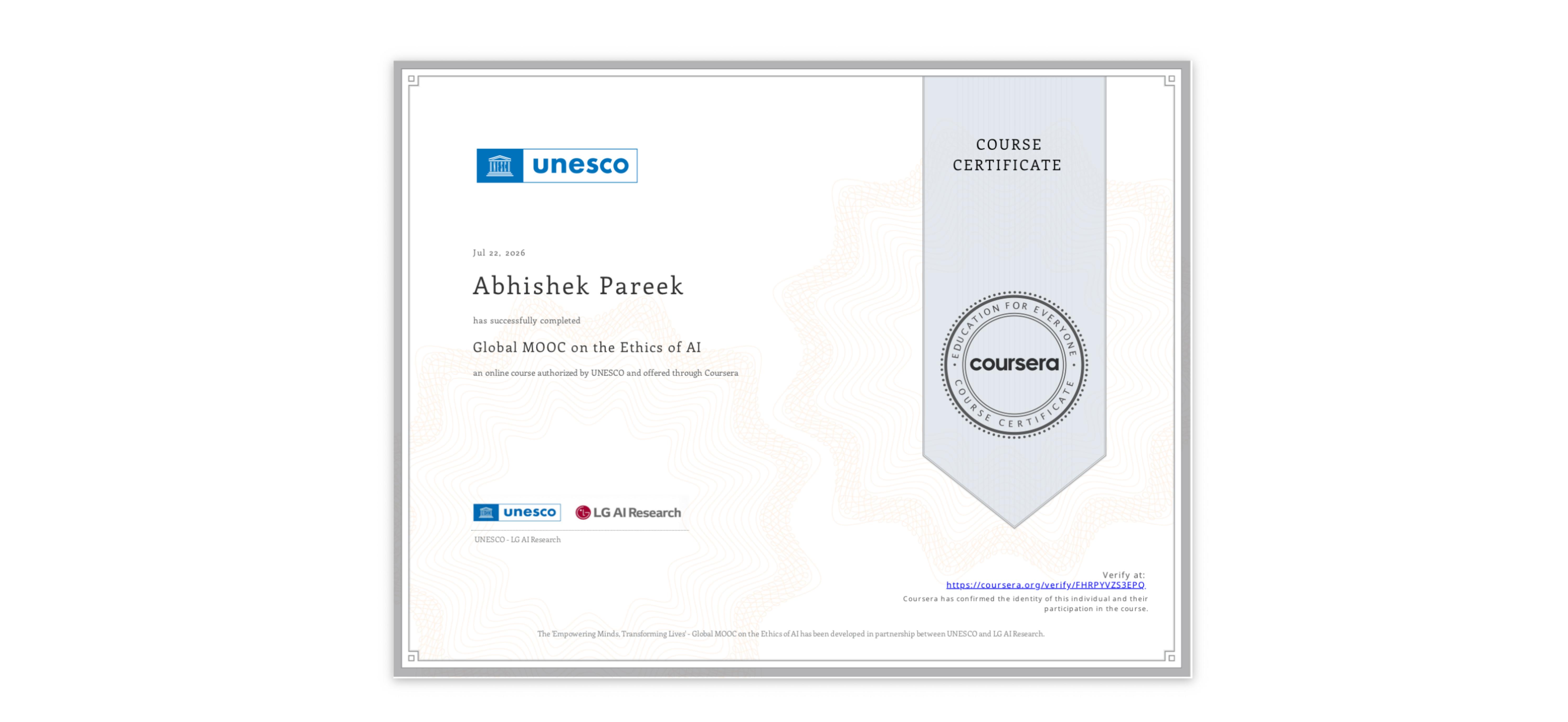
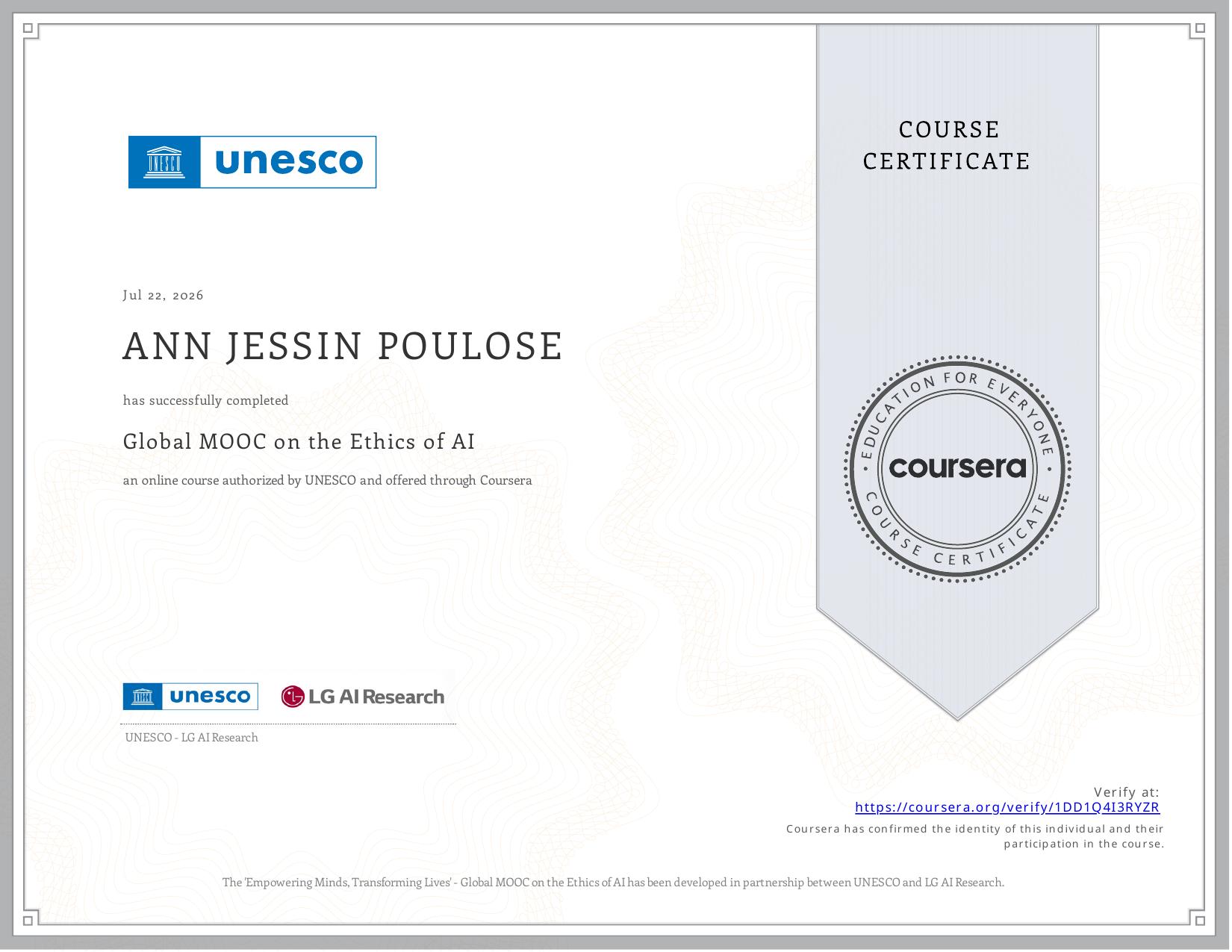
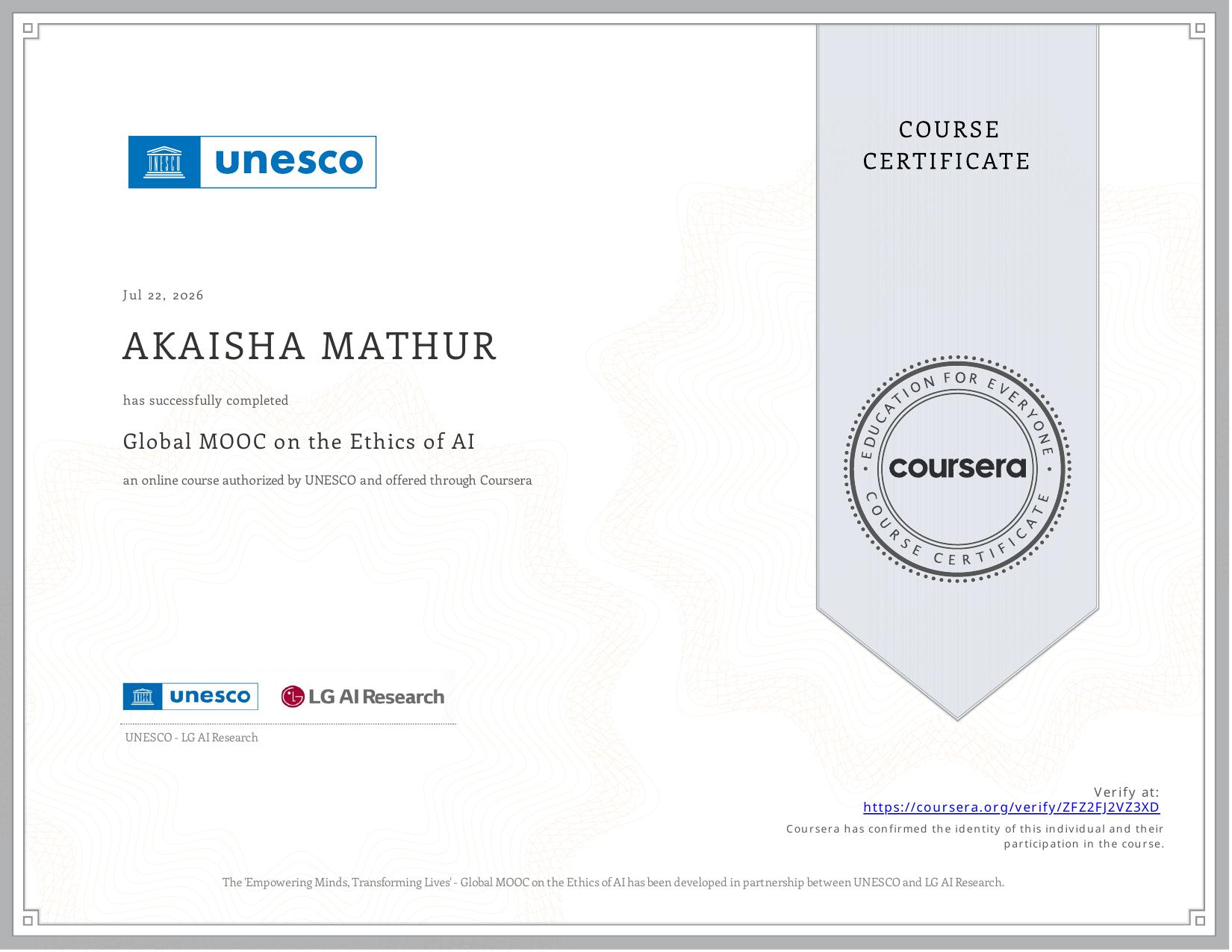
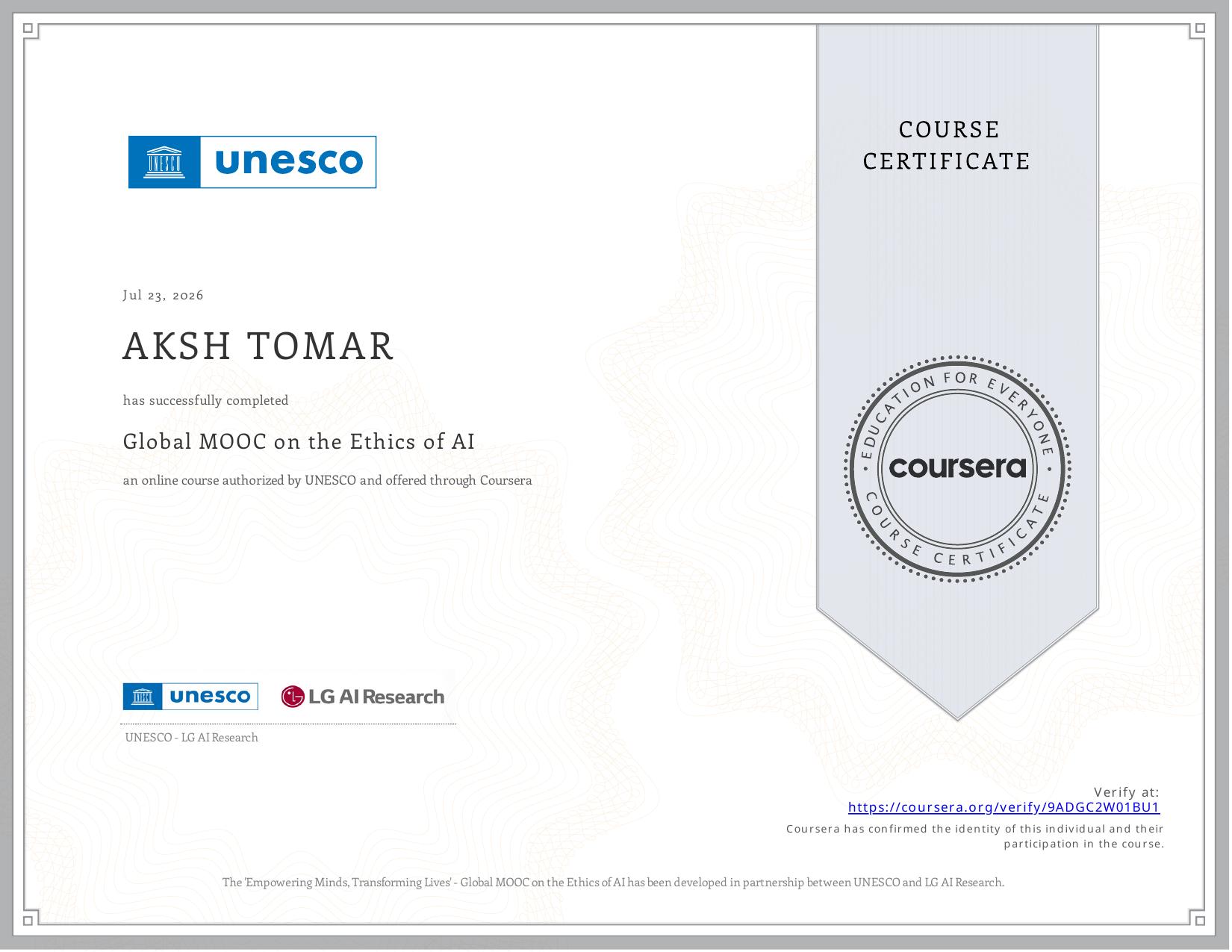
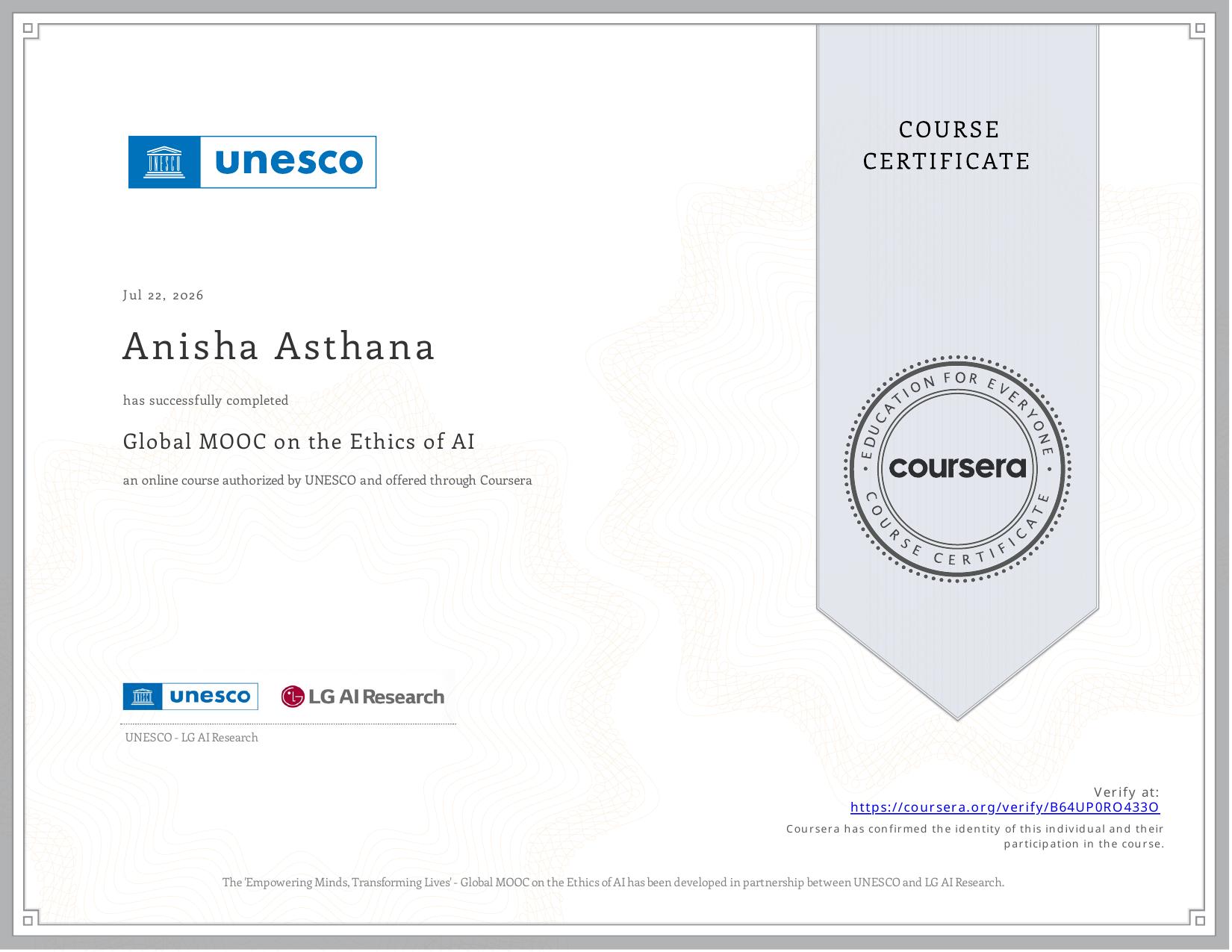
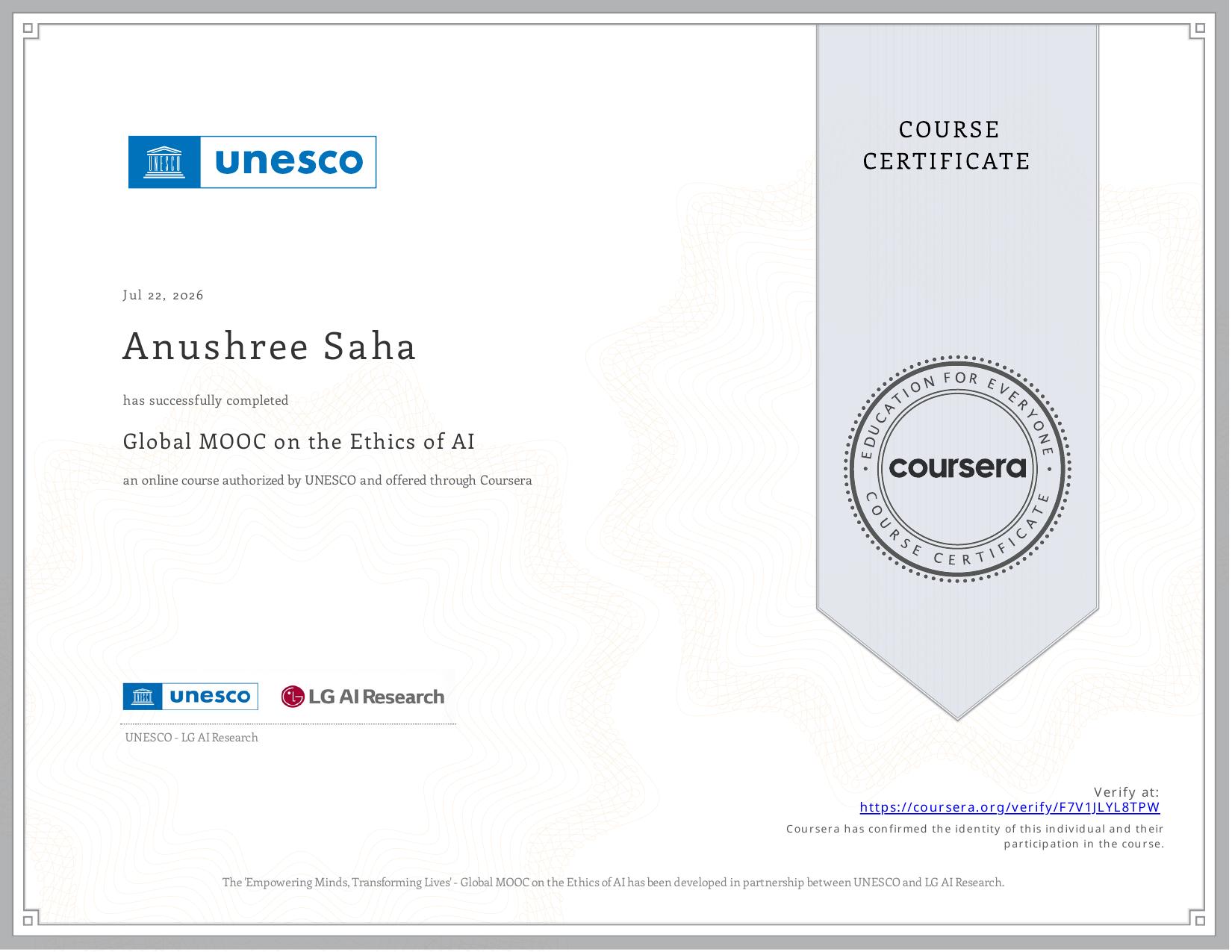
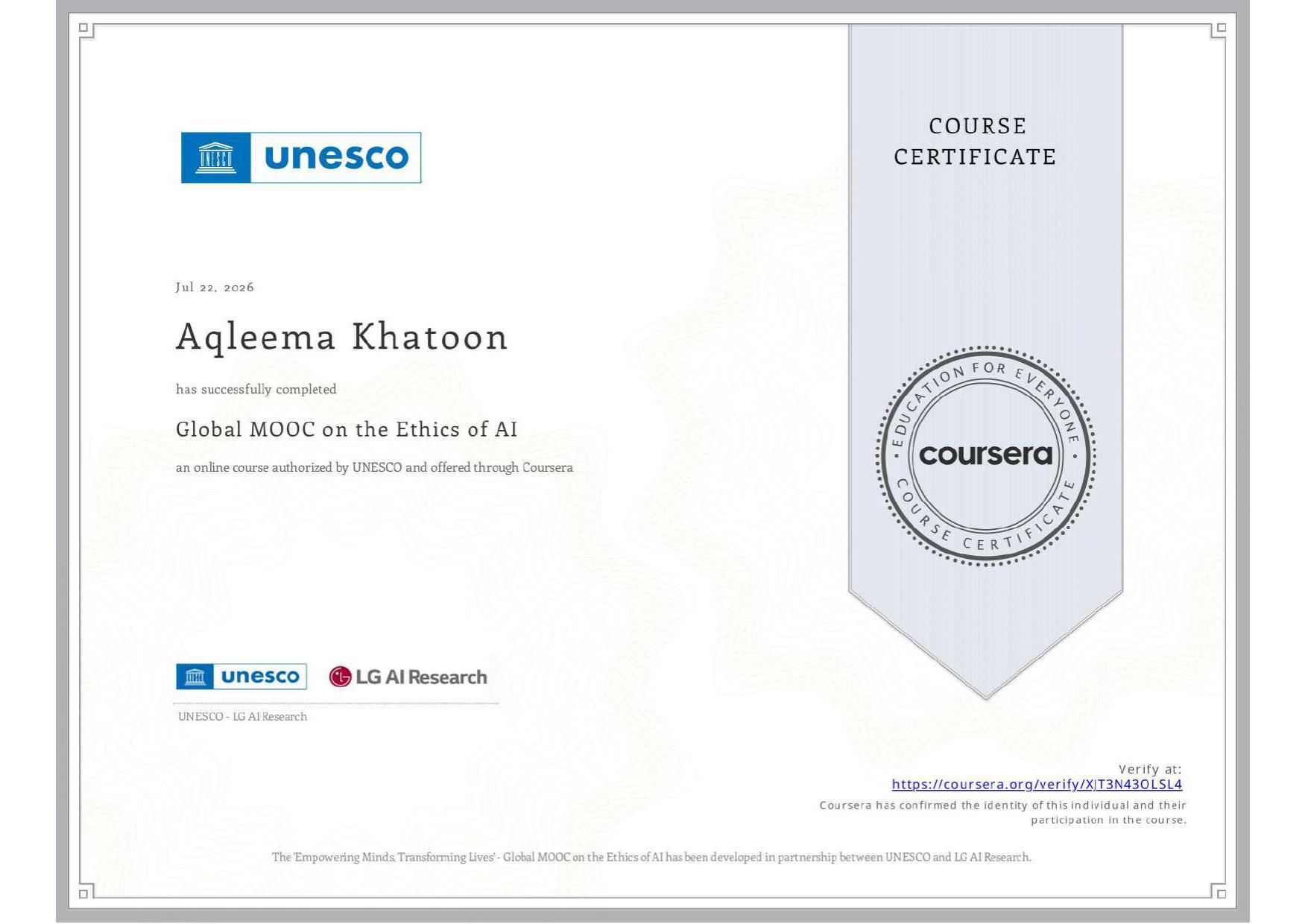
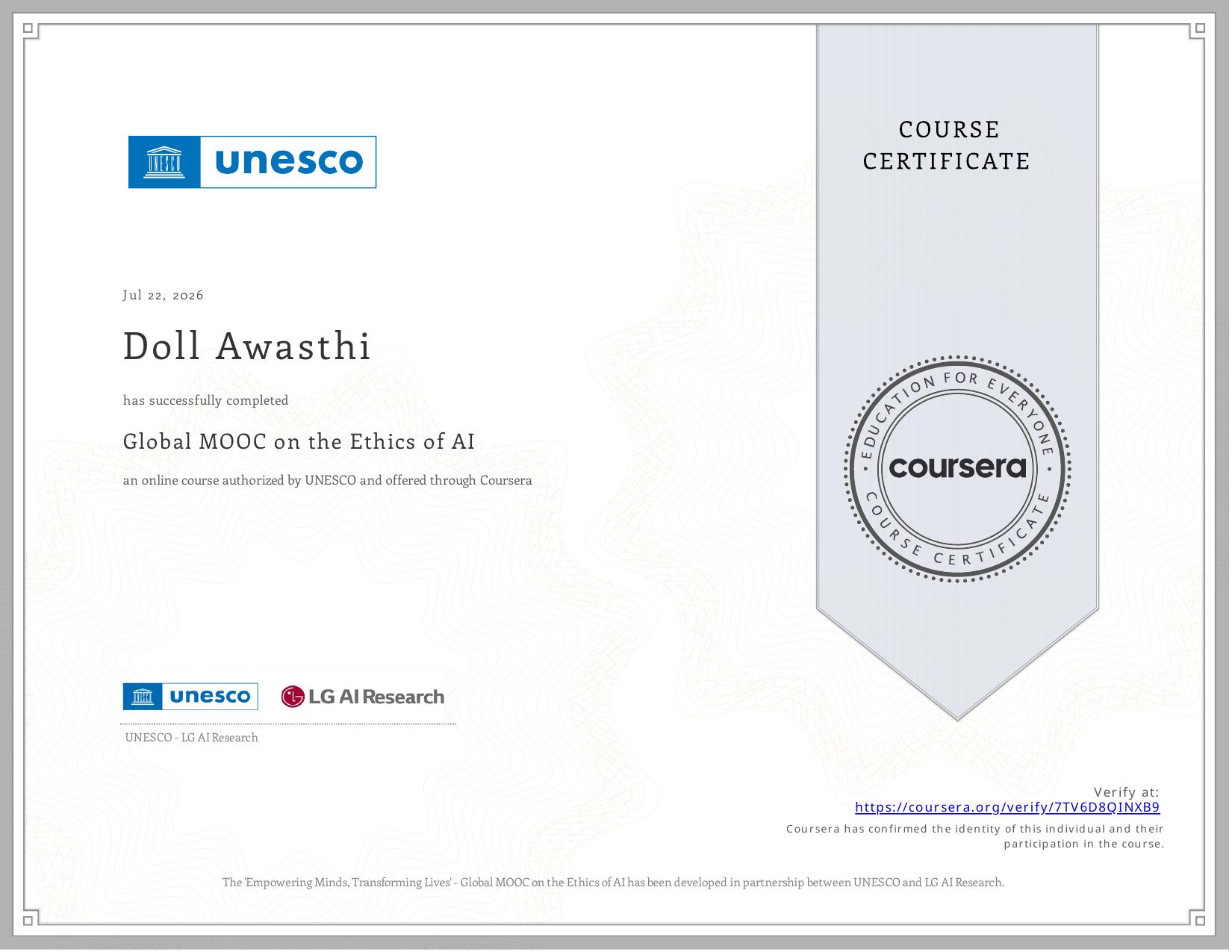
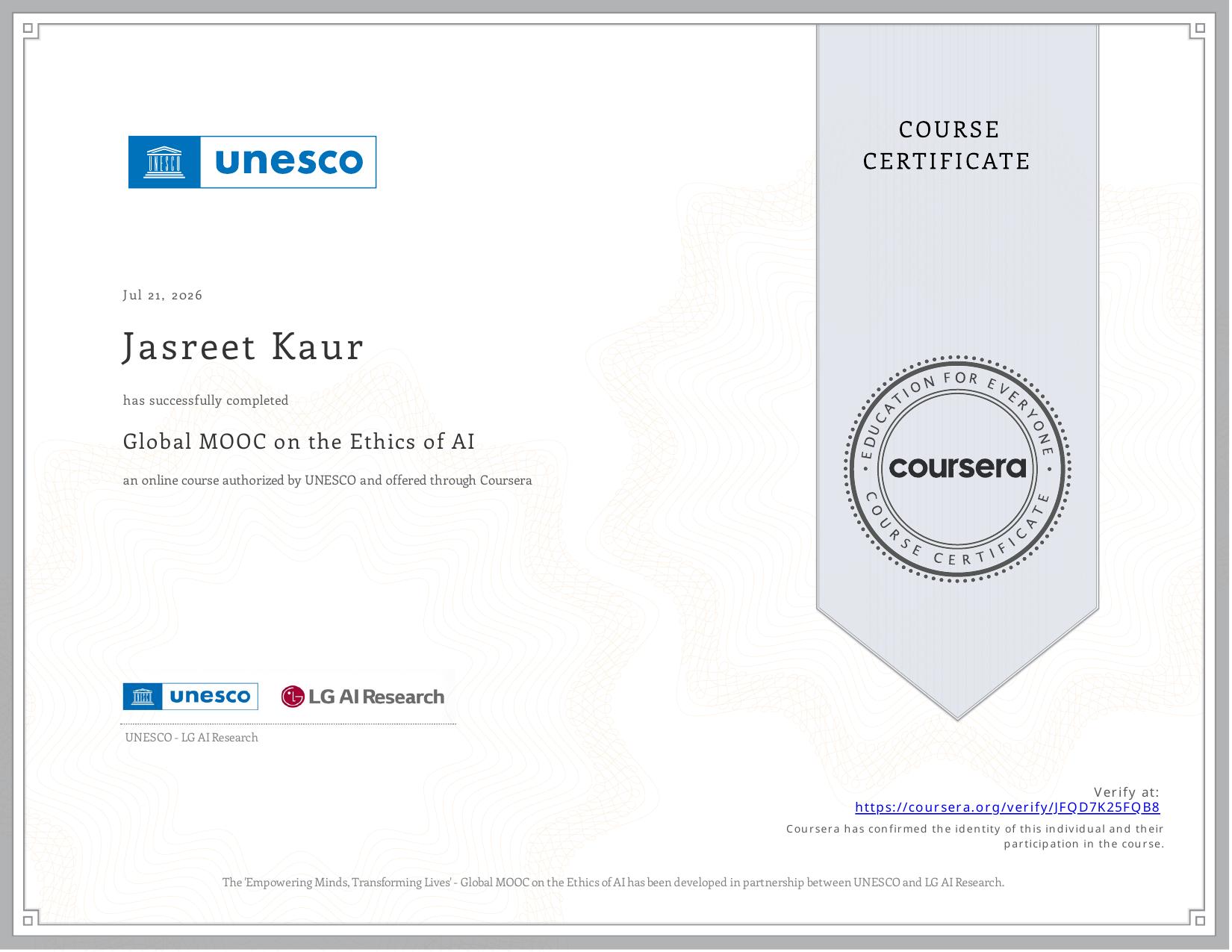
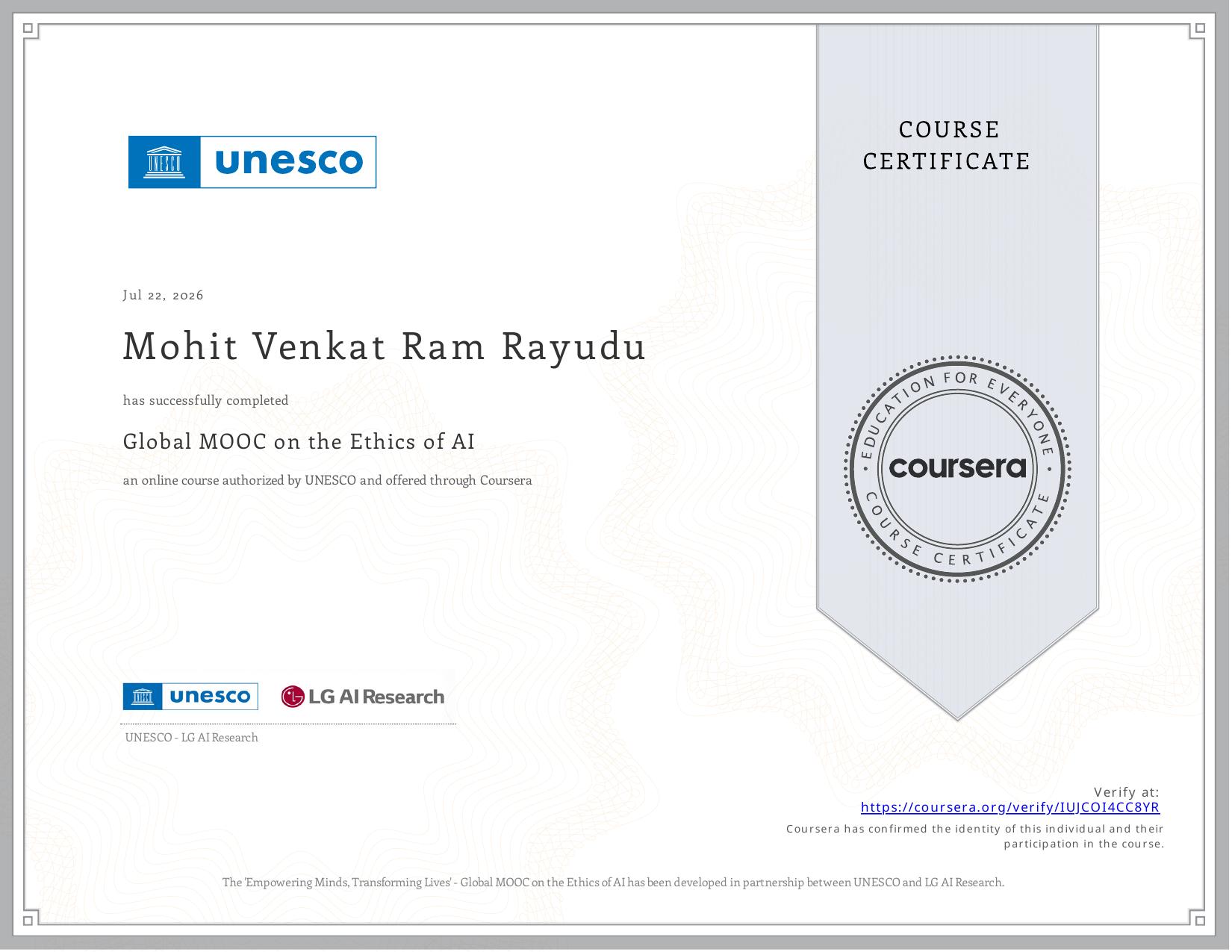
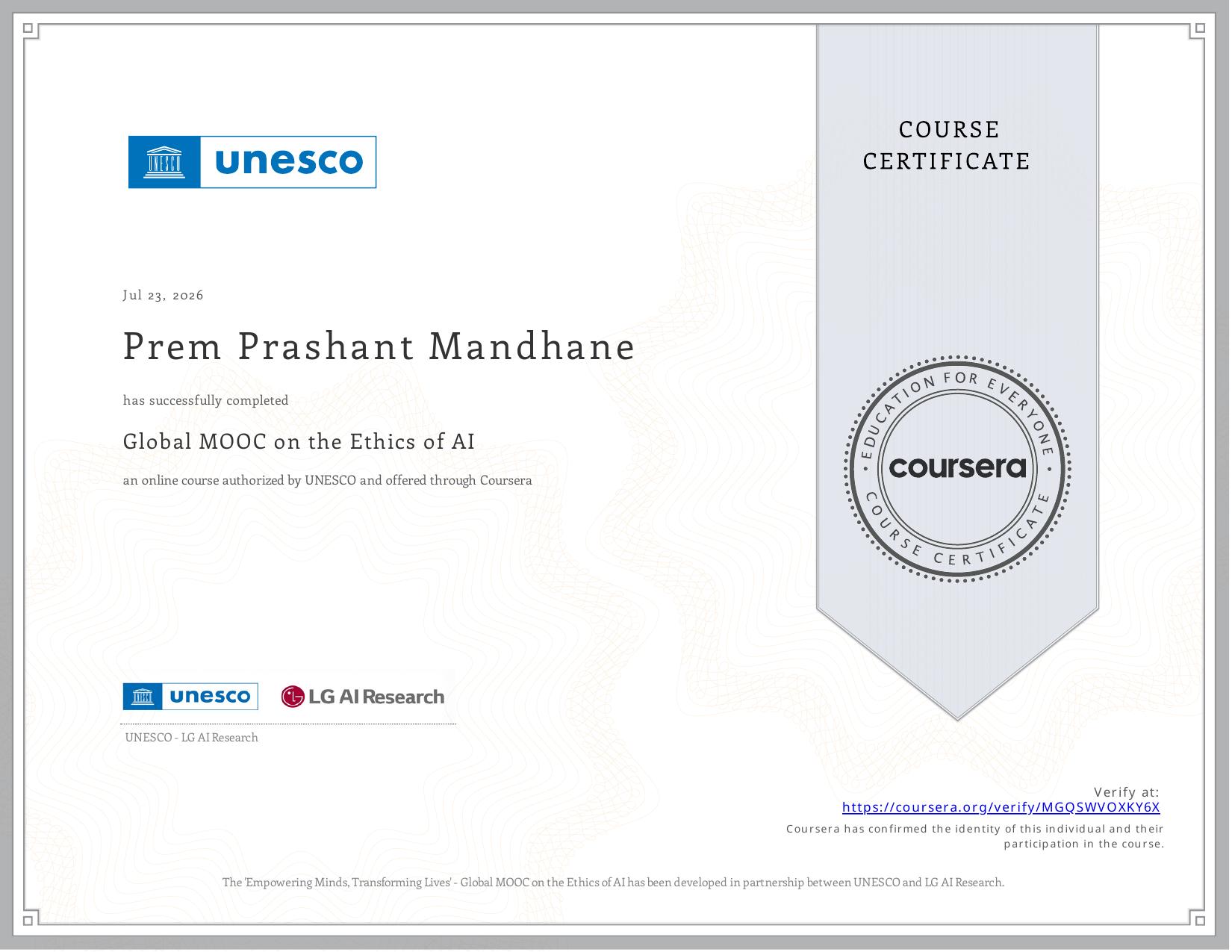
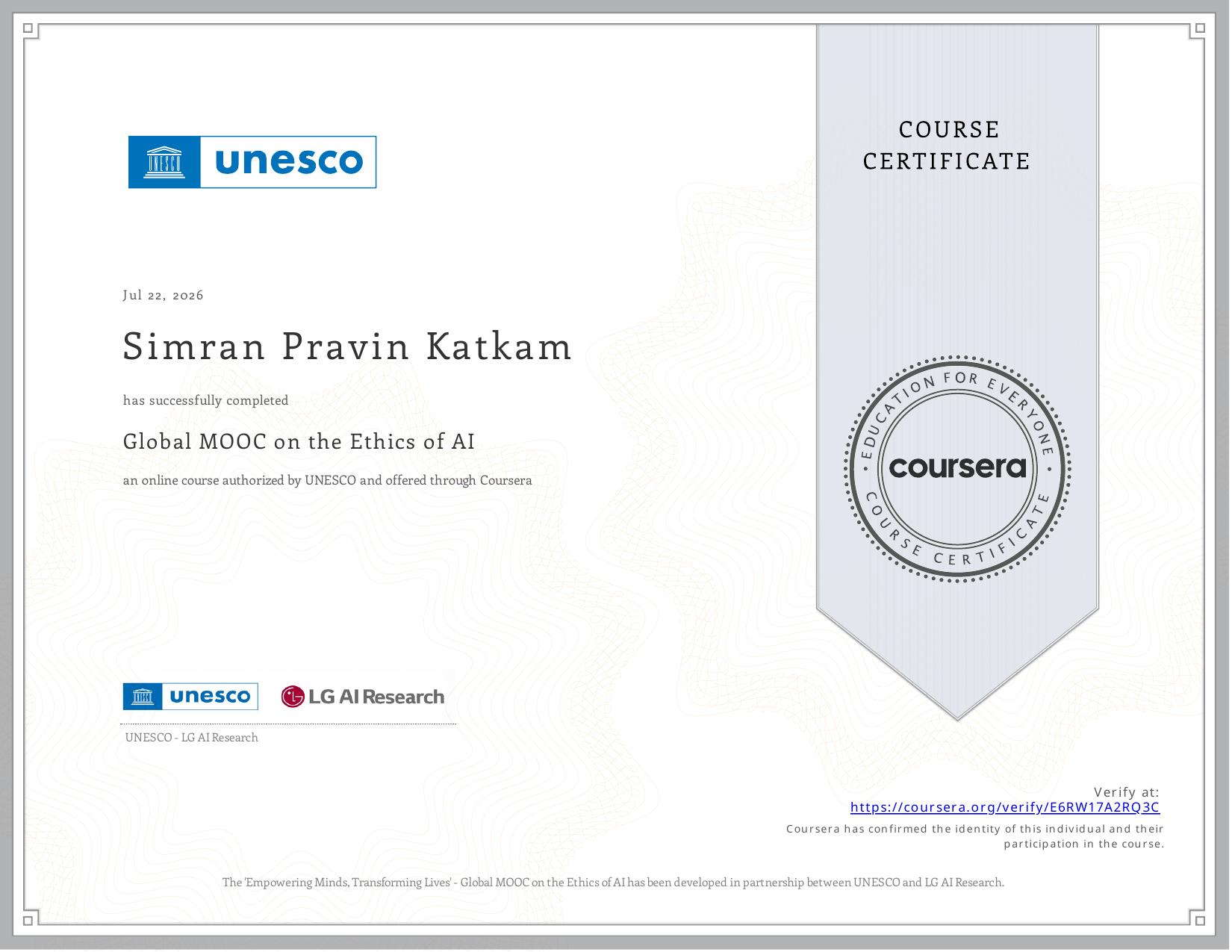
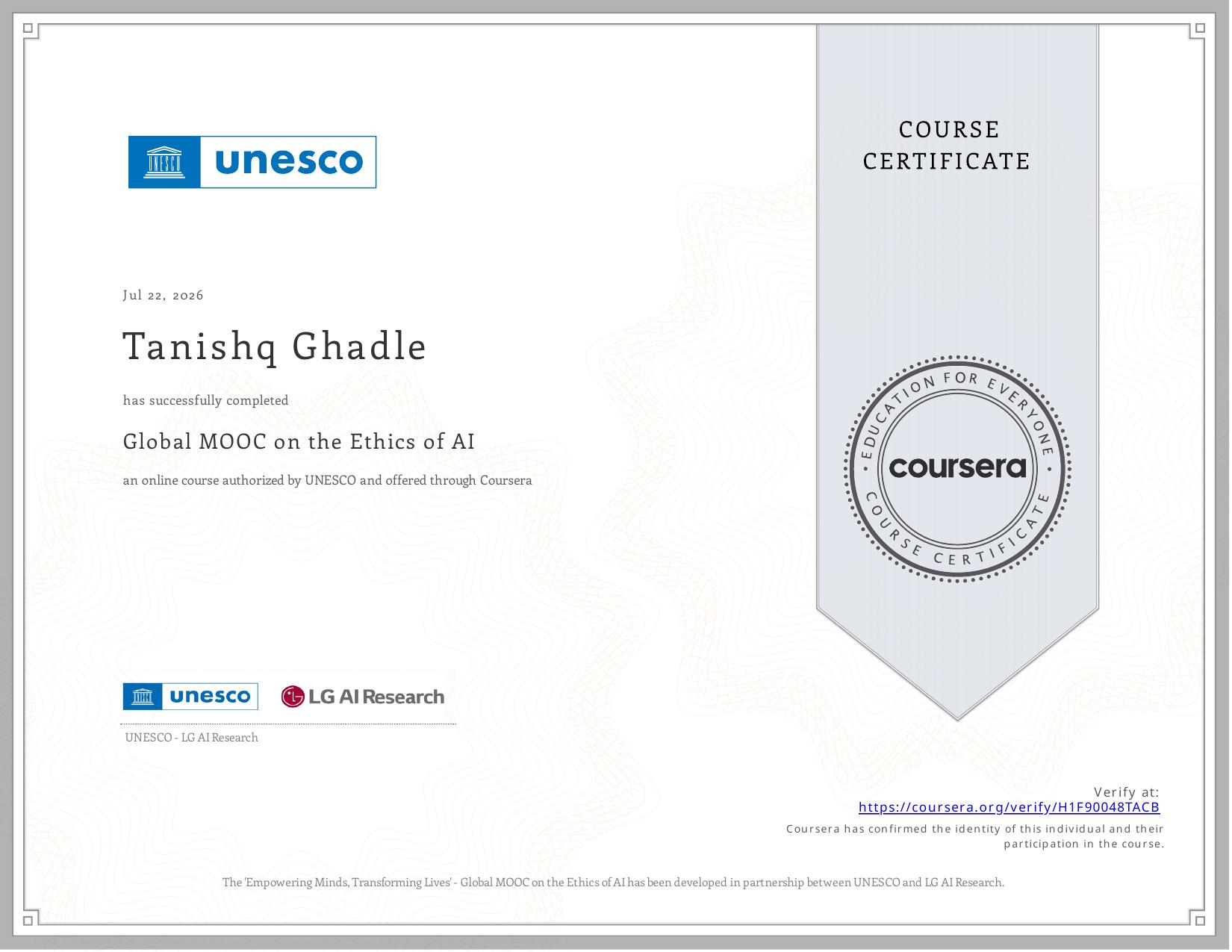
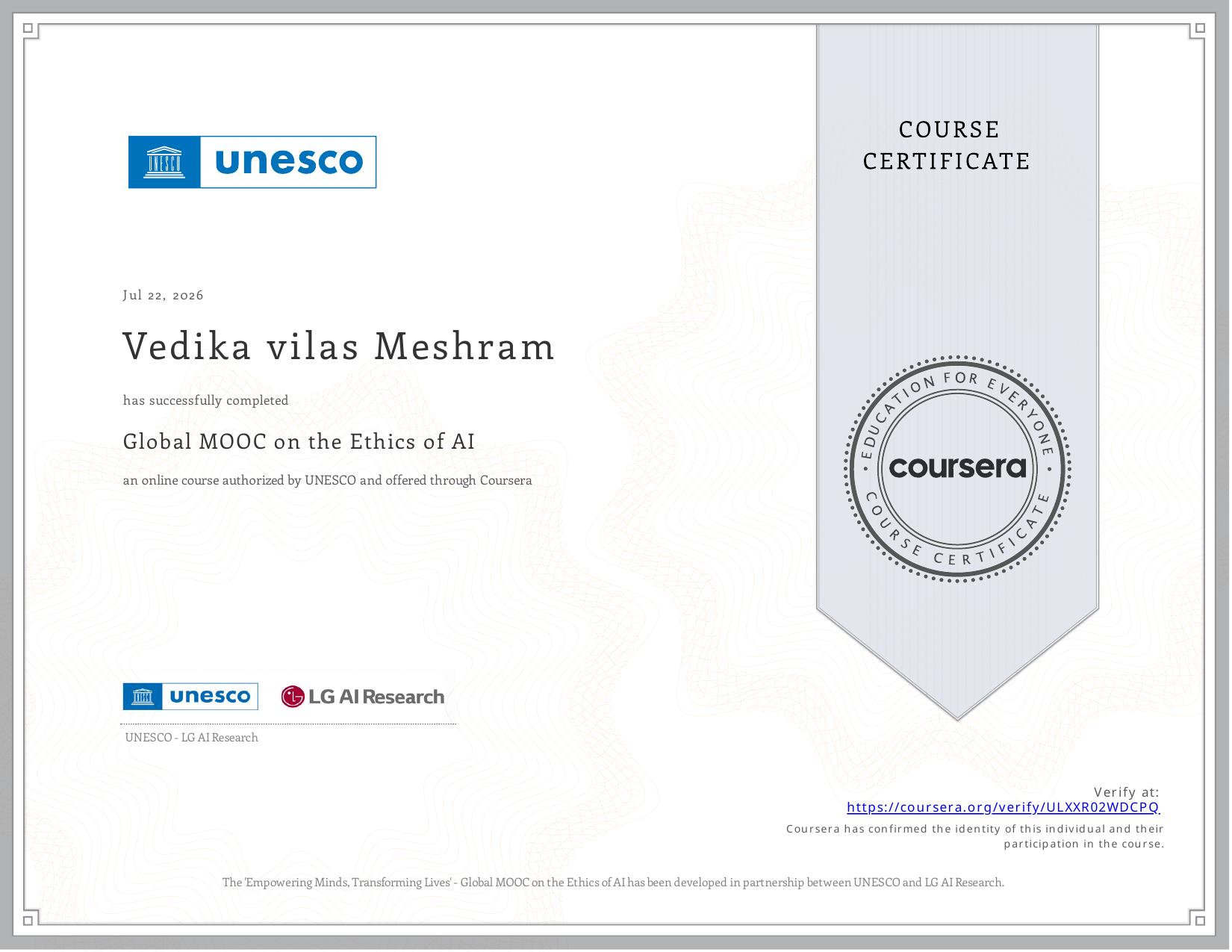
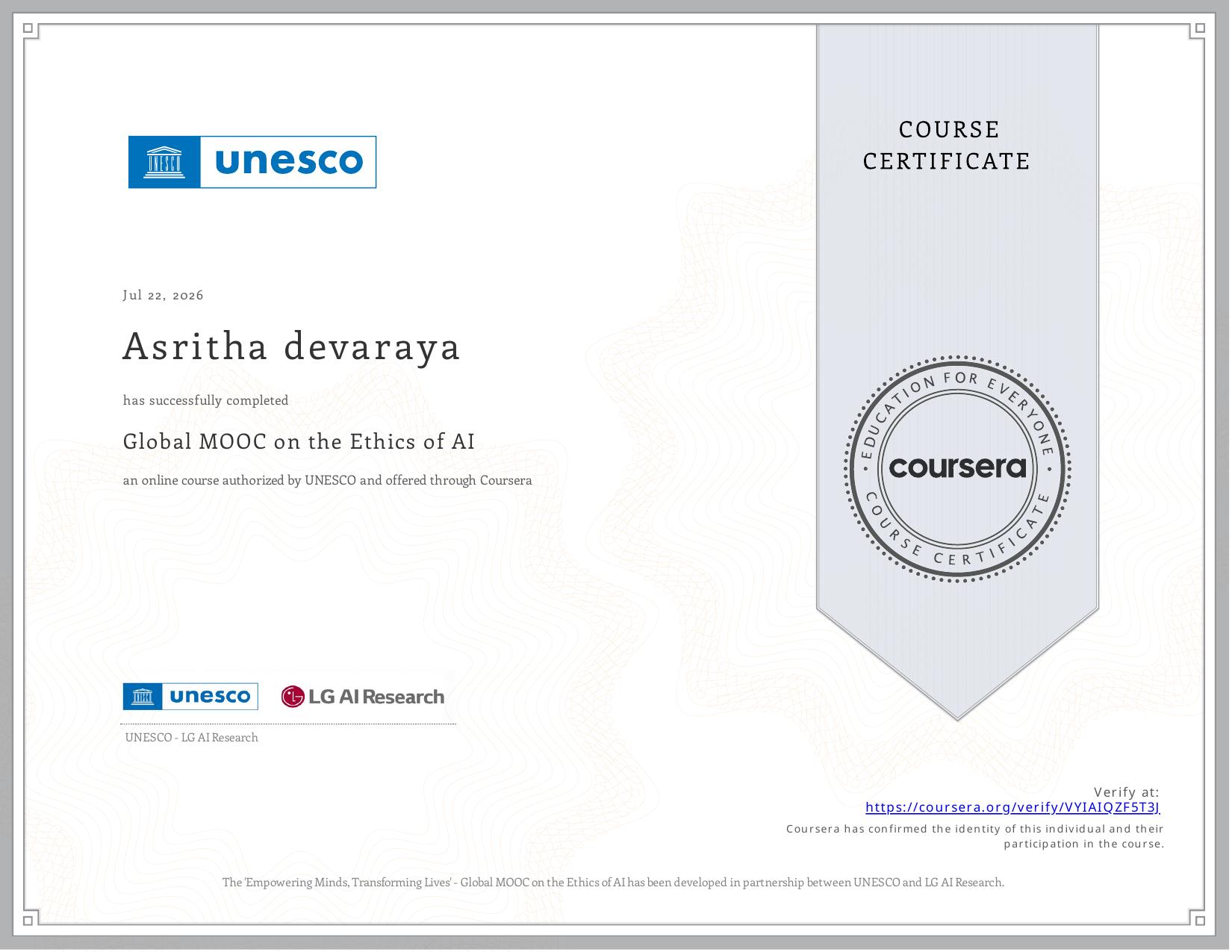
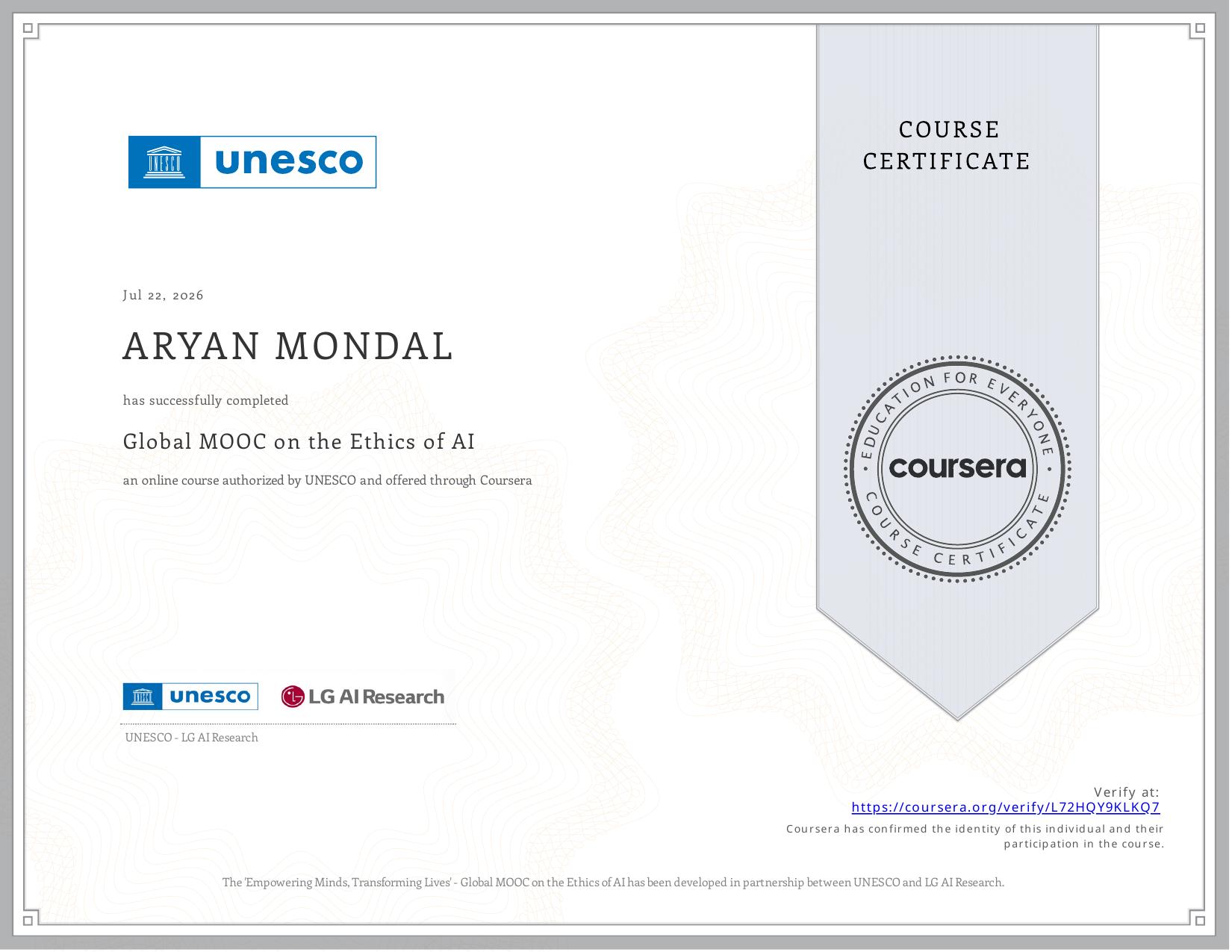
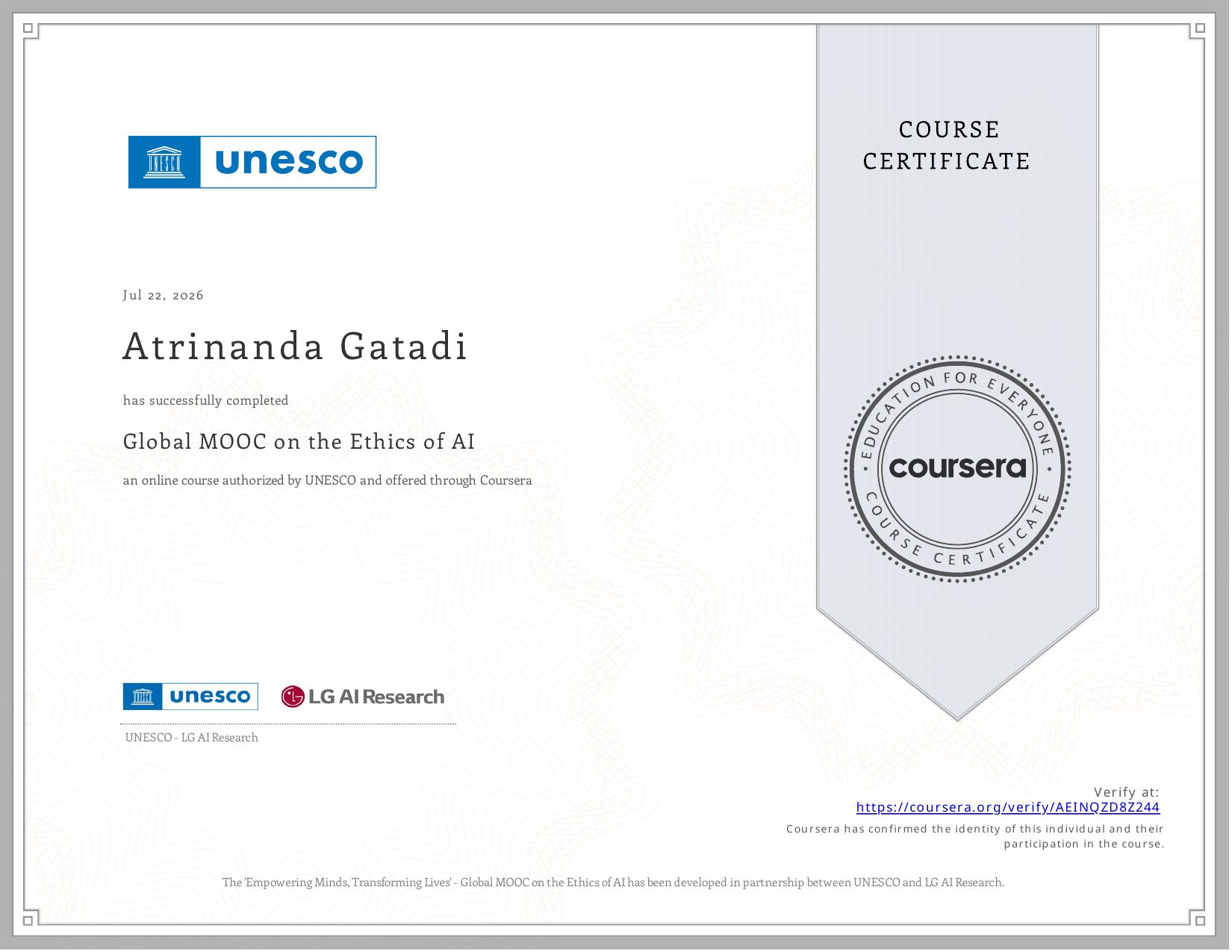
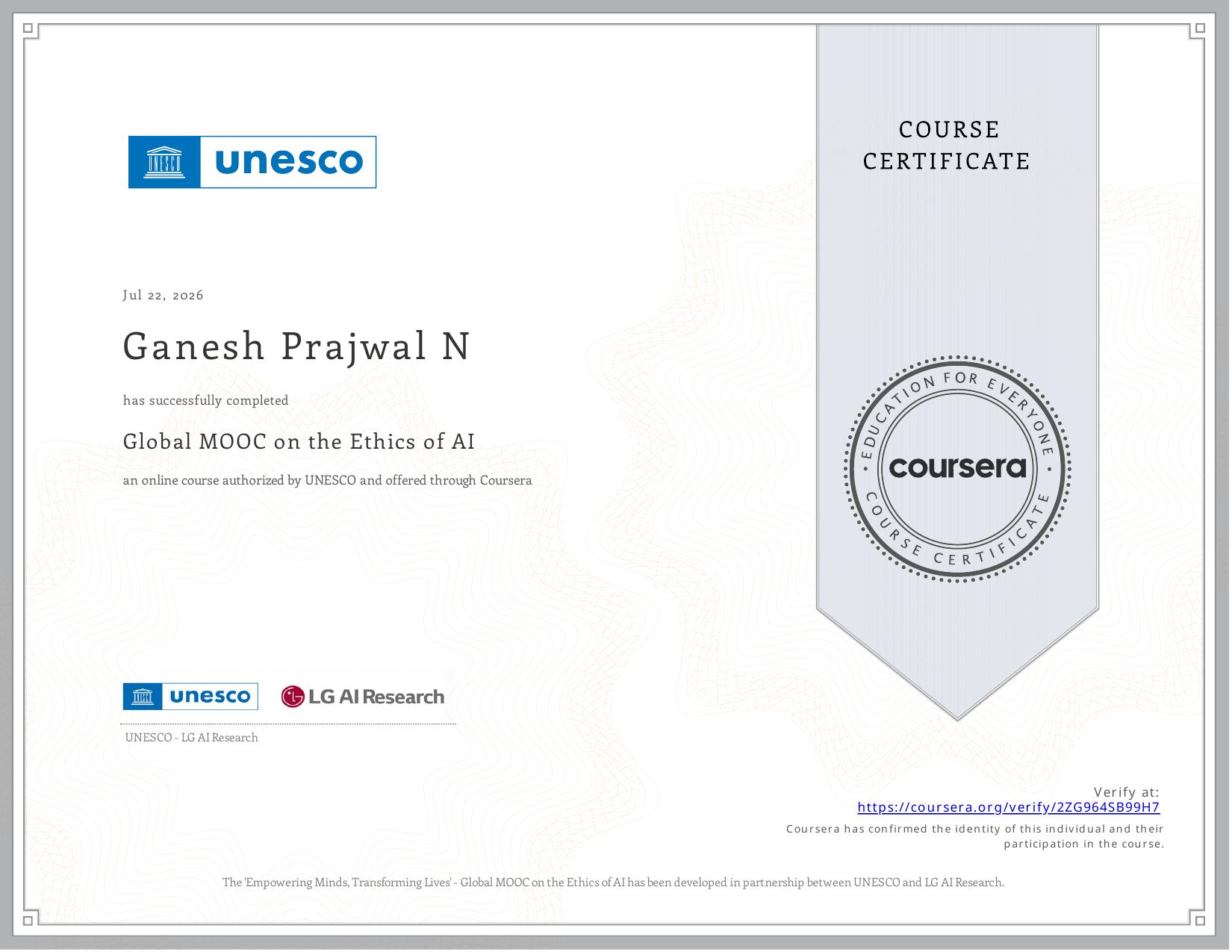
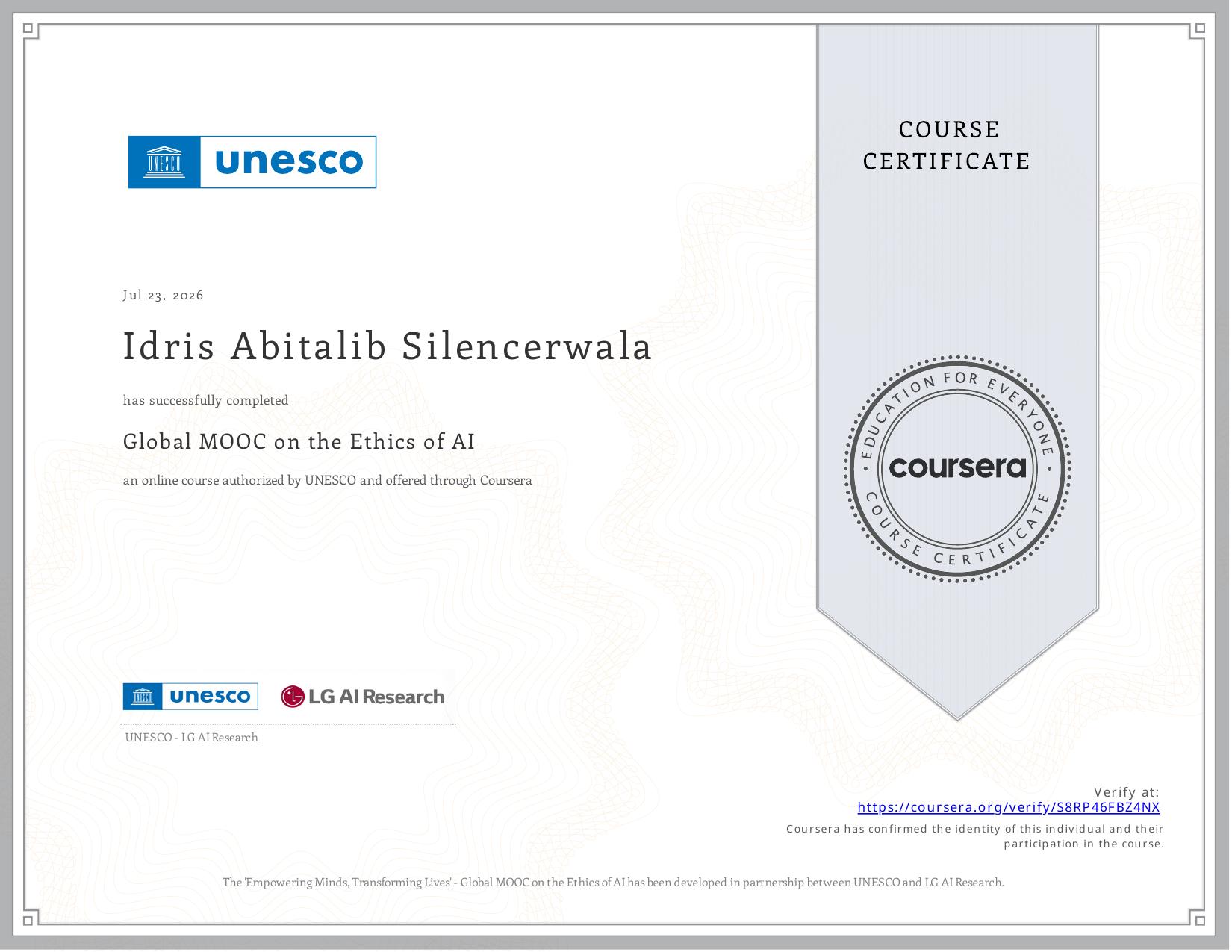
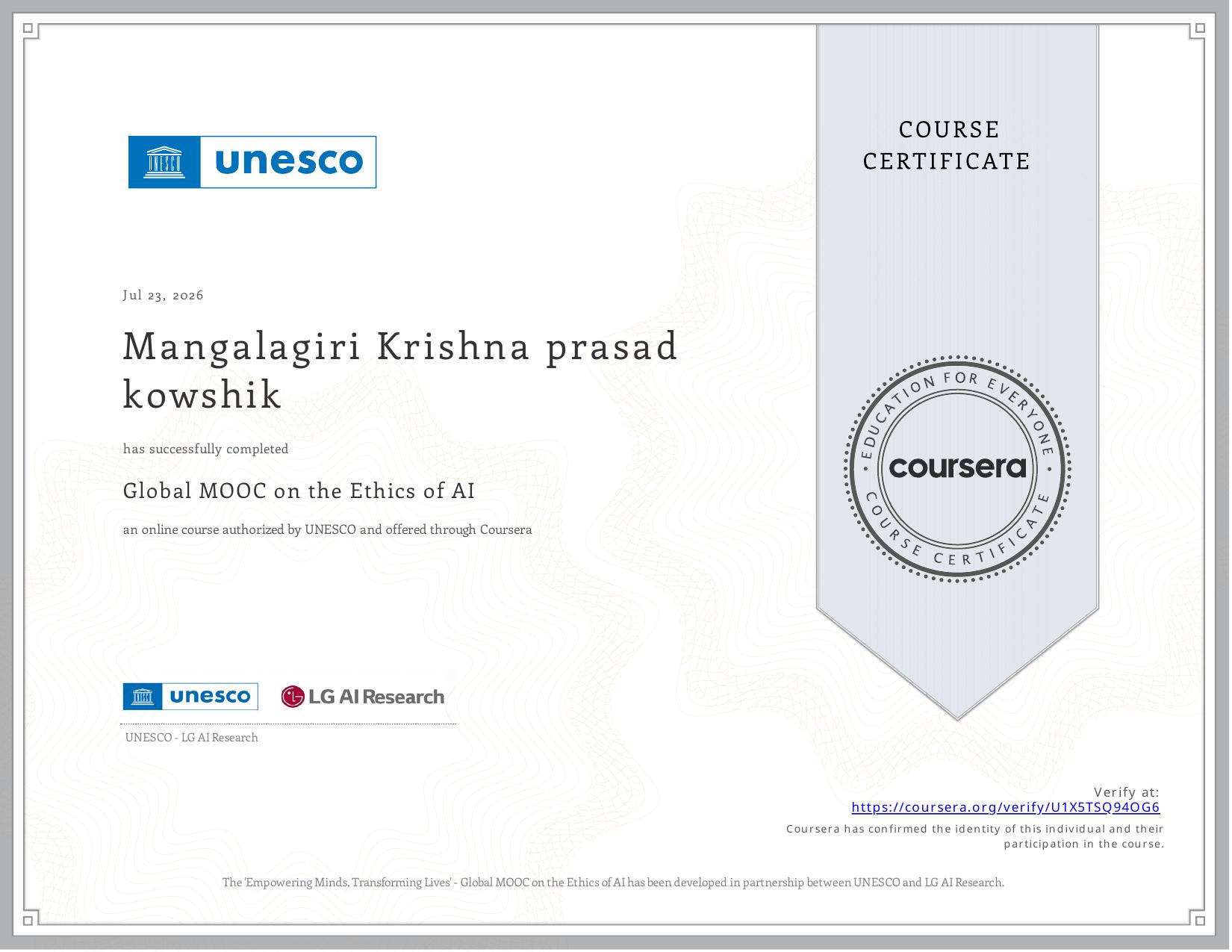
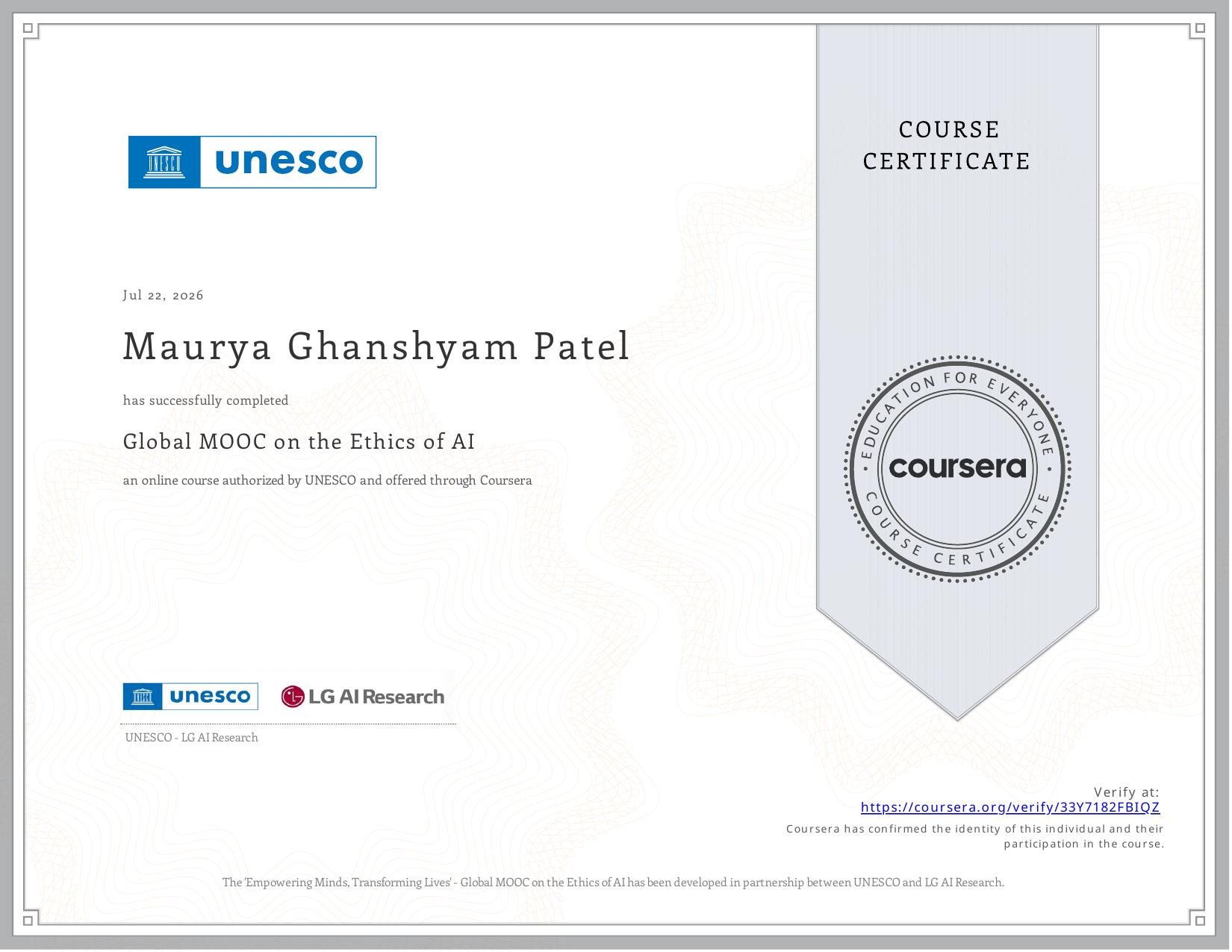
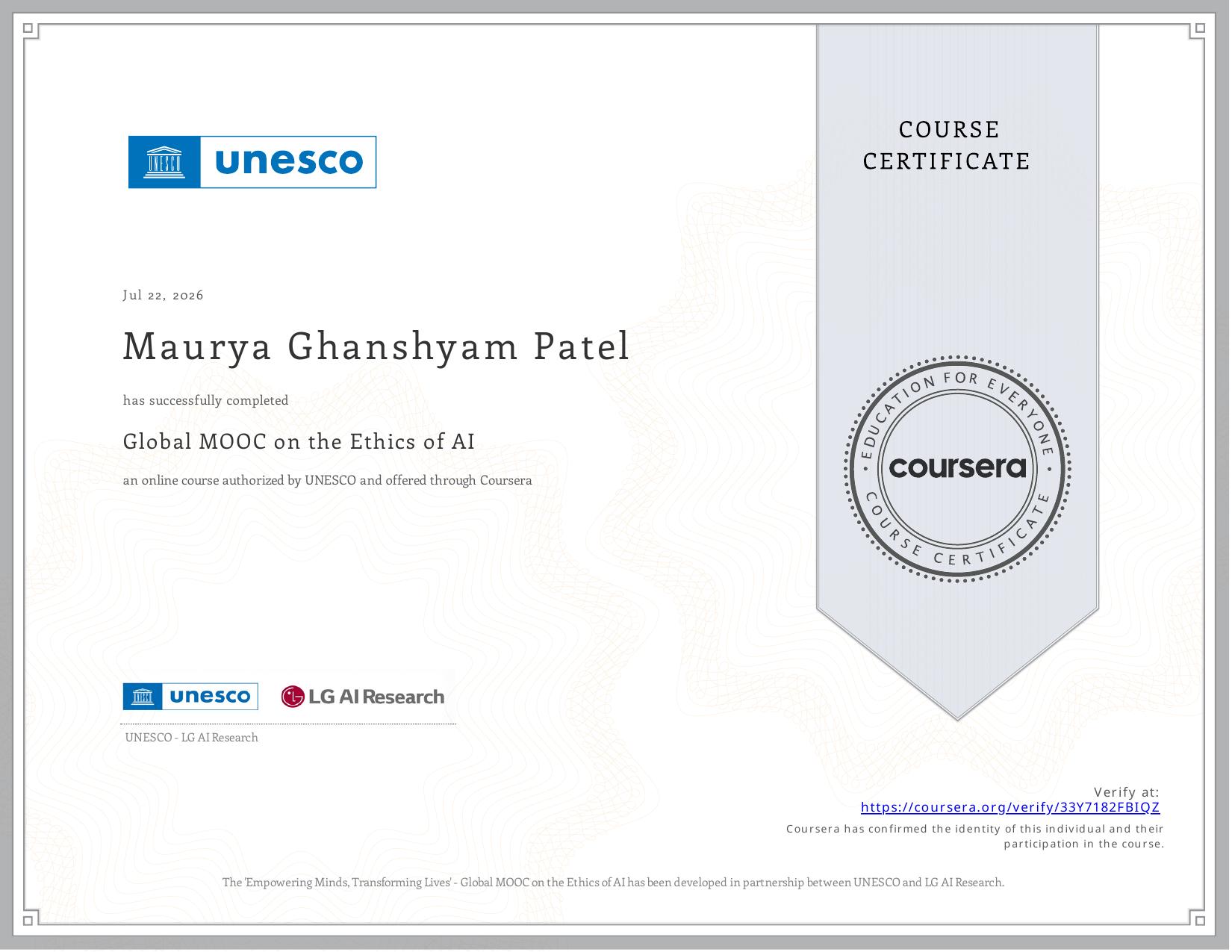
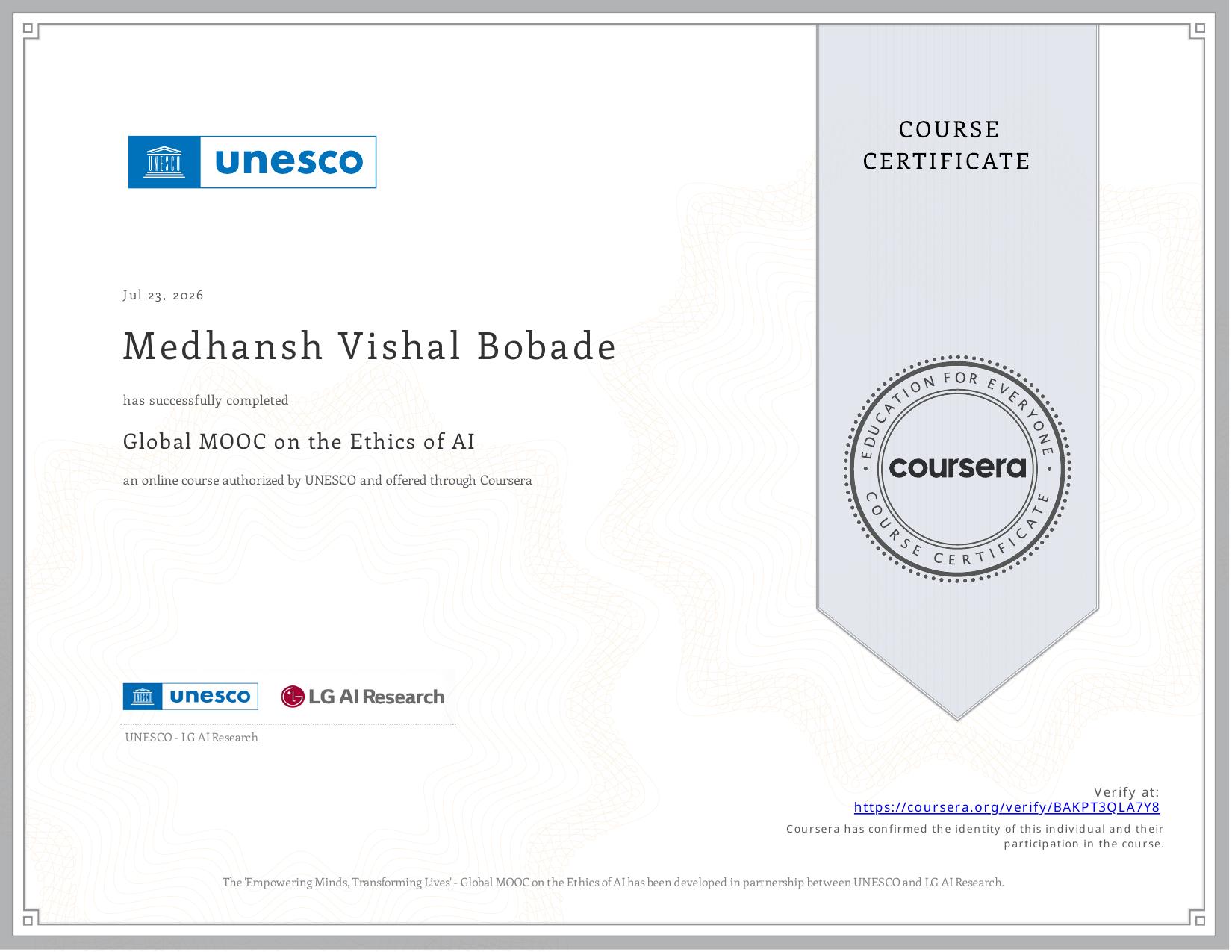
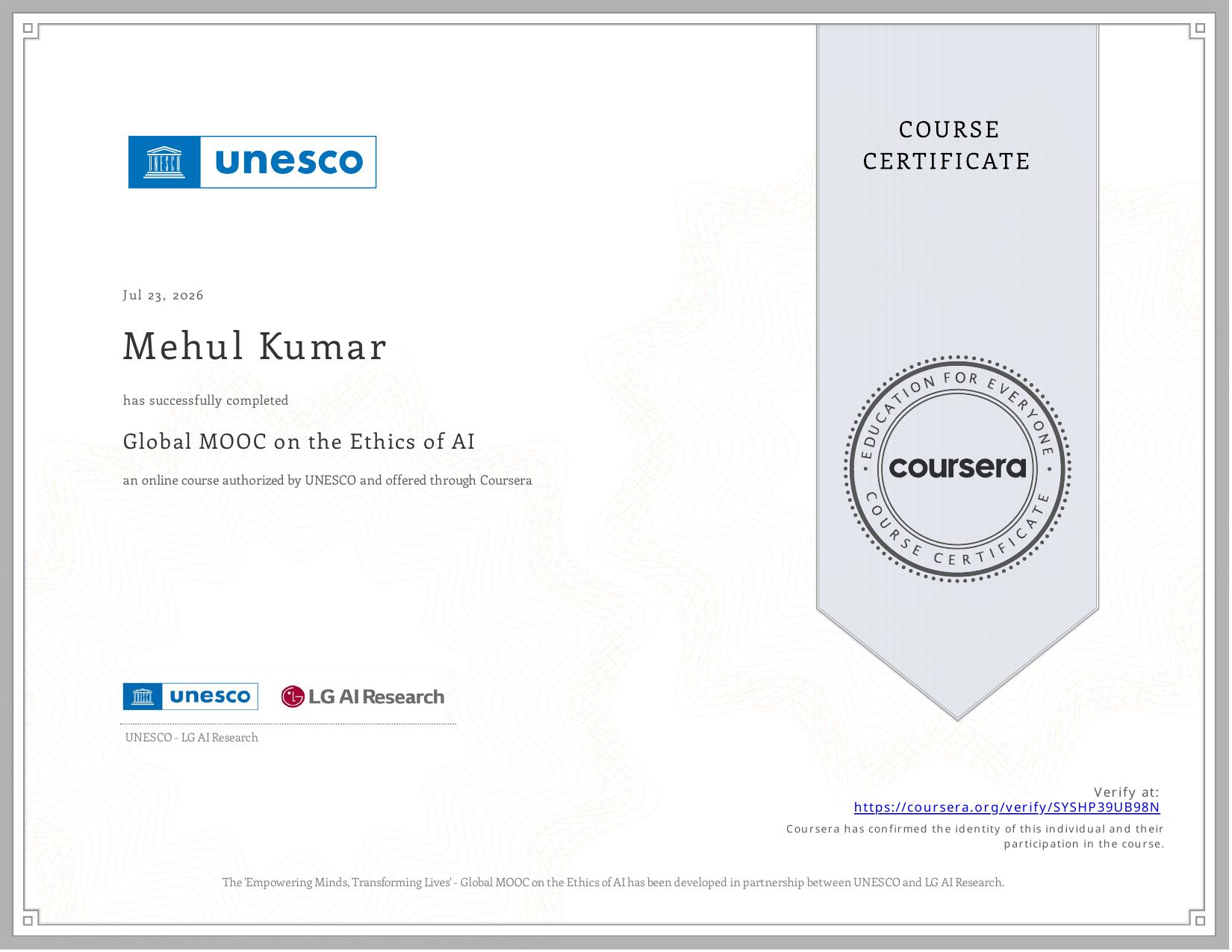
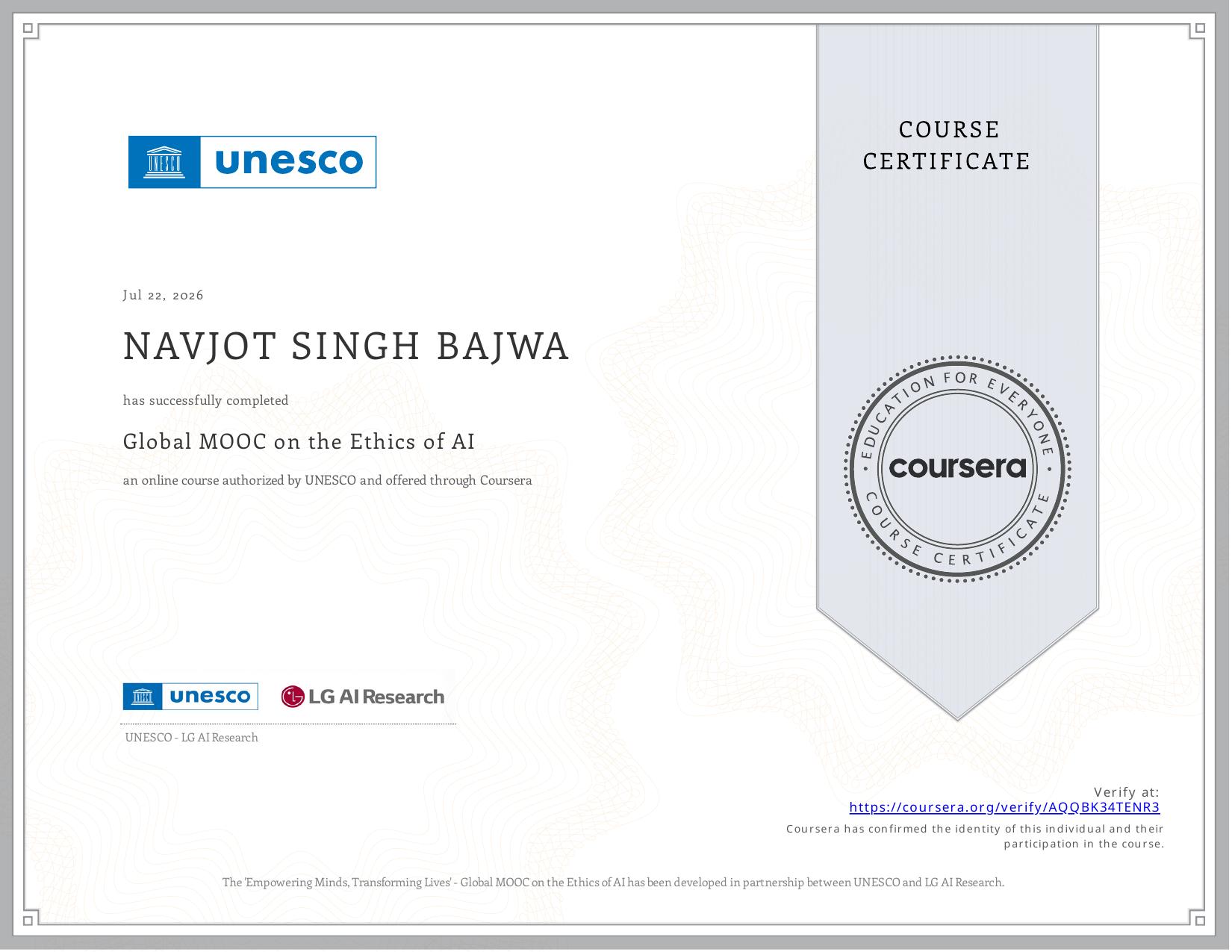
The answer, for me, was the same one it's always been — in a classroom, with students who haven't been told yet that the room is too big for them. I led a student community of 100 through UNESCO and LG AI Research's Global MOOC on the Ethics of AI, taking the exact questions raised on that UN panel — access, agency, accountability — and building them into the foundation of how the next generation is taught to think about AI, not just use it.
This wasn't a side project. It was the same belief from Nations Room G, applied at ground level: education isn't one application of AI policy, it's the foundation the policy has to stand on. A hundred undergraduate researchers now hold that foundation as a certified part of who they are.
Together we celebrated our first 100 undergraduate researchers certified in the Ethics of AI — and I hold Certificate 101, because leading that belief meant living it too.Dr. Smrite Goudhaman, on Certificate 101/100
I proudly hold Certificate 101
Because together we celebrated our first 100 undergraduate researchers certified in the Ethics of AI — and the 101st seat at that table belonged to the person who asked them to show up in the first place.
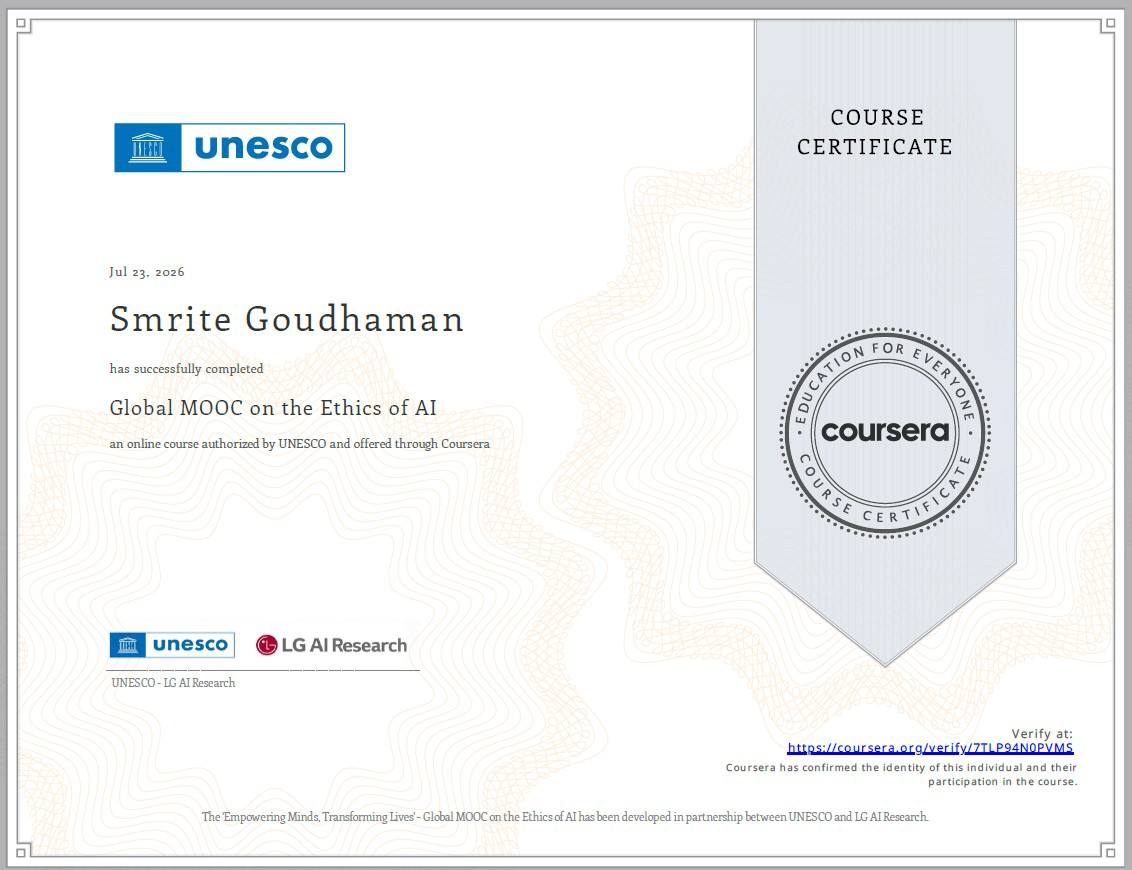
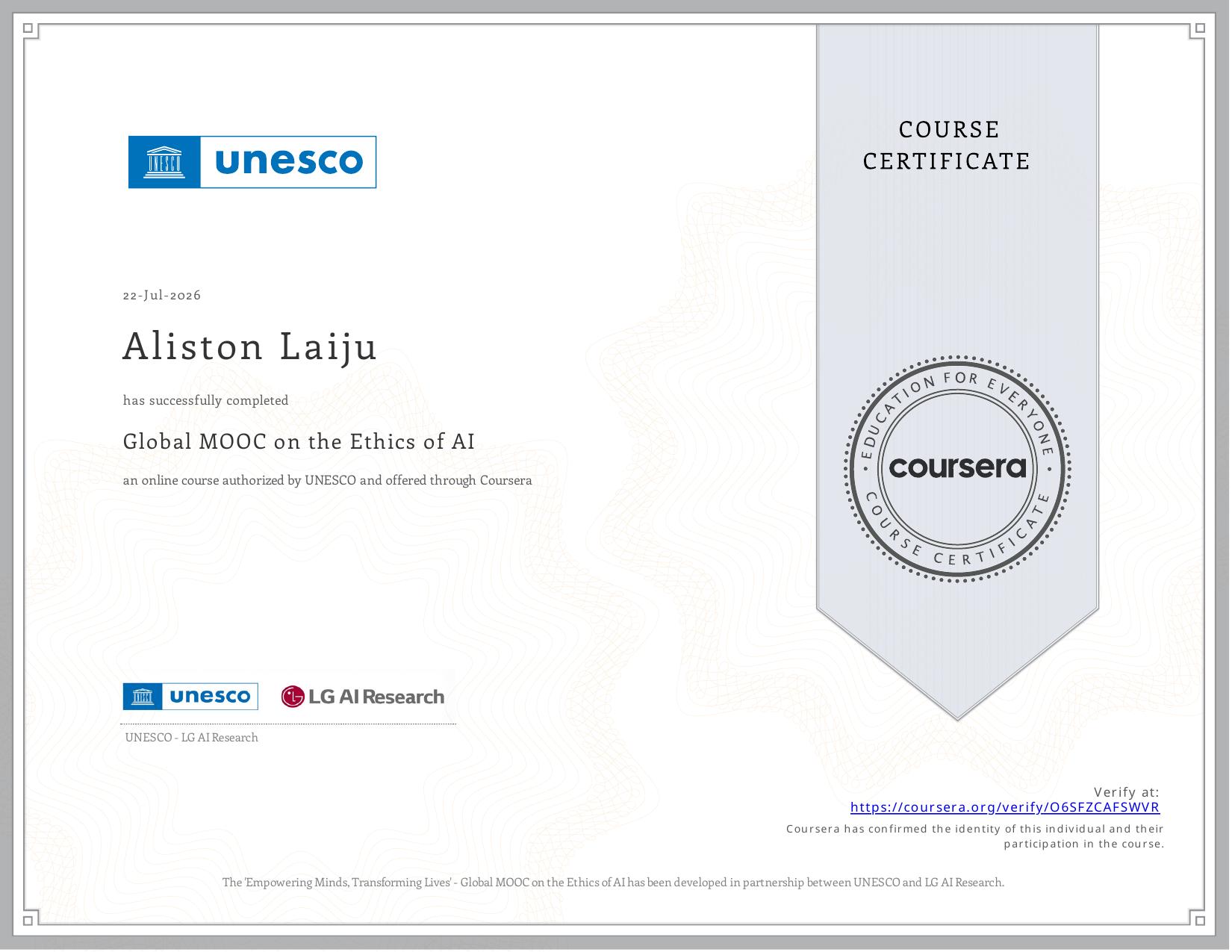
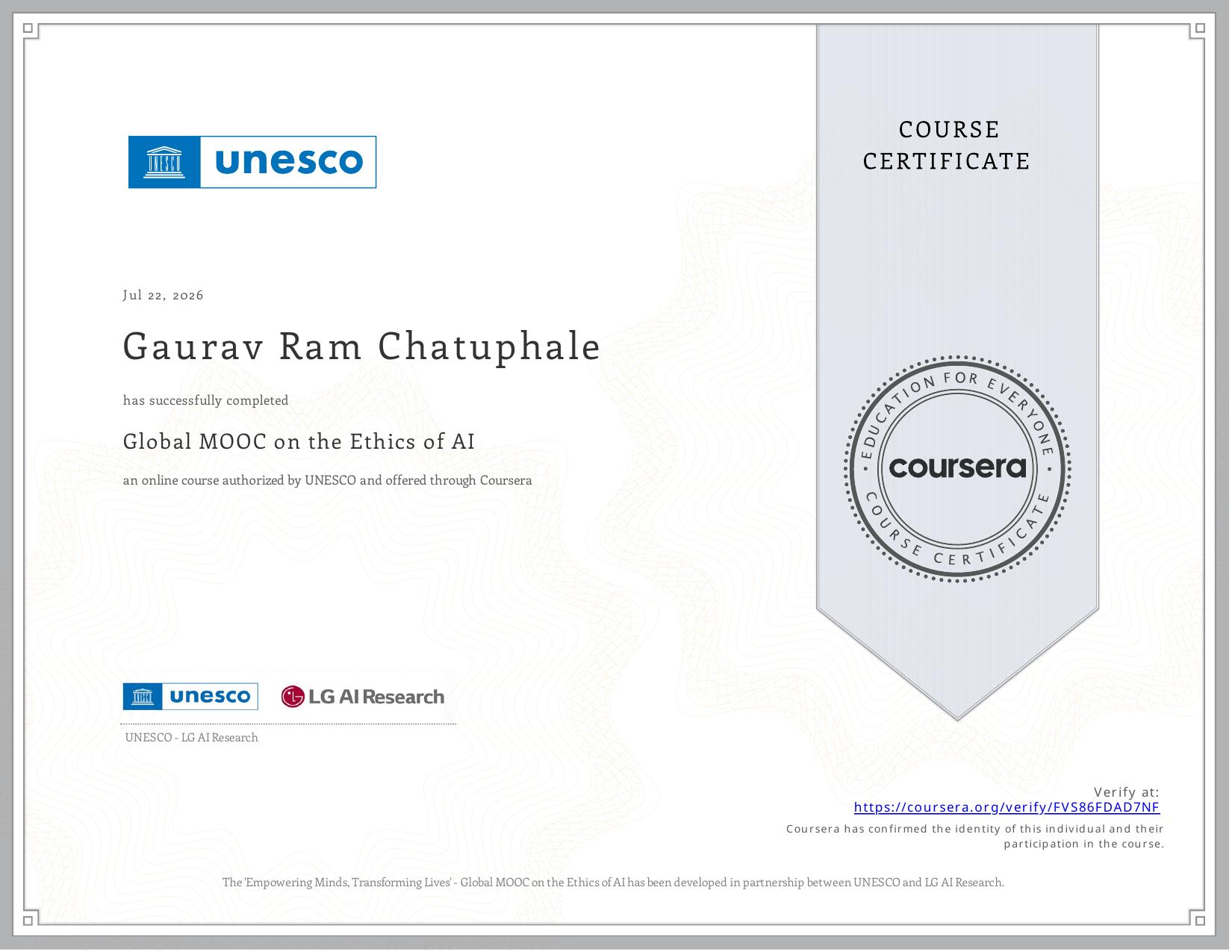
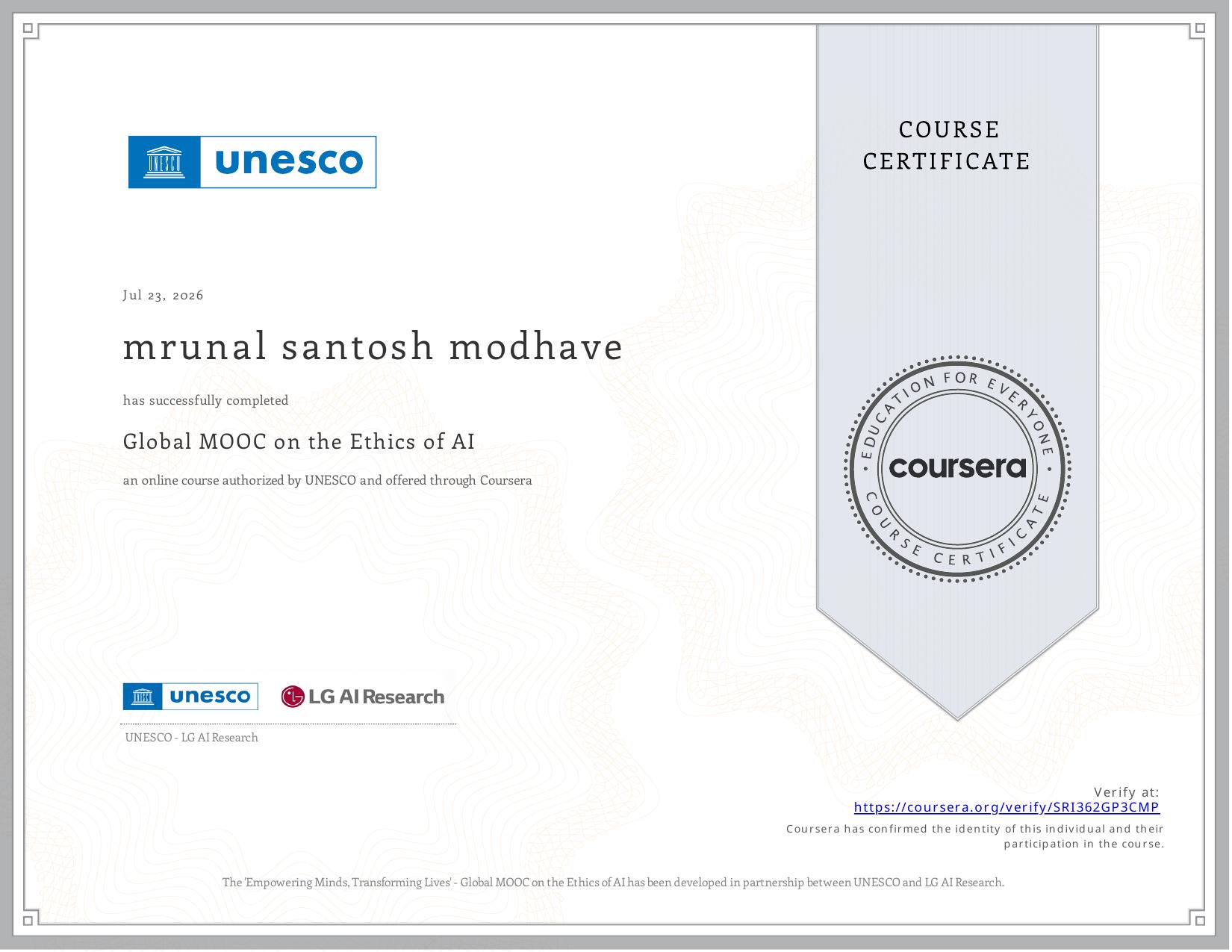
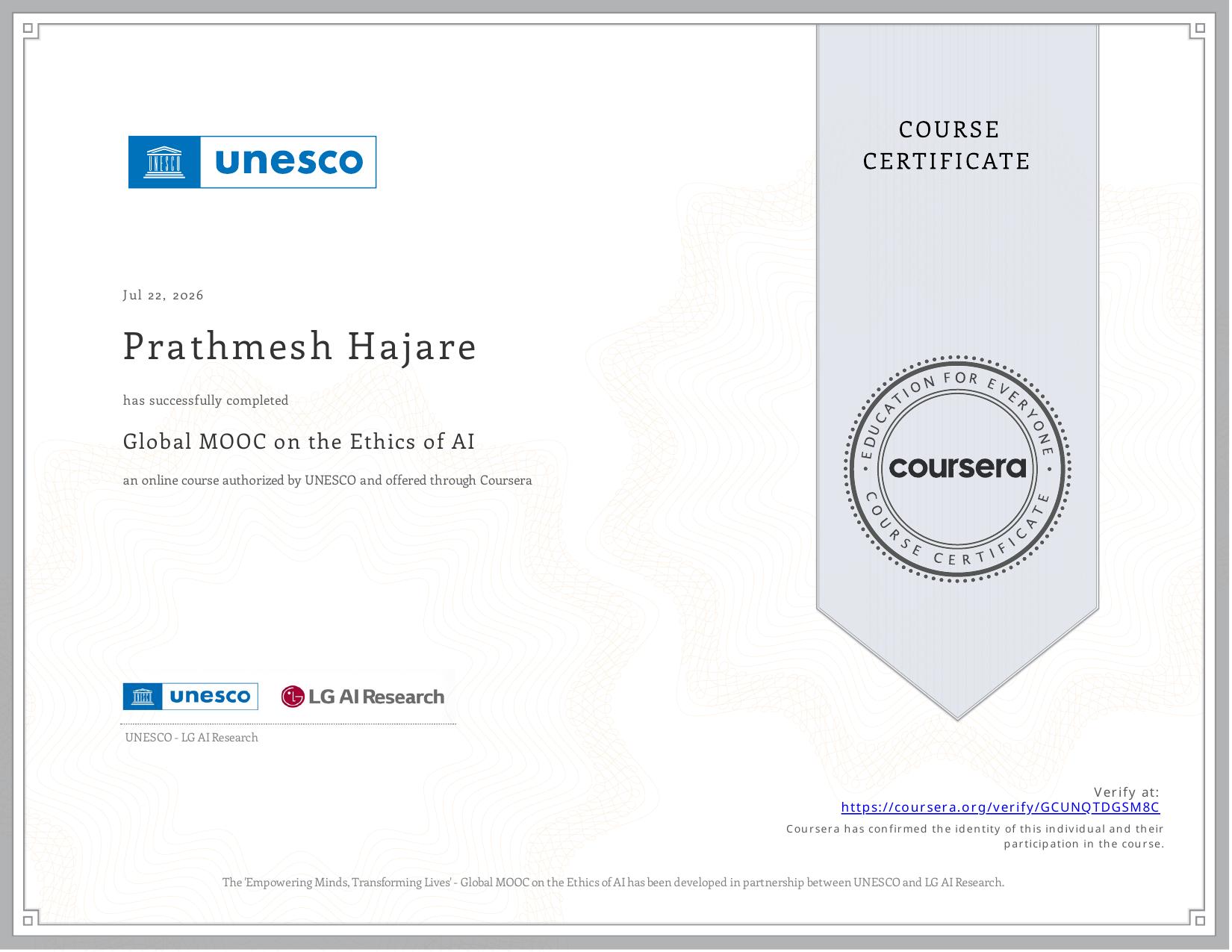
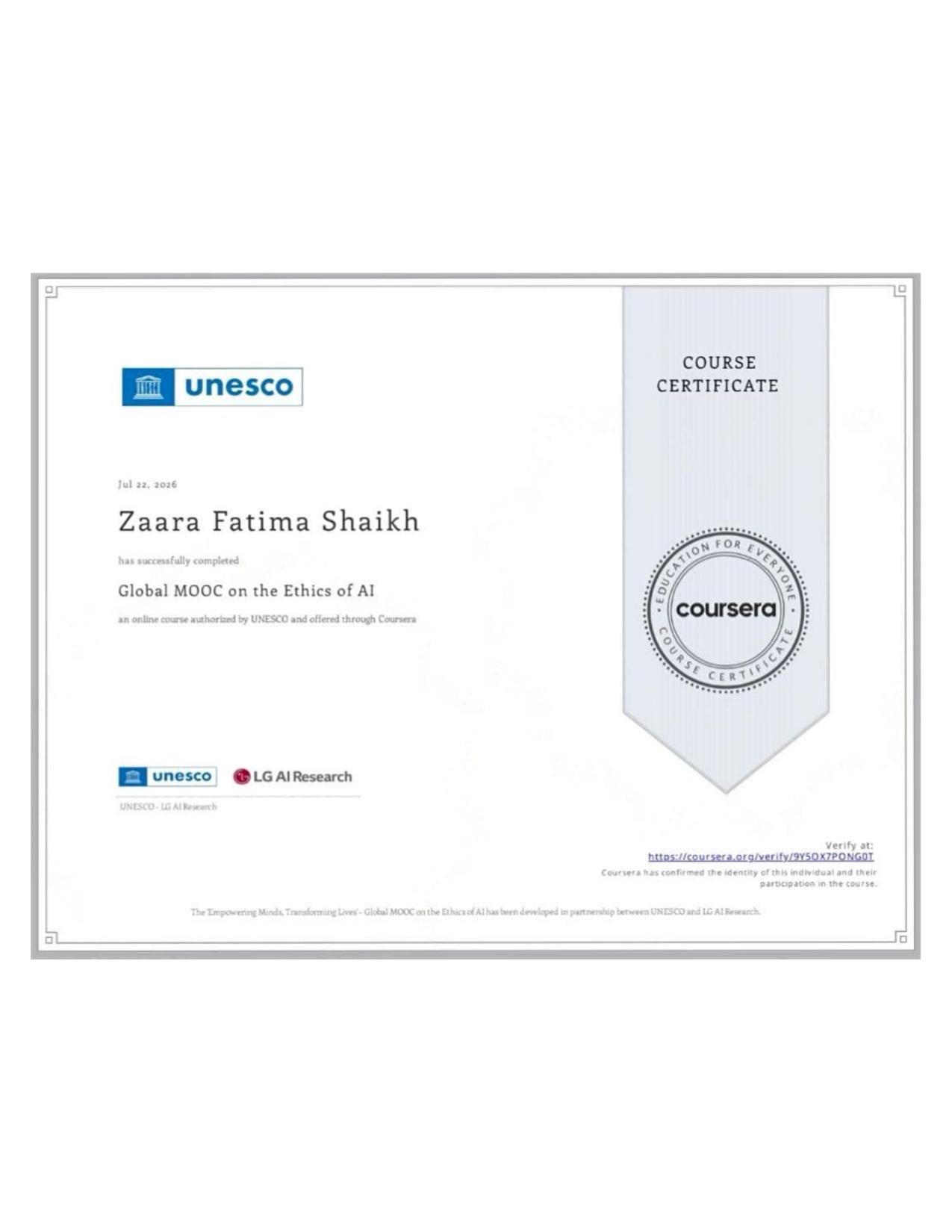
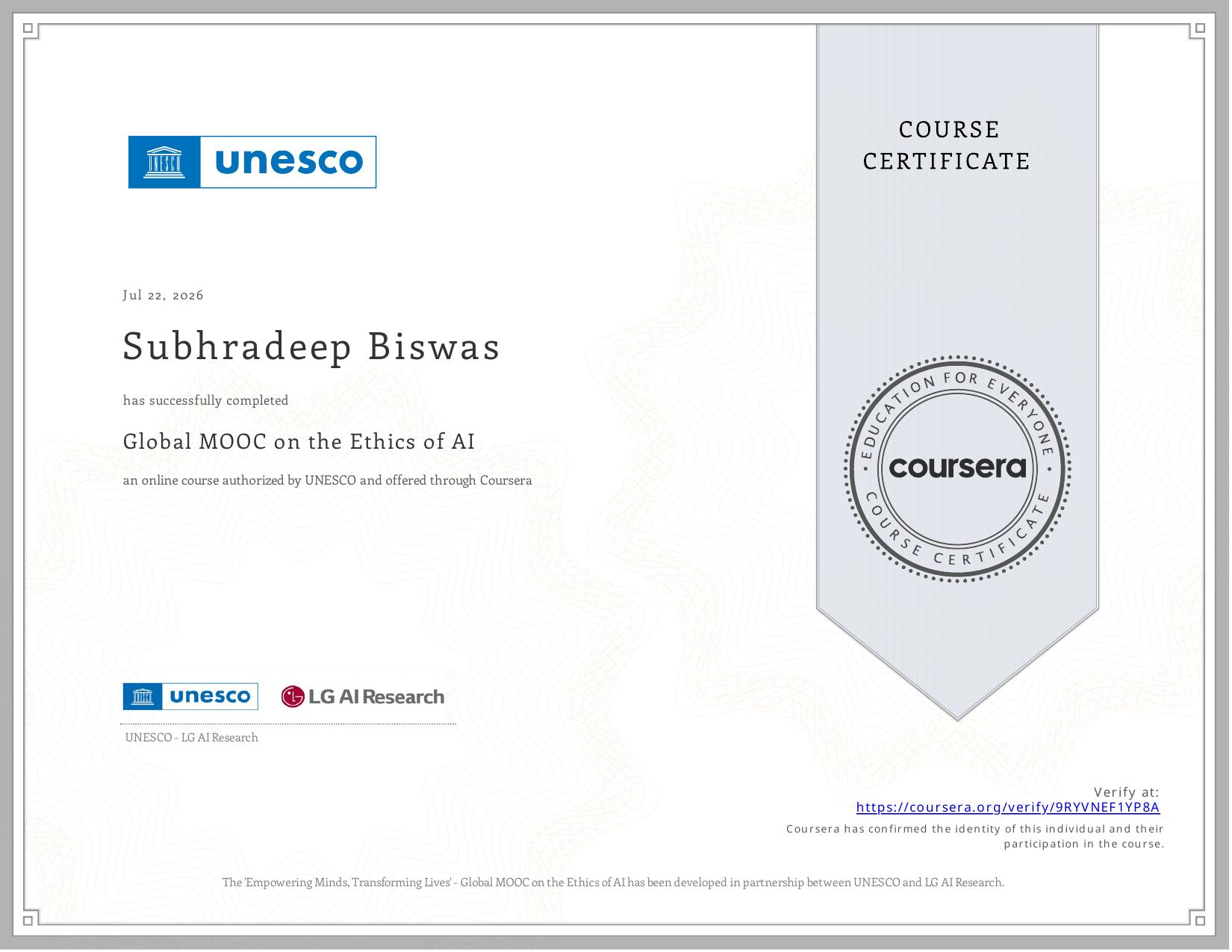
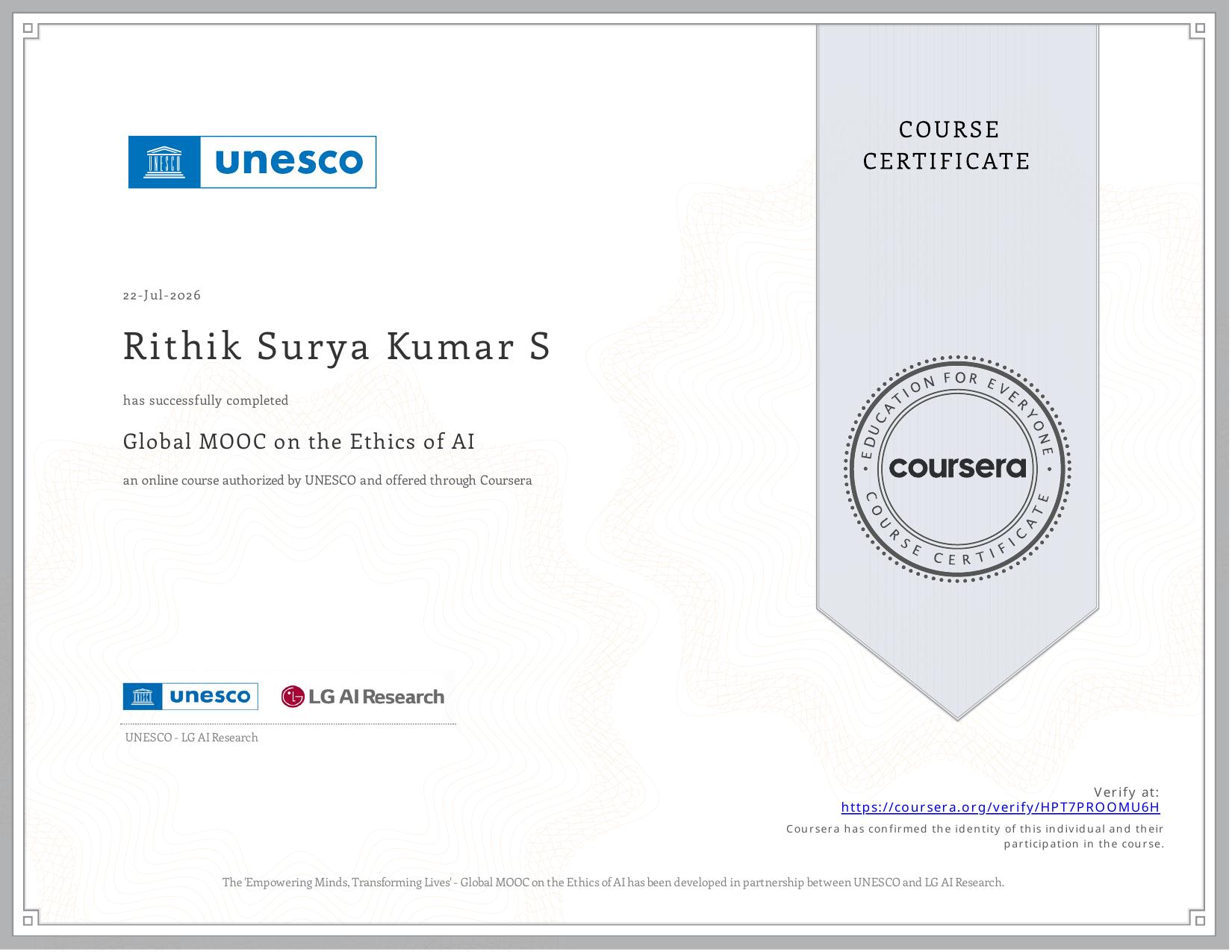
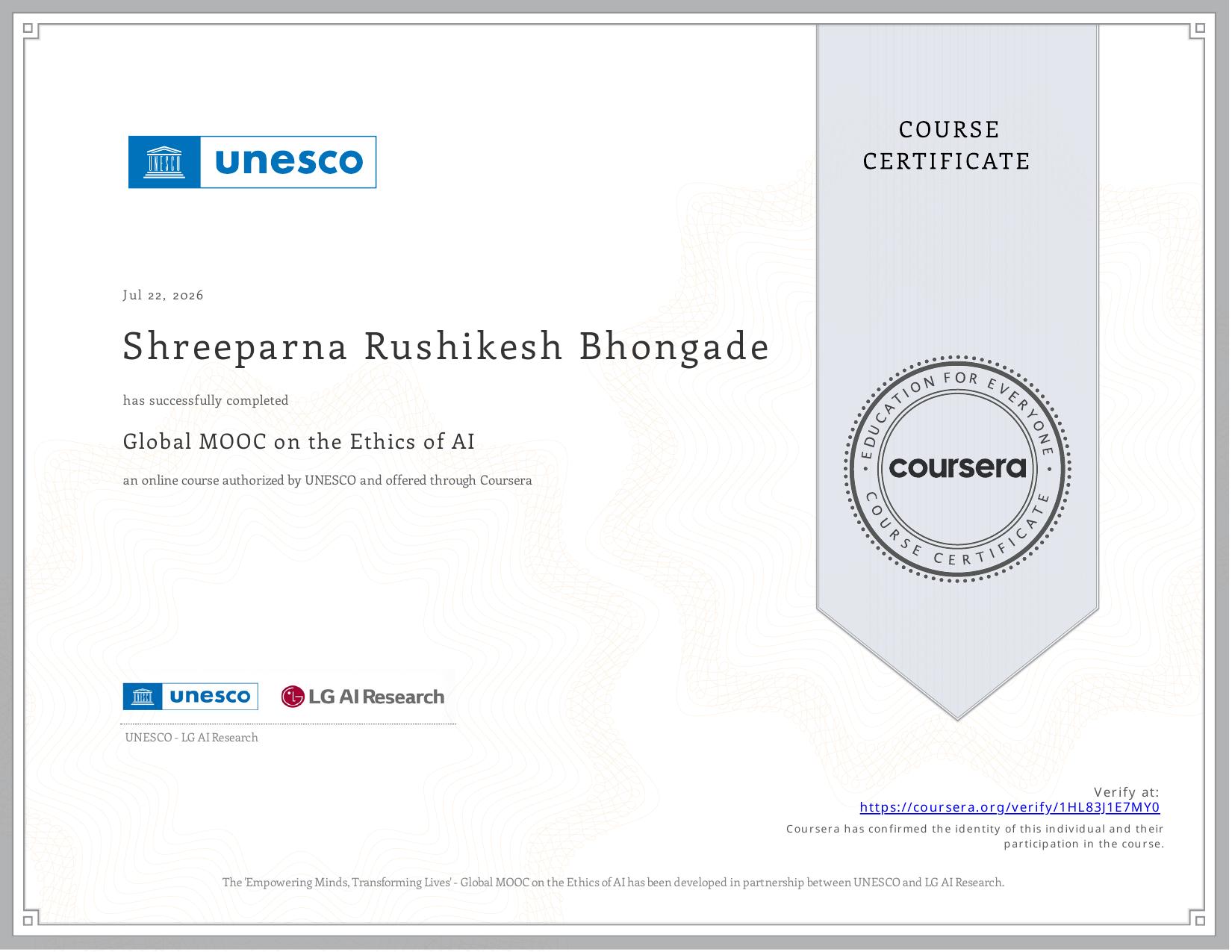
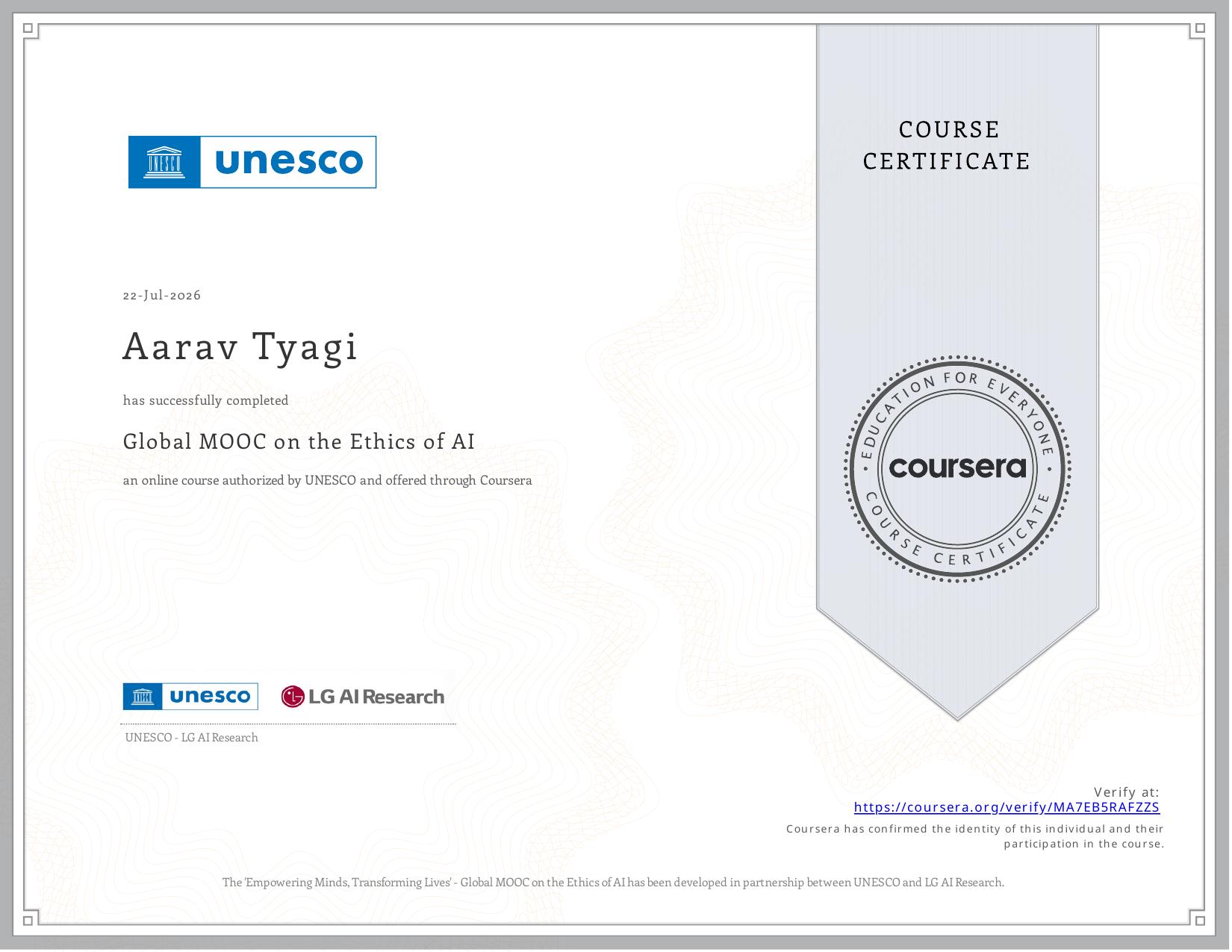
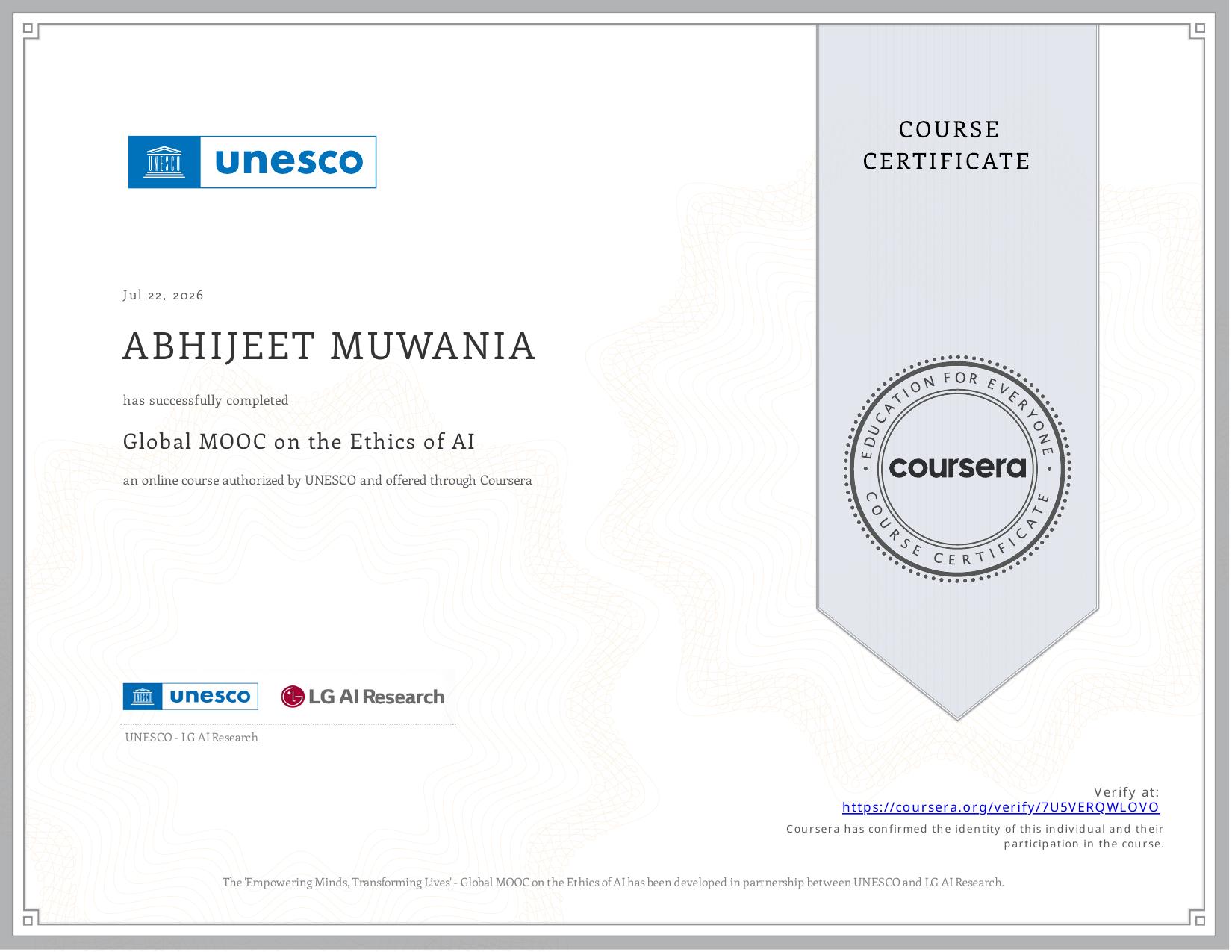
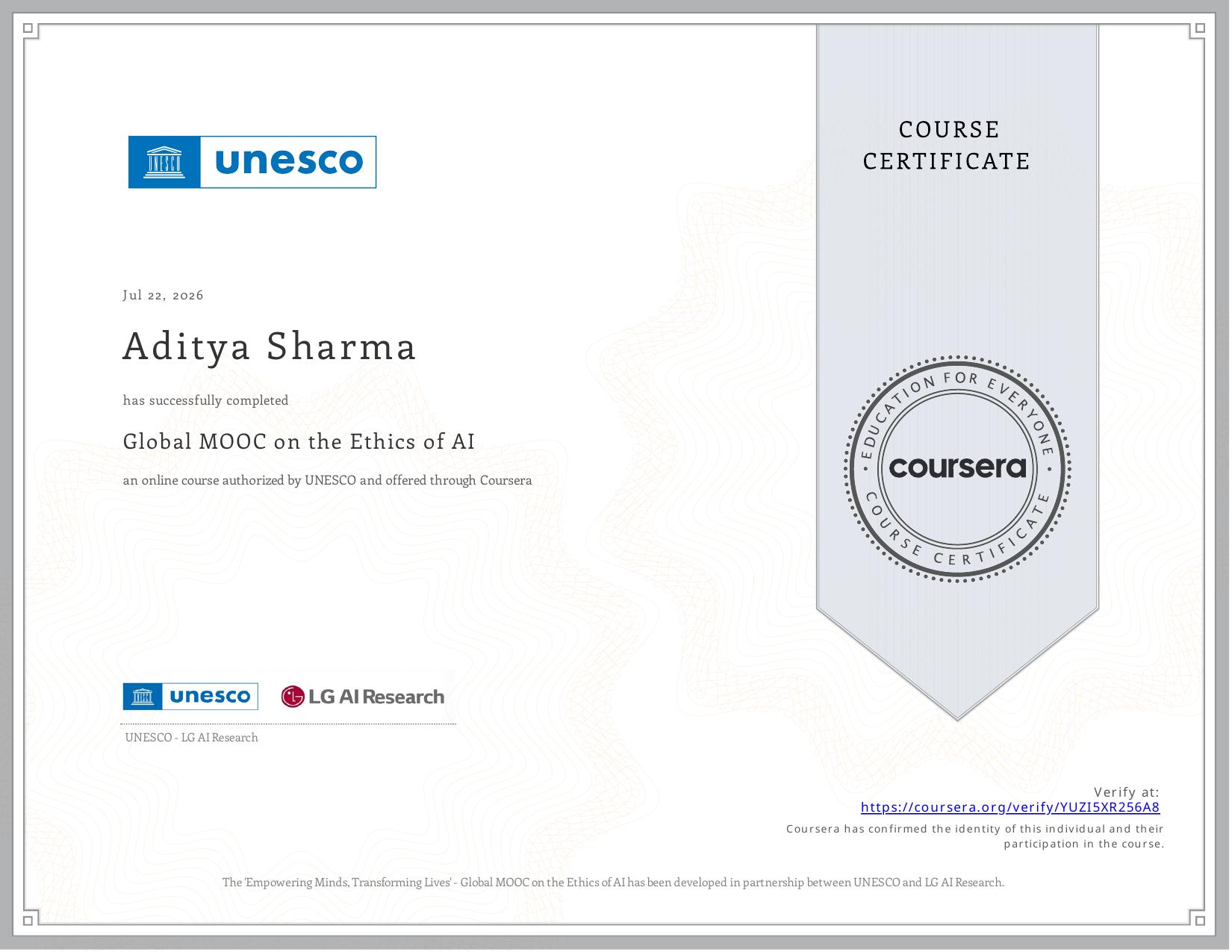
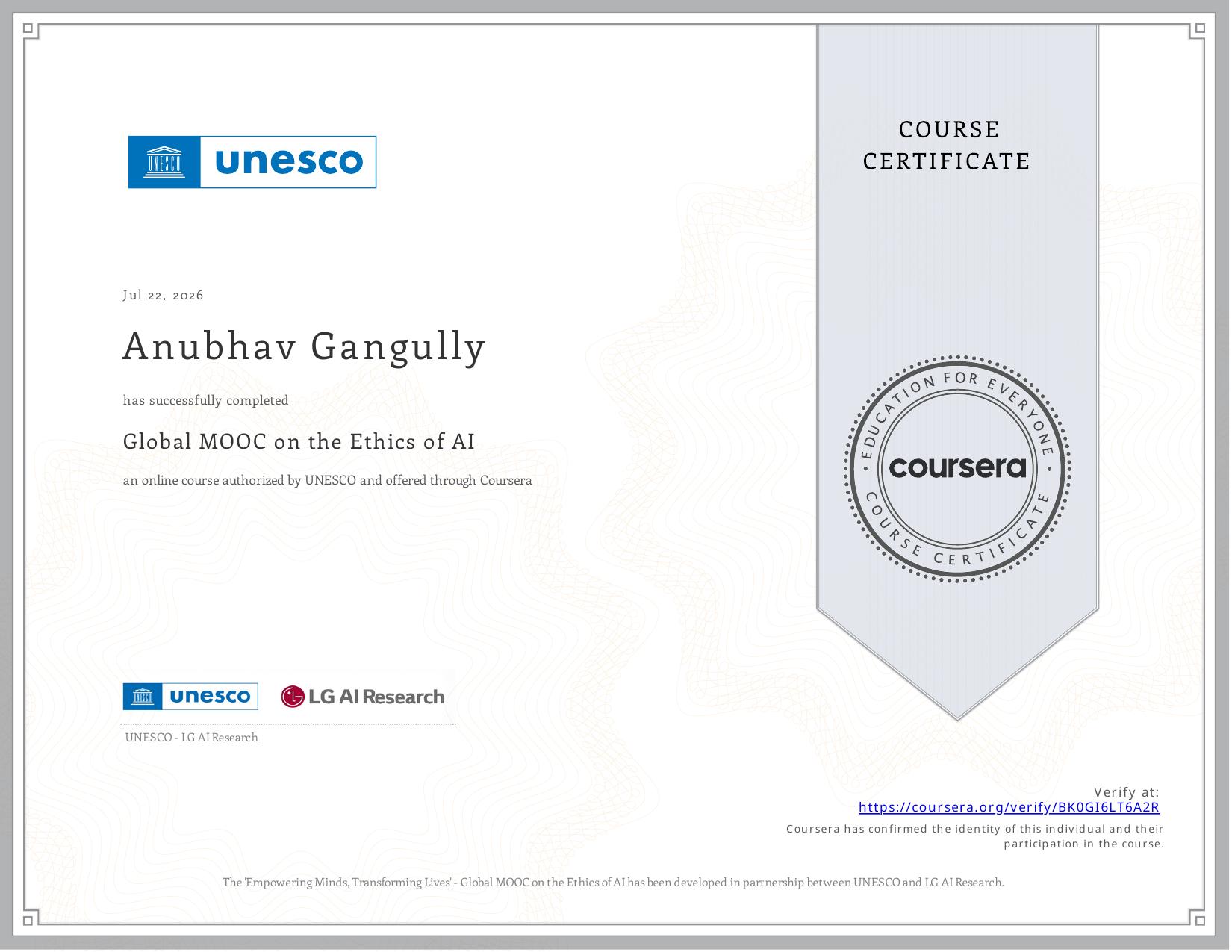
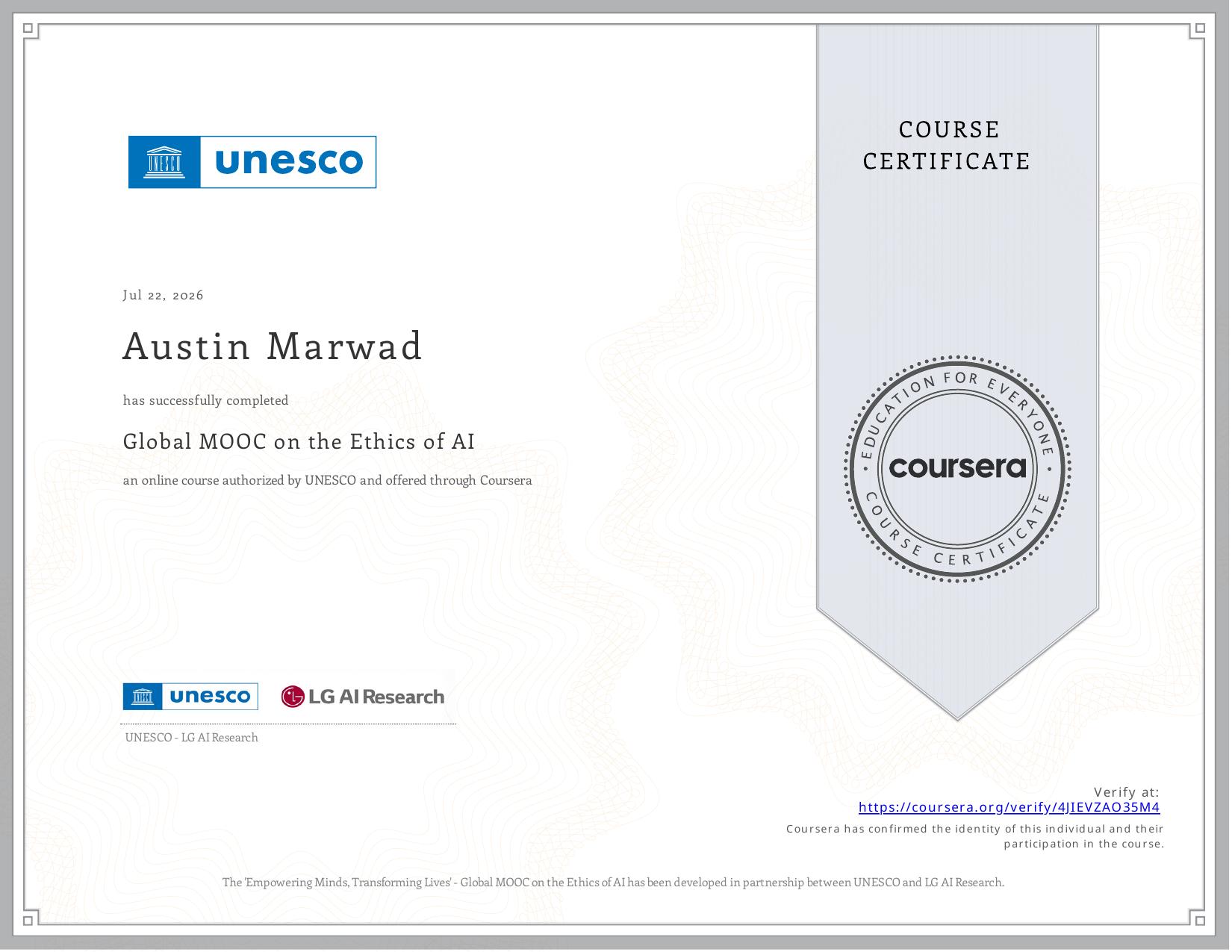
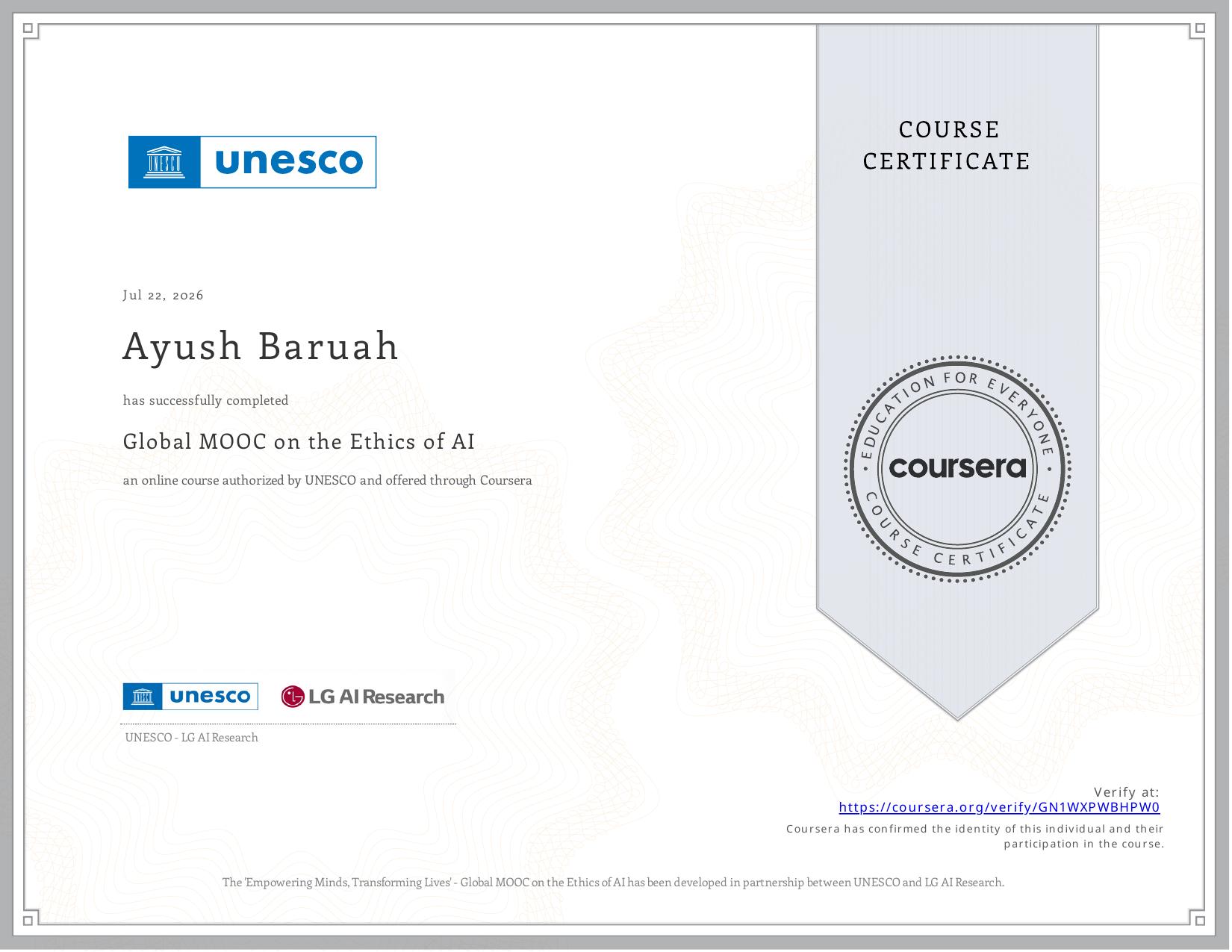
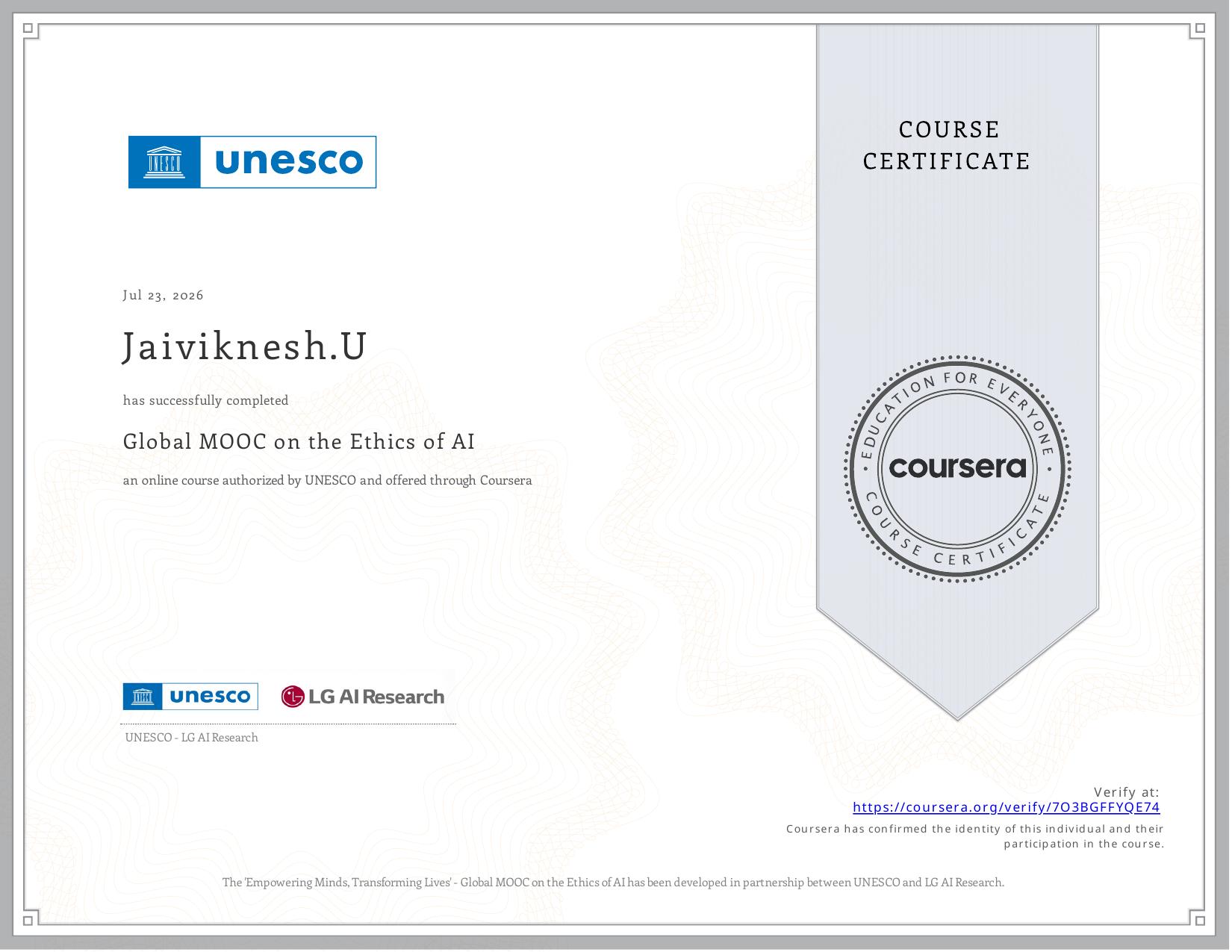
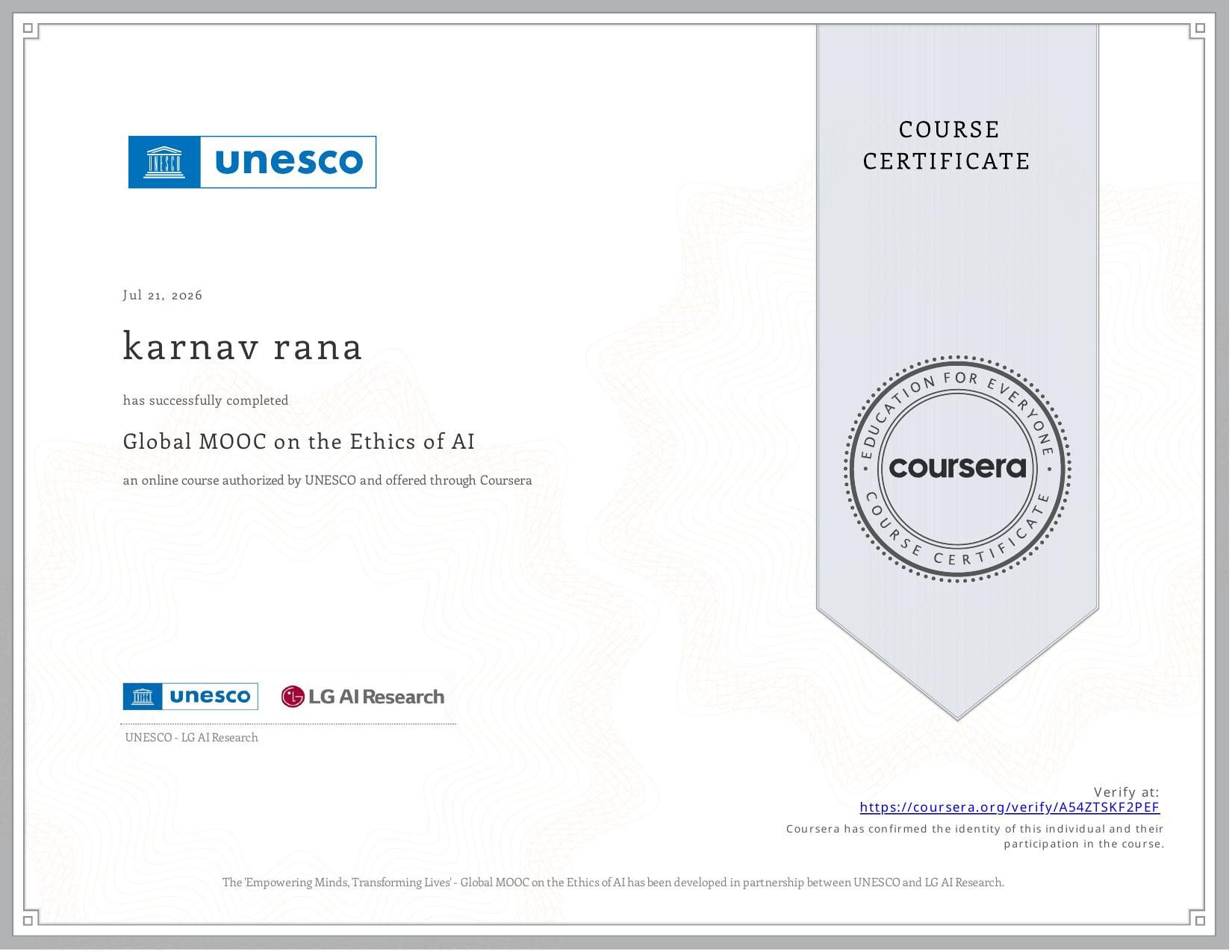
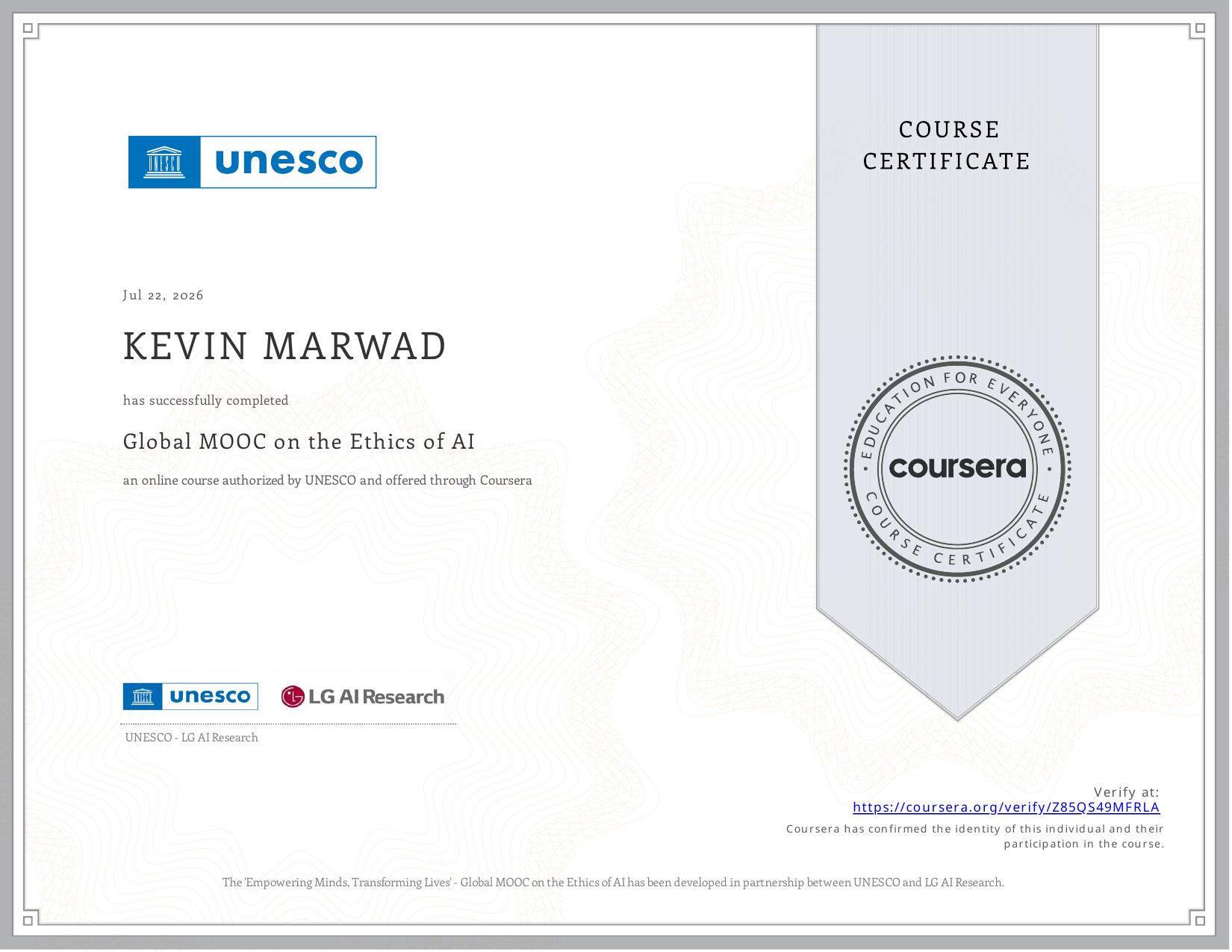
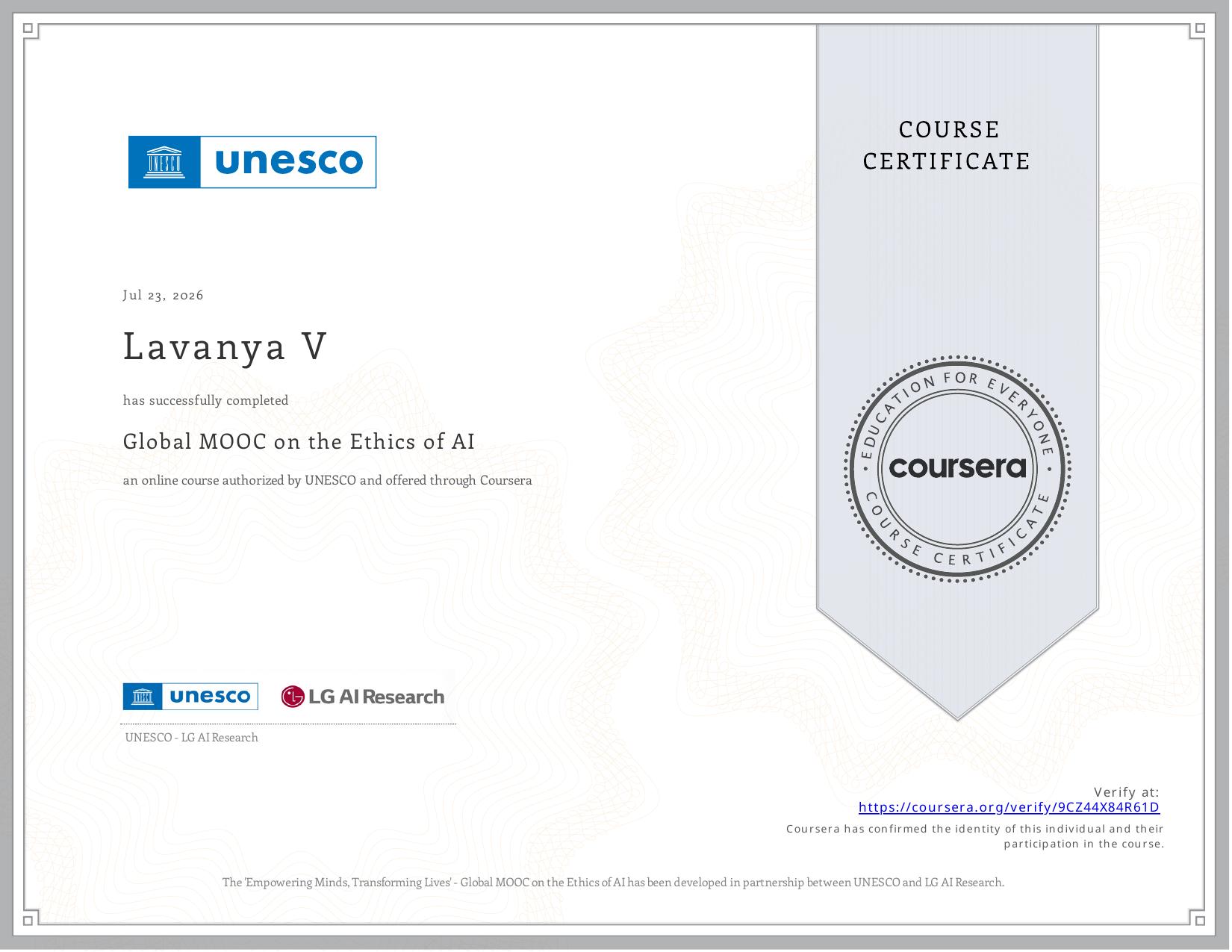
UNESCO × LG AI Research × CourseraEvery Certificate, One Belief
Hover or tap any card to flip it. One hundred undergraduate researchers, certified in the Ethics of AI — and one 101st, held by the person who led them there.
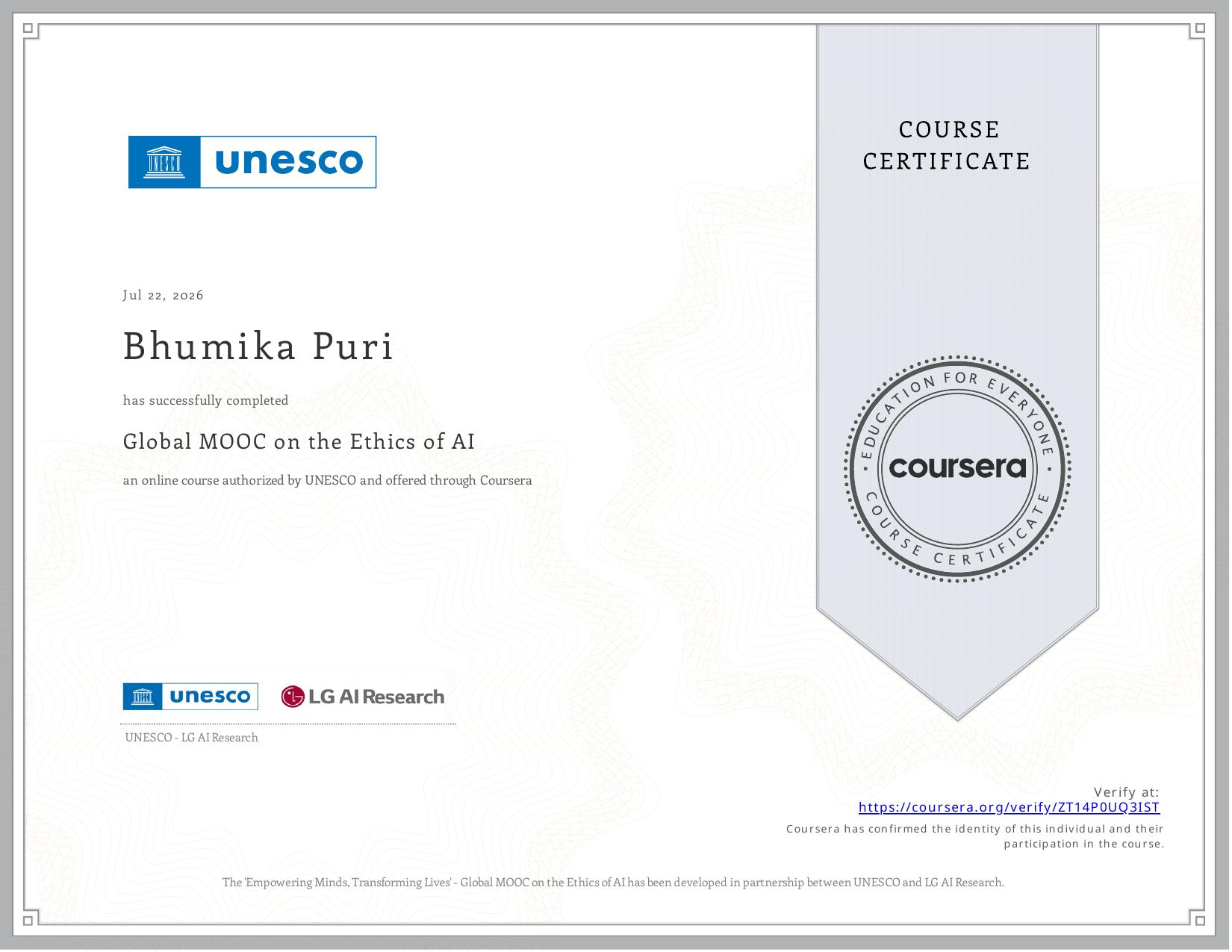
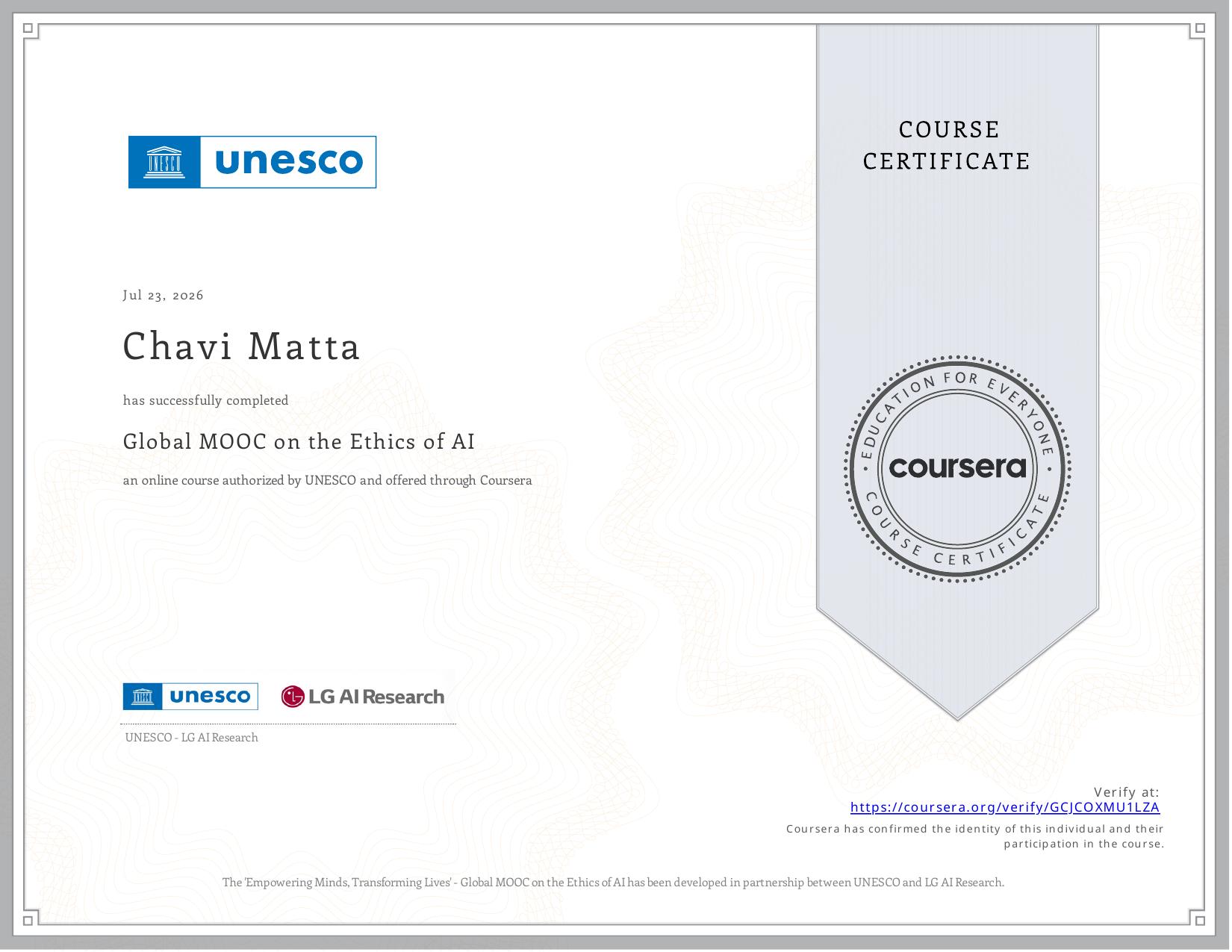
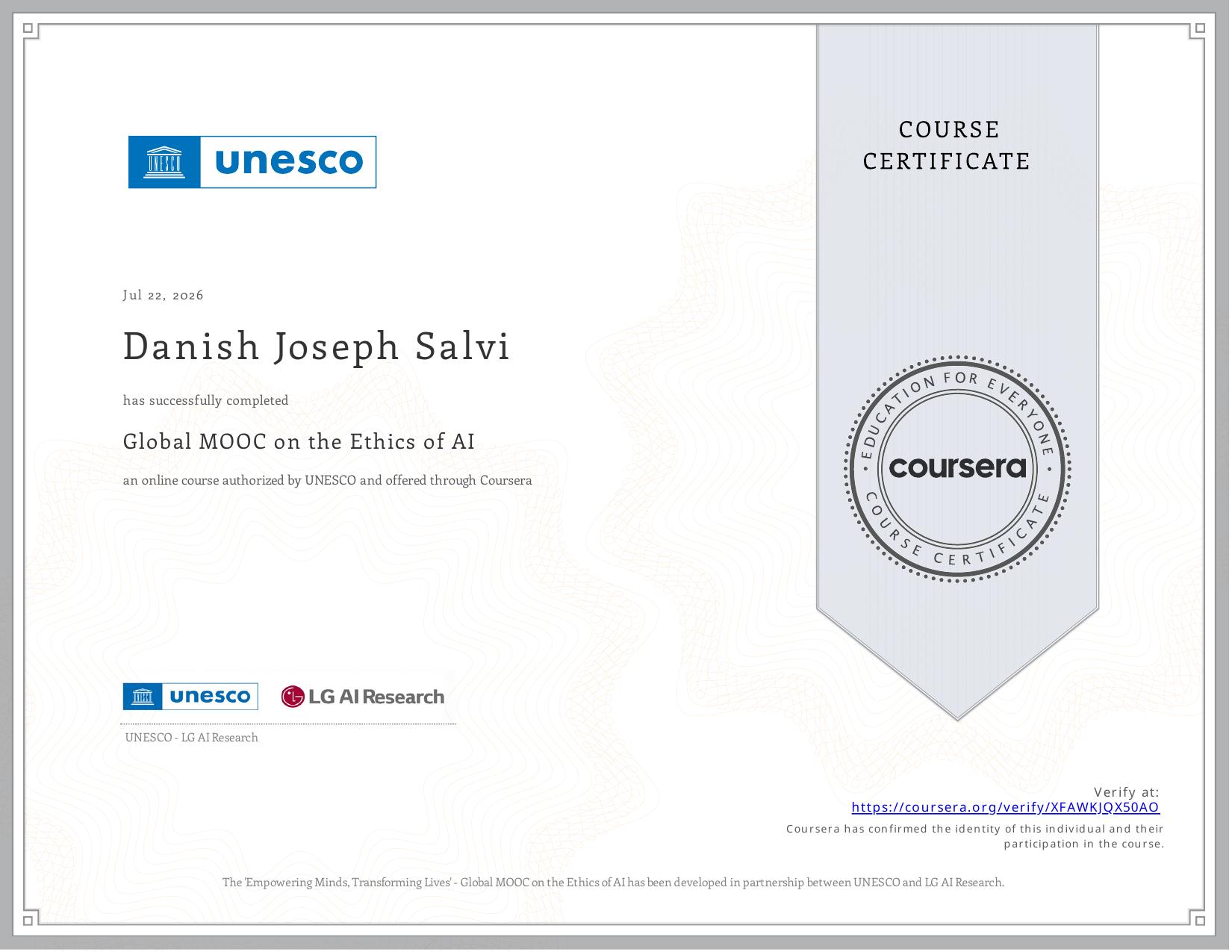
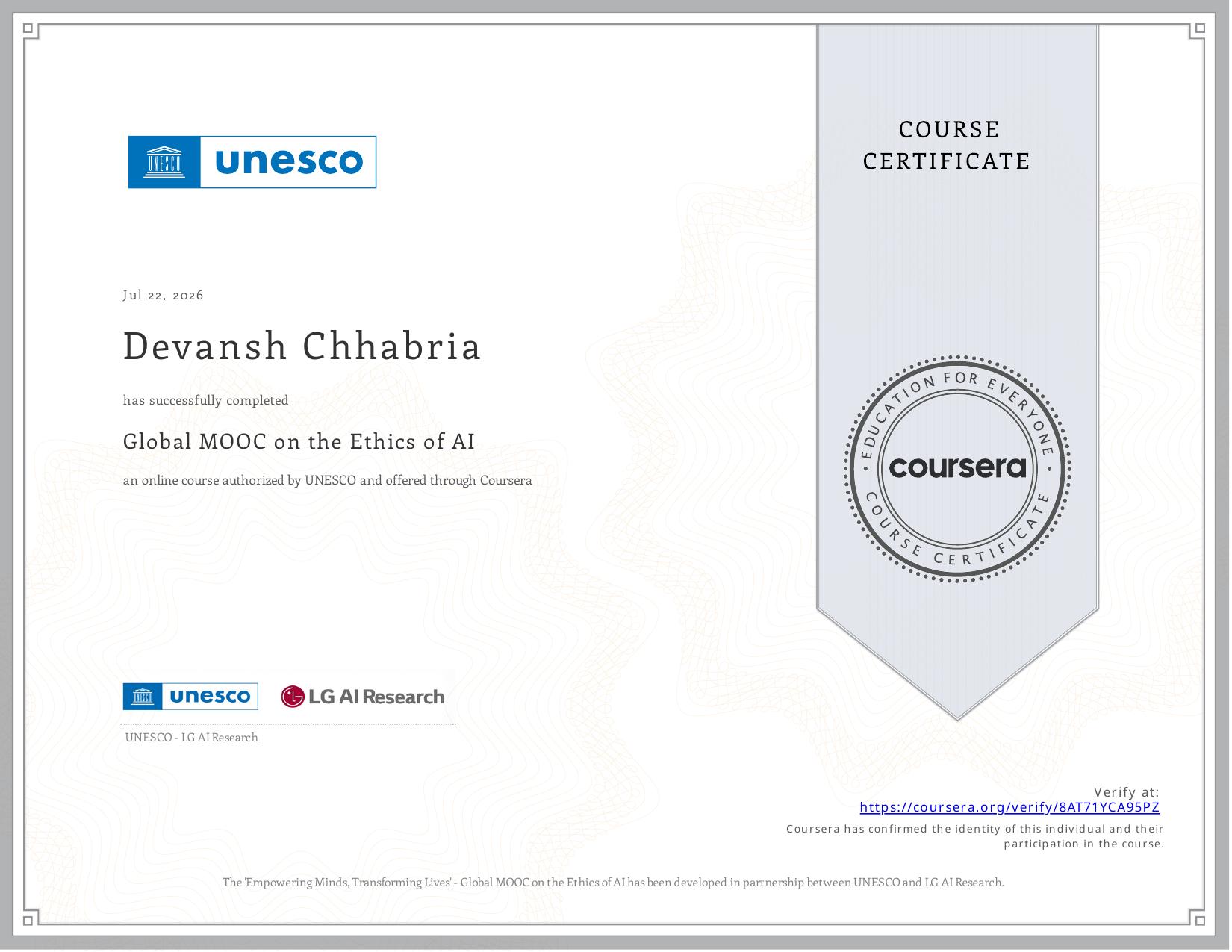
The Journey That Was Connecting Everything
Geneva looked, from the outside, like where this story began. It wasn't. Each stage below seemed, at the time, to be its own room. Looking back, they were all asking the same question — who gets left behind, and what would it take to make sure no one is.
The United Nations did not begin this journey. It simply became the global stage for a mission that started with a four-year-old learning that no one should ever be left behind.
The Full Story From Geneva, in One Video
AI for Every Mind — the side event was the surface. The classroom is the work.
Everything shared in Geneva grew out of an inclusion-first AI education initiative for visually impaired, deaf, autistic, ADHD and neurodiverse learners in India.
“For every investment in AI technology, make an equal investment in people.” That's the one line I brought back from Geneva — not because it was said on a stage, but because it's what an inclusive classroom in India has been proving, one student at a time, long before the UN gave it a room to say so in.
Palexpo will host another summit next year. UNOG will convene another dialogue. The badges, the banners, the rooms — all of it resets. What doesn't reset is a student who once said AI finally answered her instead of someone answering for her. That's the version of this story I'm still building toward.